How does clay tempering affect the look of a T10 katana?
Updated Mar 2026
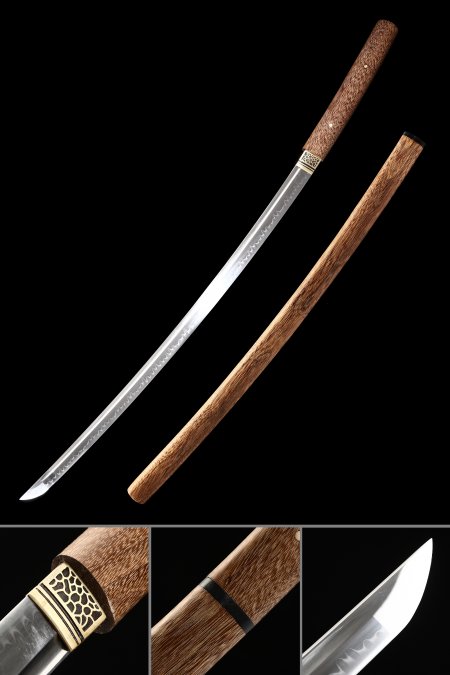
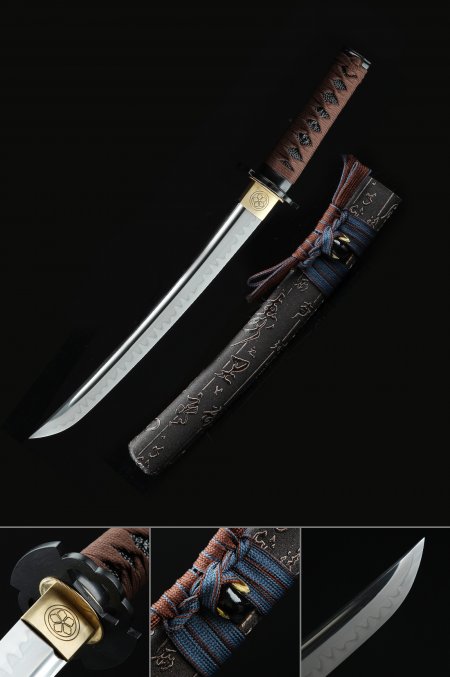
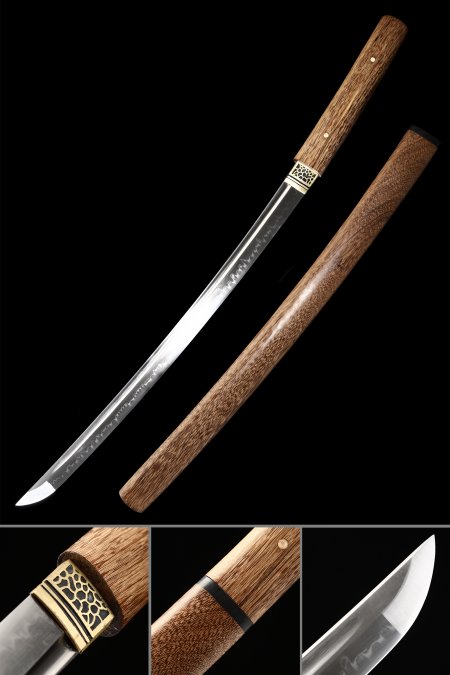
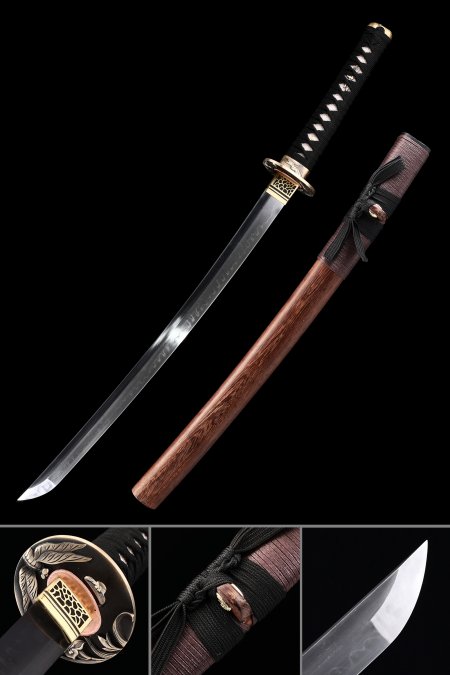
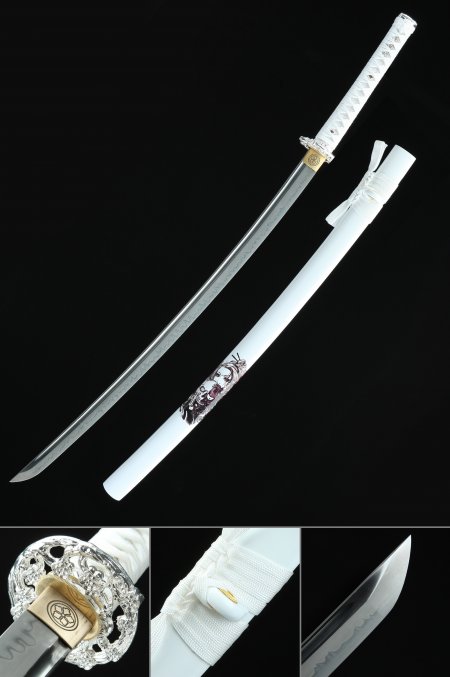
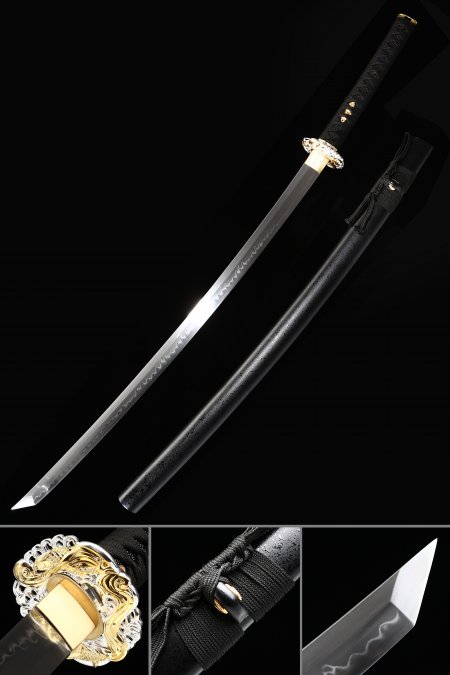
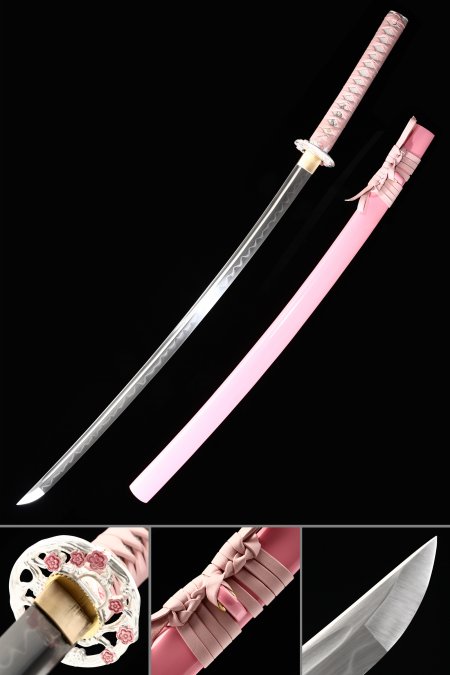
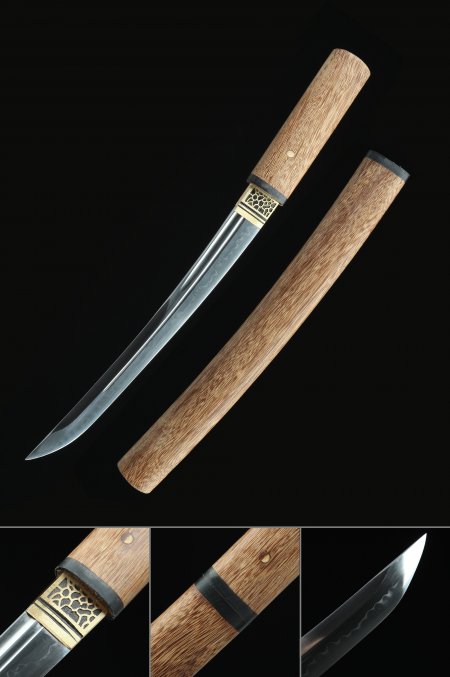
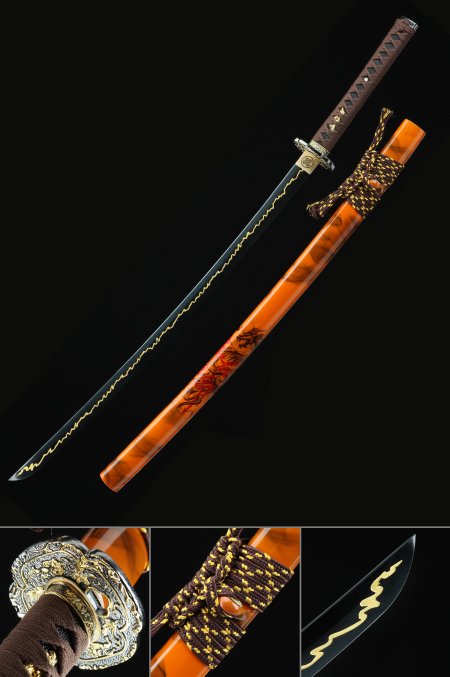
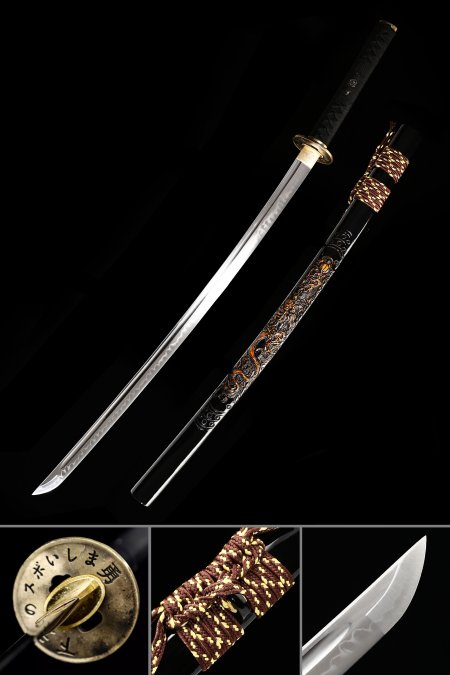
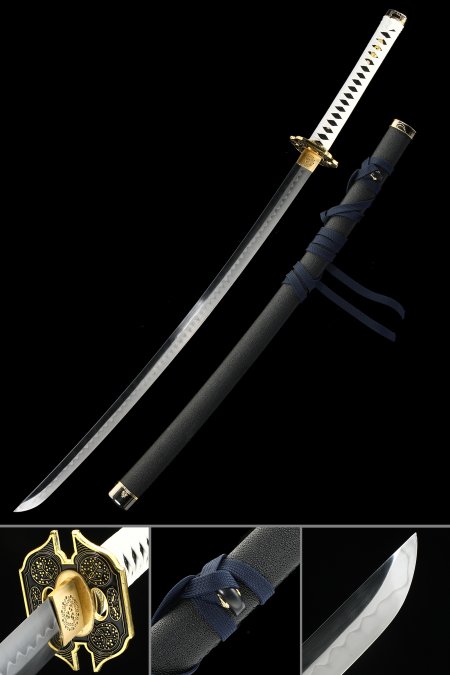
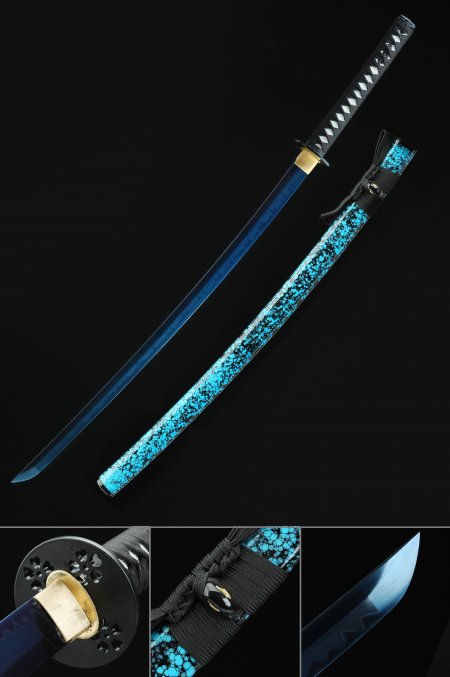
Clay tempering is a heat-treatment method in which a layer of refractory clay is applied along the spine of the blade before quenching, insulating that section and allowing the edge to cool faster. The differential hardness this creates produces a visible hamon — a misty, undulating boundary line running the length of the blade between the harder edge steel and the softer spine. On T10 tool steel, which has a slightly elevated carbon content compared to standard 1060 or 1045, the hamon tends to appear with fine activity and a bright, well-defined nie or nioi pattern visible under good lighting. For display collectors, this is a significant visual feature: no two clay-tempered blades produce an identical hamon, giving each sword a degree of individuality that factory-ground blades simply cannot replicate. The hamon is best appreciated under a focused light source held at a low angle to the blade surface.