How does T10 clay-tempered steel compare to Damascus in these katana?
Updated Mar 2026
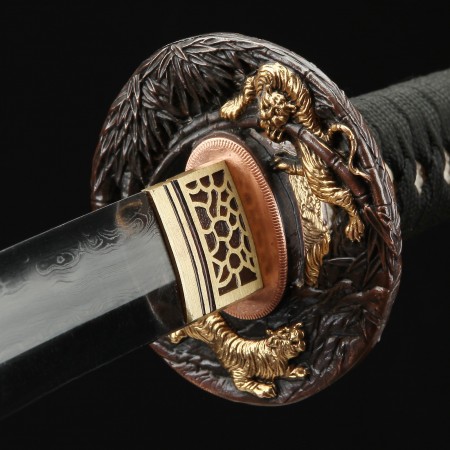
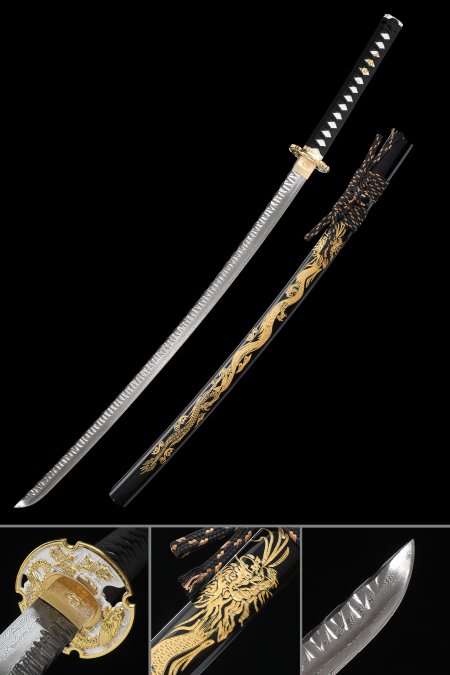
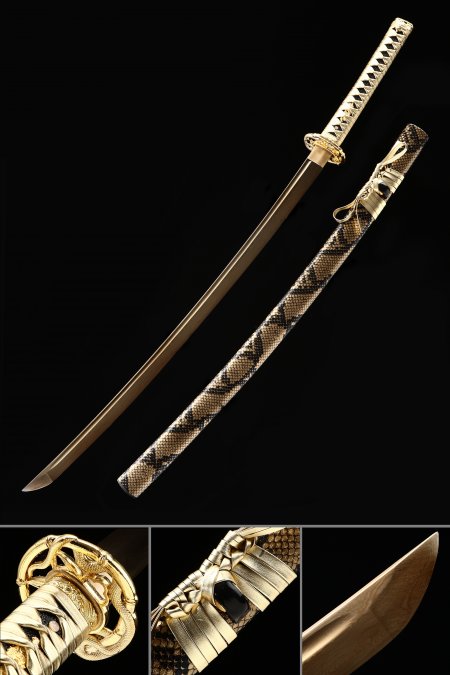
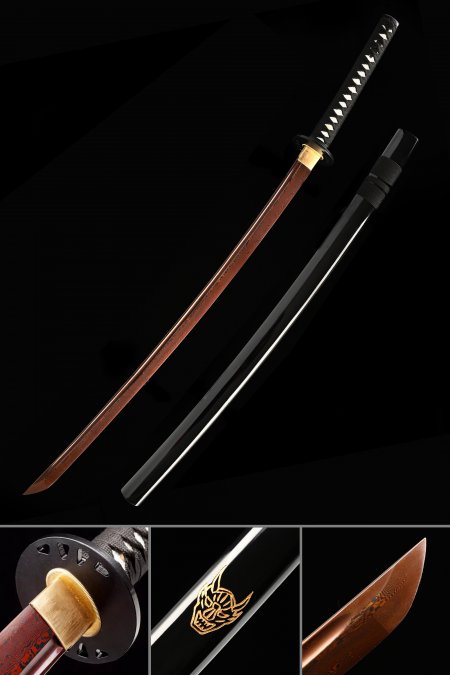
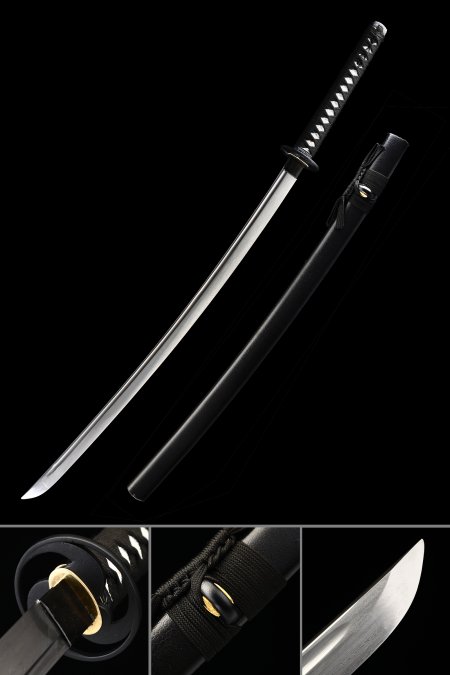
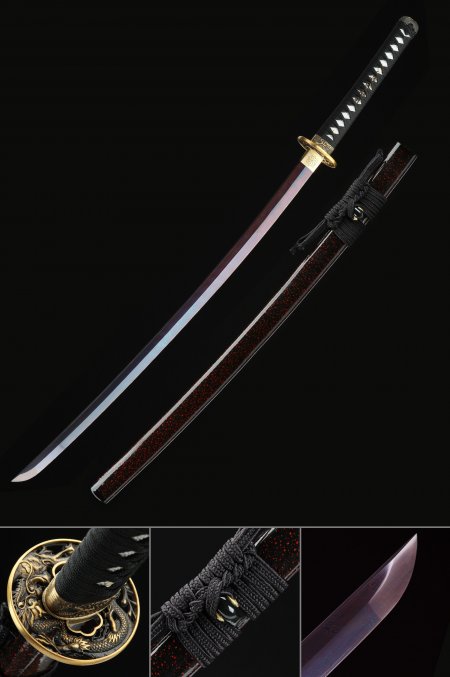
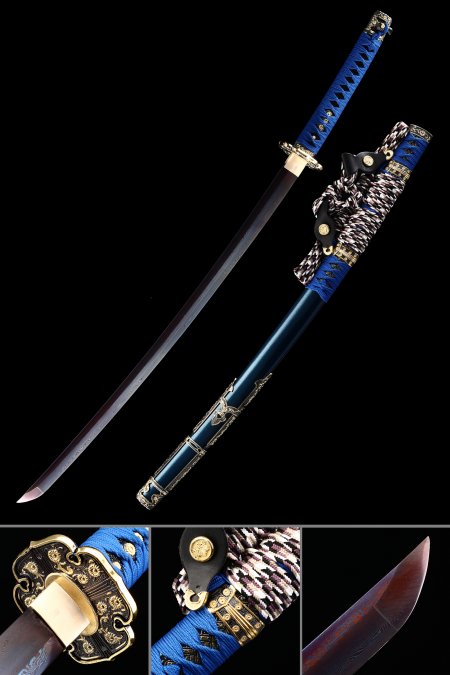
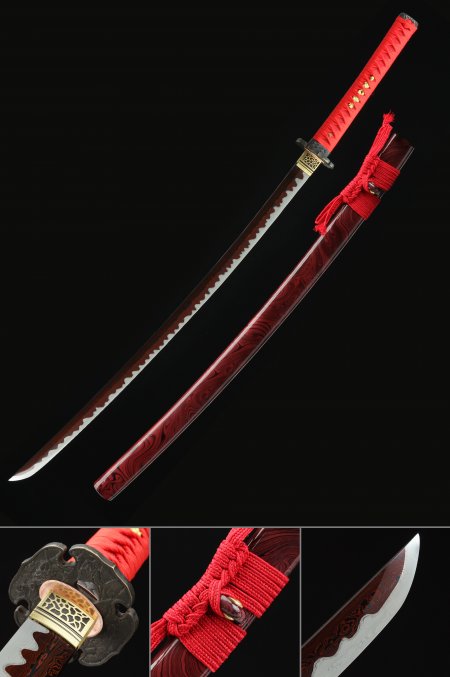
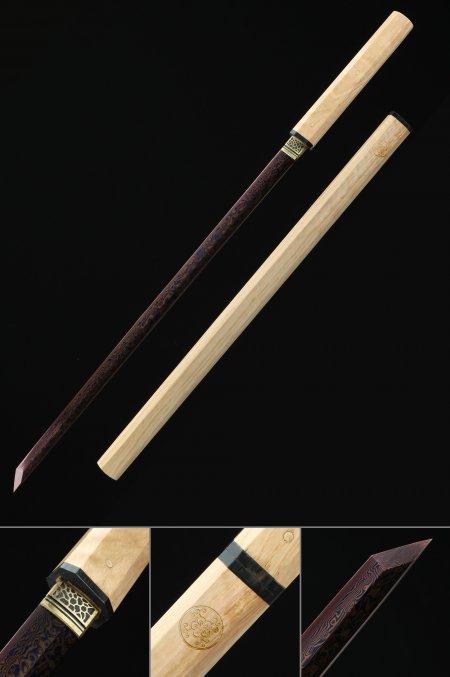
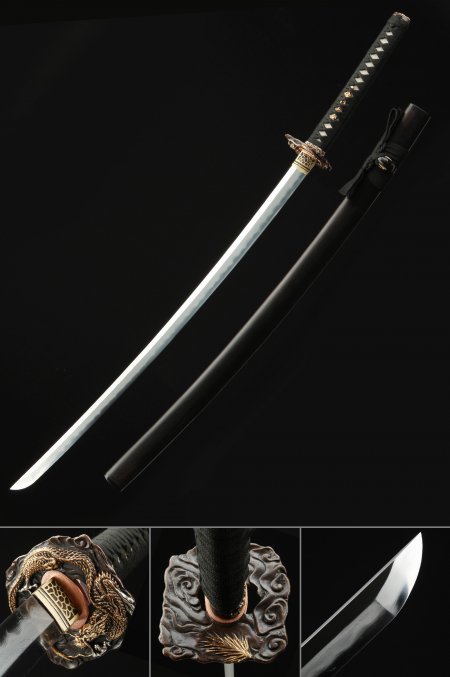
T10 tool steel and Damascus steel represent two distinct approaches to blade character, and both appear prominently in this collection. T10 is a high-carbon steel valued for its fine grain structure and edge retention; when clay-tempered, a thin layer of clay is applied along the spine before quenching, causing the edge and spine to cool at different rates. This differential hardening produces a visible hamon - the misty, undulating temper line - that is one of the most admired features in traditional Japanese blade aesthetics and a hallmark of authentic hand-forging technique. Damascus steel, by contrast, is created by layering and folding two or more steel types together, producing distinctive flowing grain patterns across the blade surface. Every Damascus blade is visually unique, making it especially appealing for collectors who prioritize one-of-a-kind display pieces. T10 clay-tempered katana are prized for their hamon authenticity; Damascus katana are prized for their surface artistry.