How does a ninjato differ from a katana for display purposes?
Updated Mar 2026
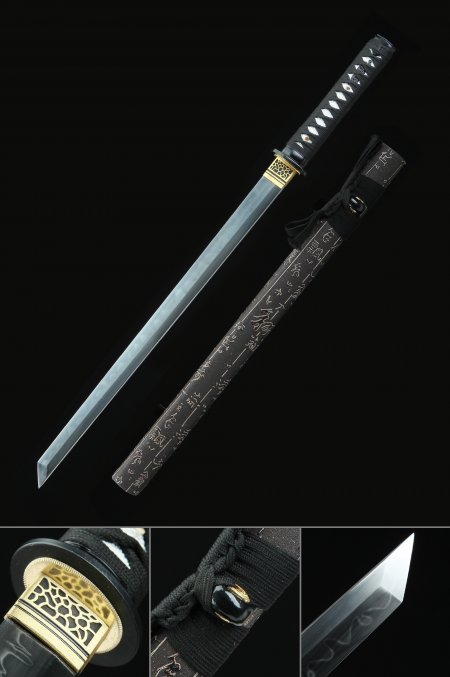
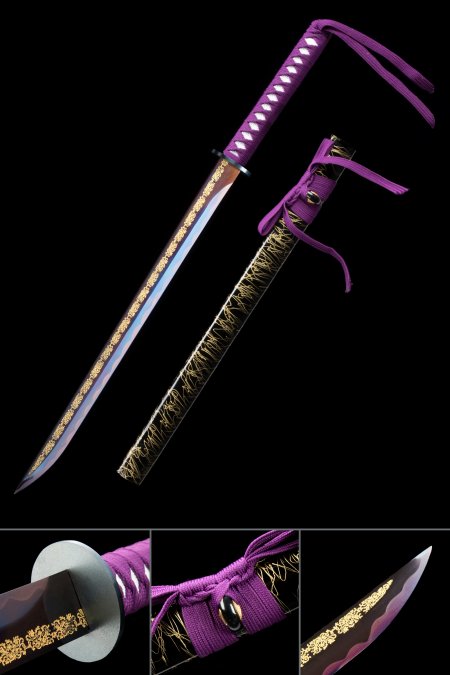
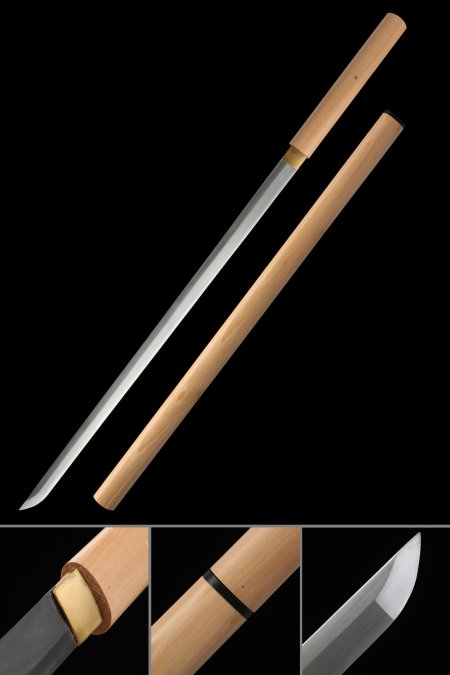
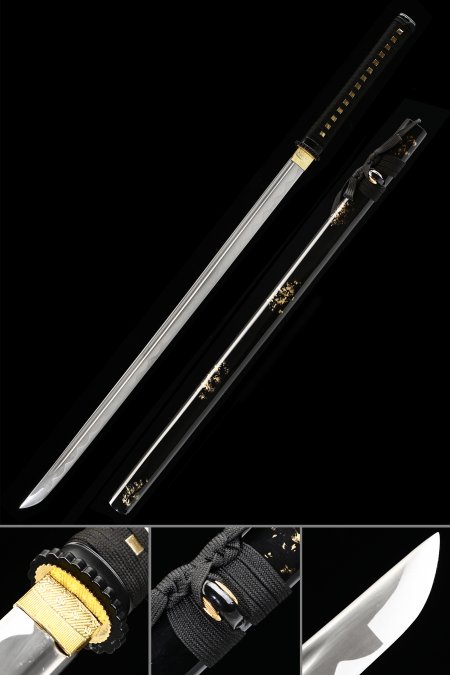
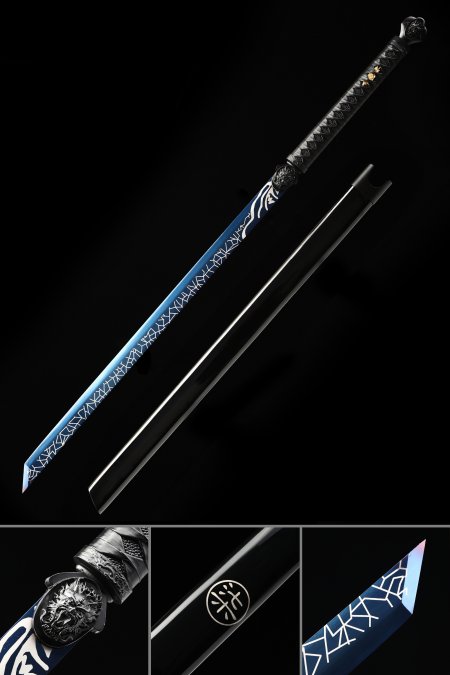
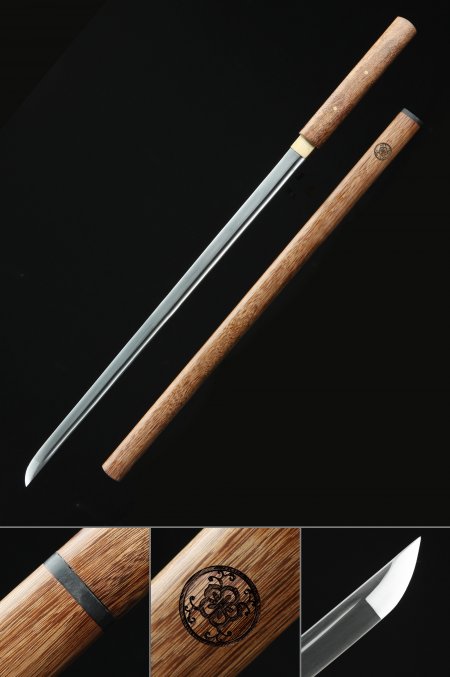
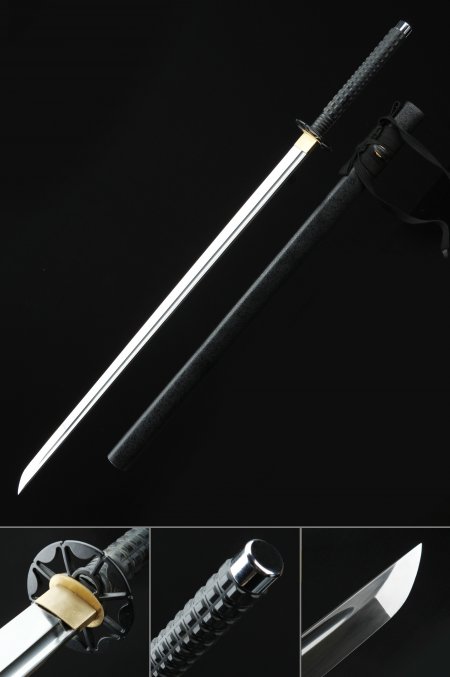
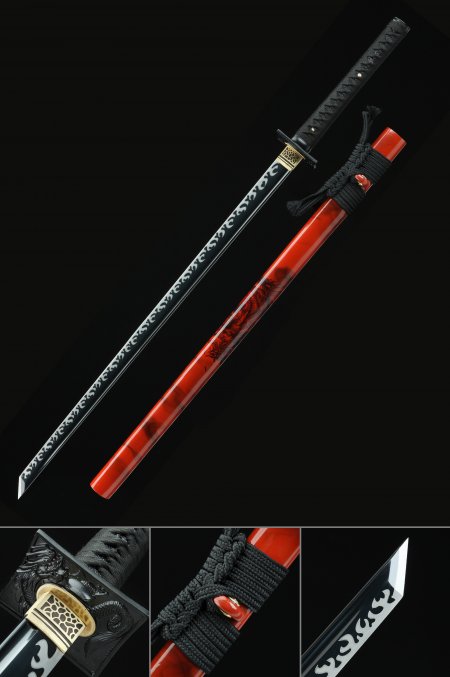
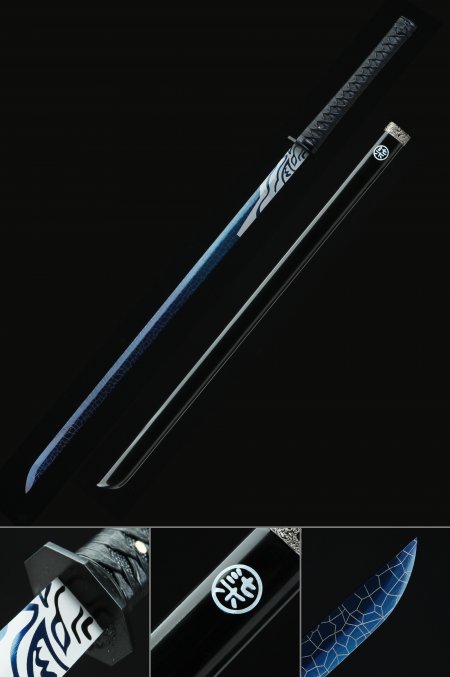
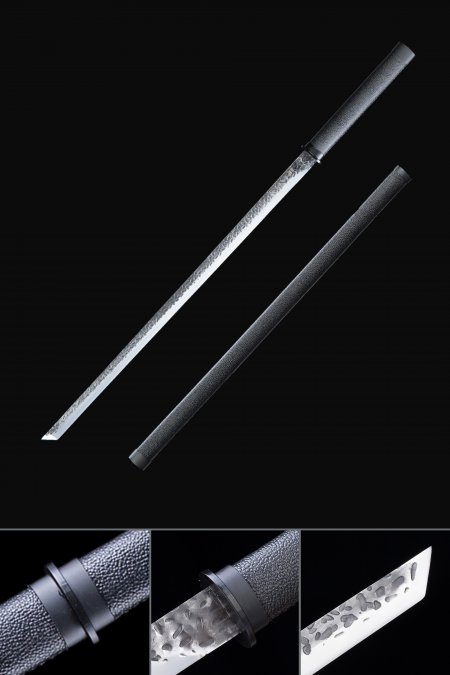
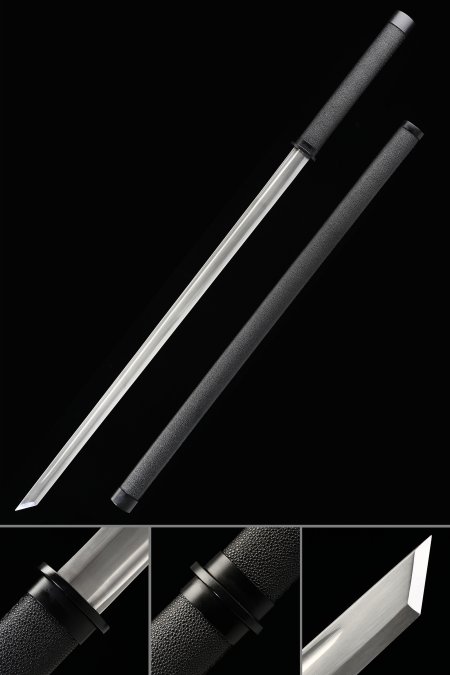
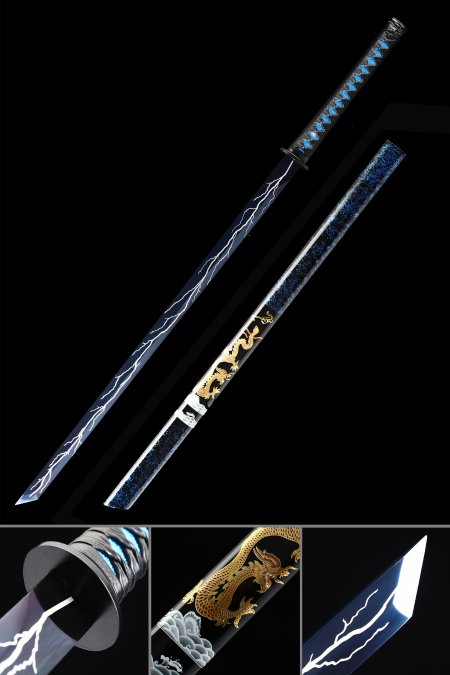
The most immediately visible difference is blade geometry. A katana follows a curved profile - the result of differential hardening that pulls the spine and edge into an arc during quenching. A ninjato is straight from tip to tsuba, with a squared or minimally tapered profile that reads as distinctly architectural on a wall mount or display stand. This straight silhouette creates a sharper visual contrast in mixed-sword displays and pairs naturally with the angular geometry of black iron sayas. For collectors arranging multiple pieces, alternating curved katana and straight ninjato forms creates rhythmic visual interest. The koshirae traditions also differ: ninjato fittings historically favored functional plainness, which in this collection is reinterpreted through black lacquer and gold accent work rather than elaborate carving.