How is a Damascus steel ninjato blade actually made?
Updated Mar 2026
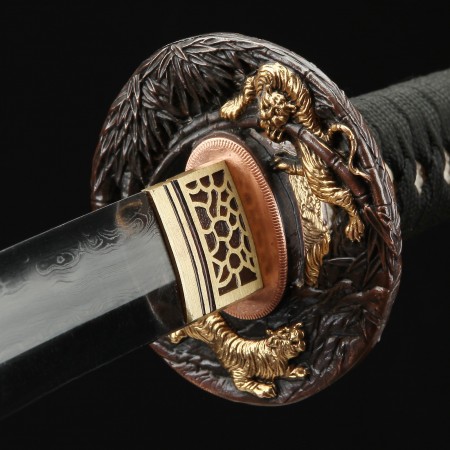
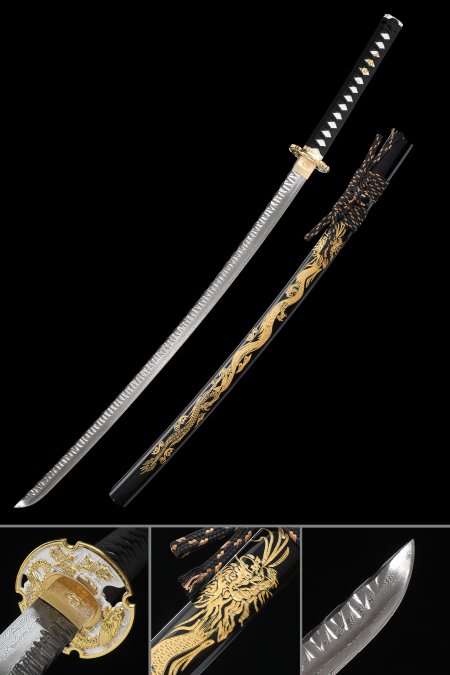
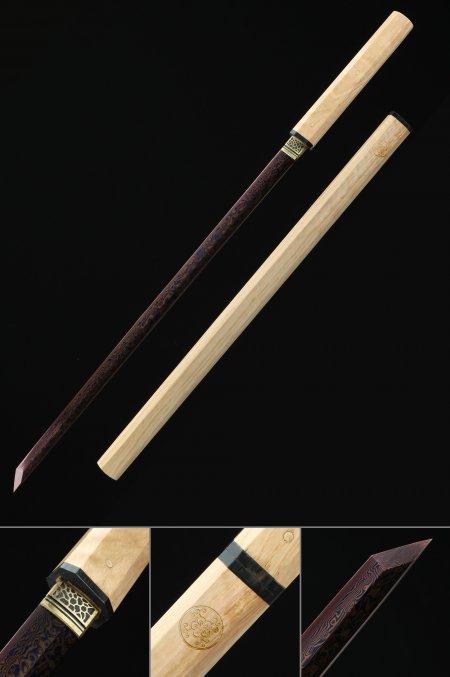
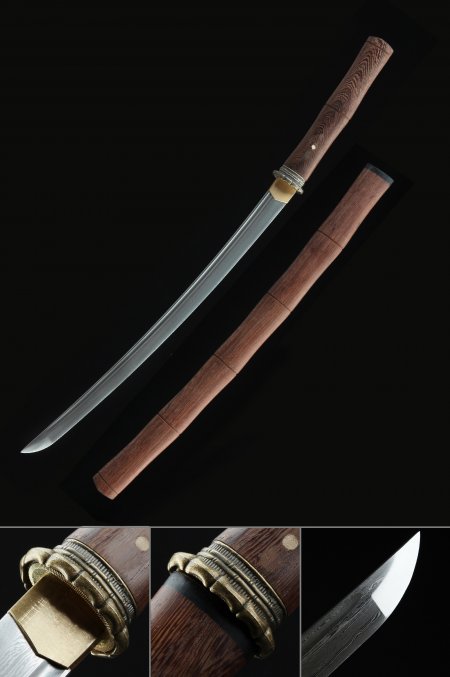
Damascus steel blades are produced by forge-welding two or more types of steel — typically a higher-carbon and lower-carbon variety — then repeatedly folding and drawing out the combined billet. Each folding cycle doubles the layer count, and after enough passes the steel develops a complex internal structure. When the finished blade is ground and acid-etched, the differential carbon content between layers reacts at different rates, revealing the characteristic flowing, watery grain pattern on the surface. Because this pattern forms organically during the forging process, no two Damascus blades are ever identical. For collectors, this means a Damascus ninjato is inherently a one-of-a-kind display piece, even within a standardized design.