What does a real hamon look like on a ninjato blade?
Updated Mar 2026
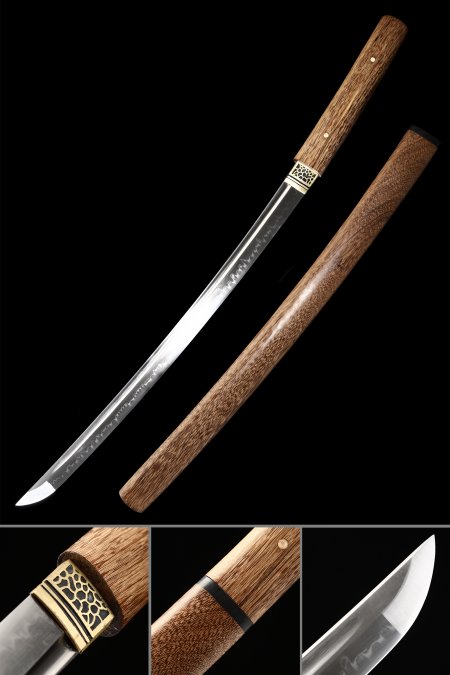
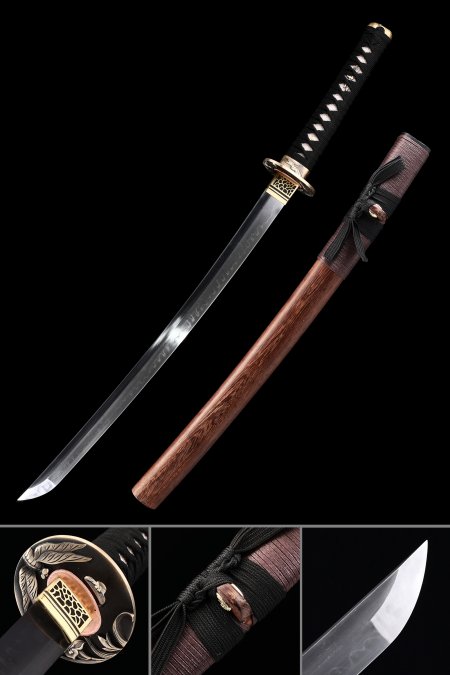
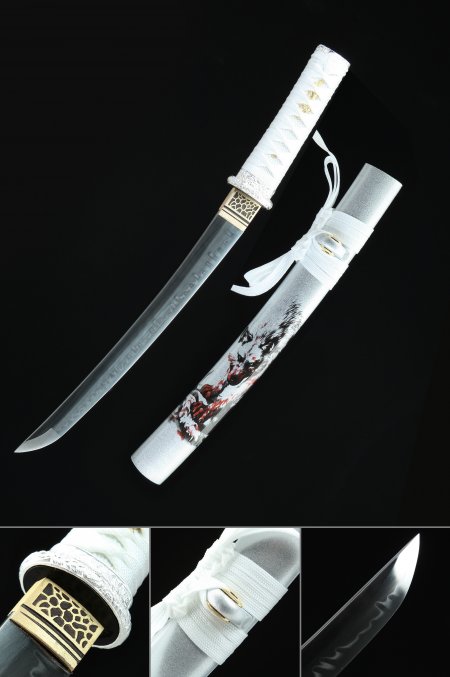
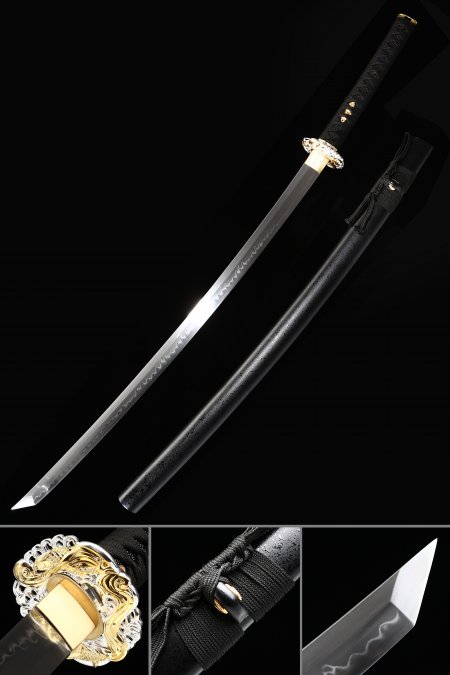
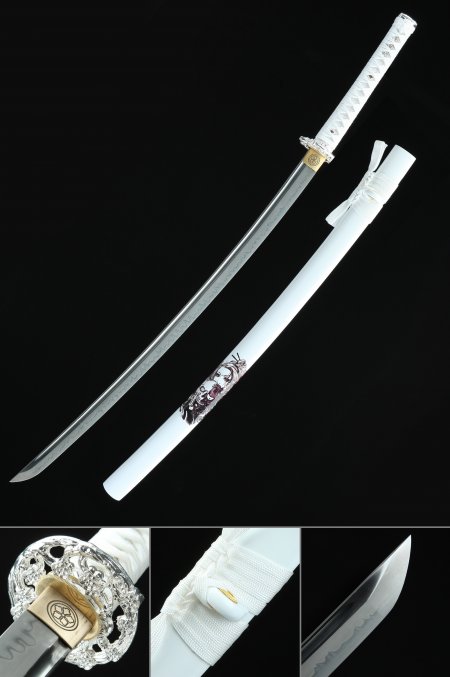
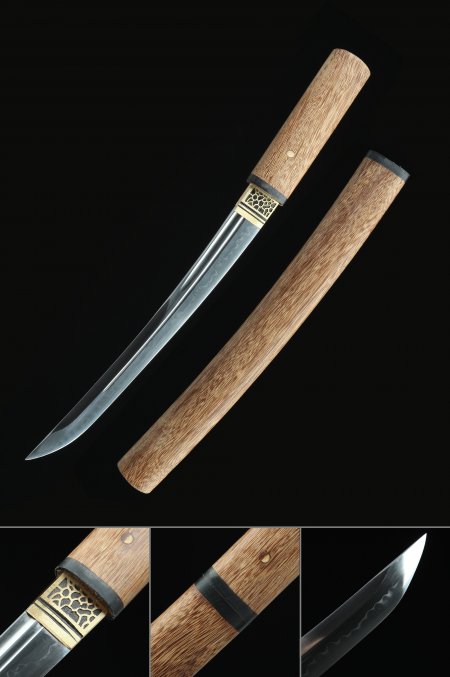
A real hamon is a visible boundary line that appears along the lower portion of a blade as a result of clay tempering during the heat treatment process. The blade is coated in clay — thicker along the spine and thinner near the edge — before being heated and quenched. This differential cooling creates two zones of steel hardness separated by a visible transition line. On a ninjato, this hamon typically runs parallel to the straight edge and may appear as a soft mist, a defined wave, or an irregular cloud-like pattern depending on the clay application technique. Unlike blades with an acid-etched or cosmetic hamon — which simply simulate the pattern on the surface — a genuine clay-tempered hamon reflects actual metallurgical activity within the steel and will show subtle shifts in texture and reflectivity when viewed under angled light. The T10 ninjato in this collection carries this authentic characteristic.