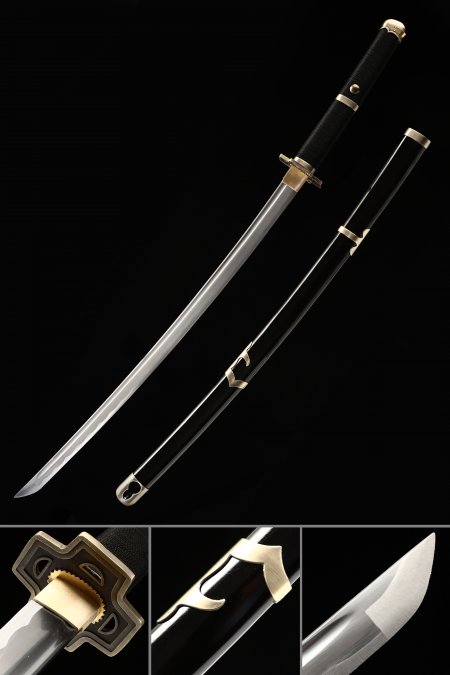
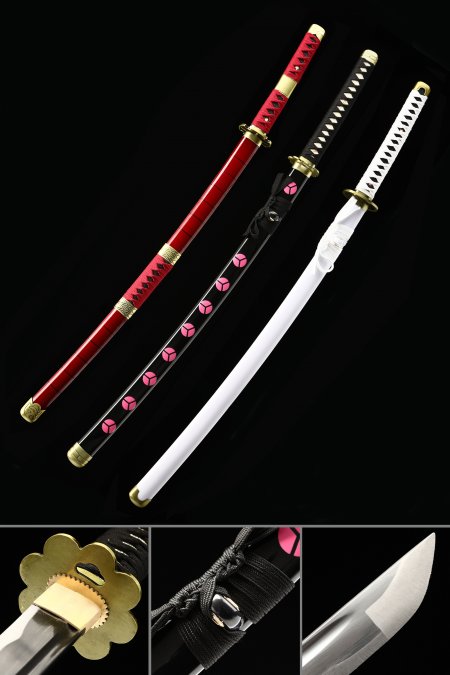
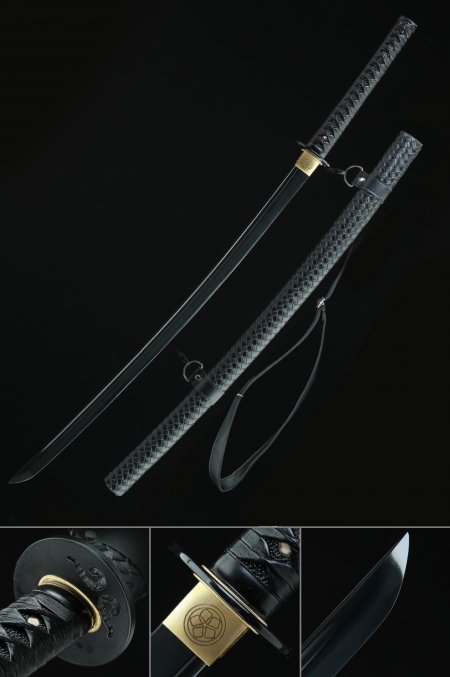
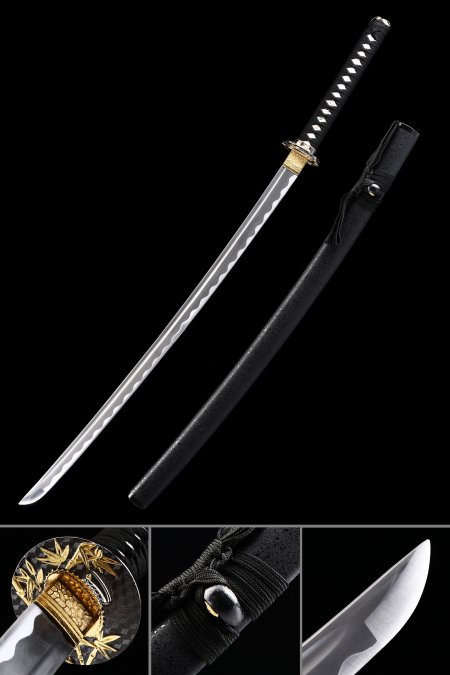
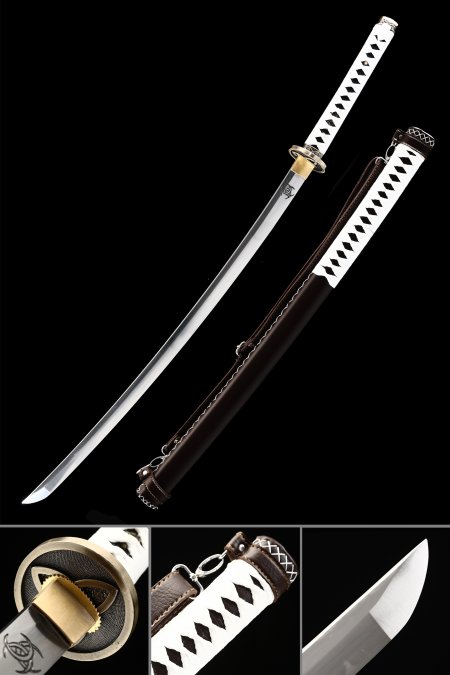
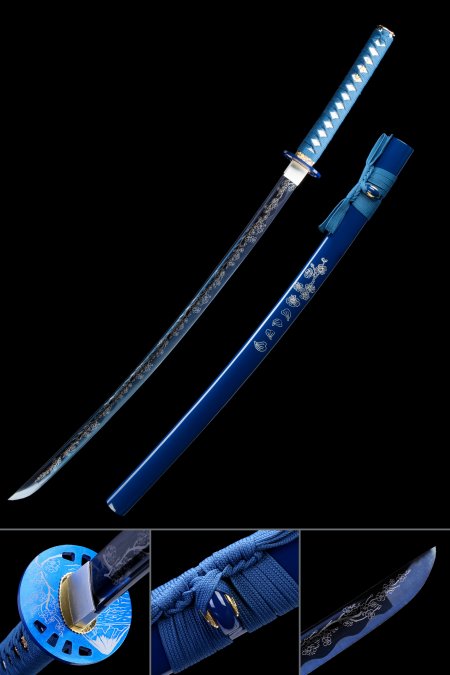
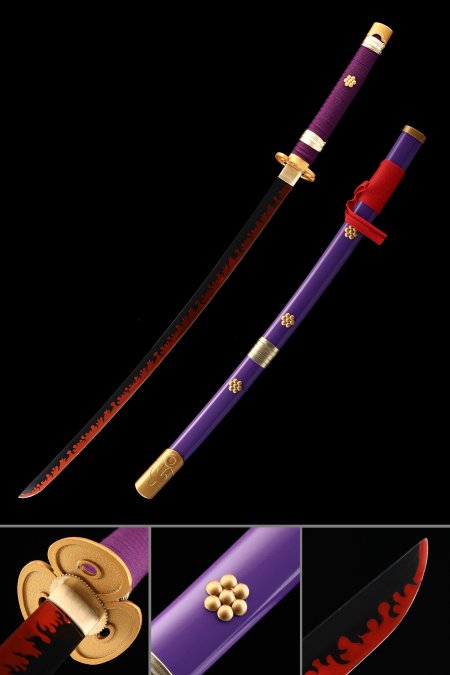
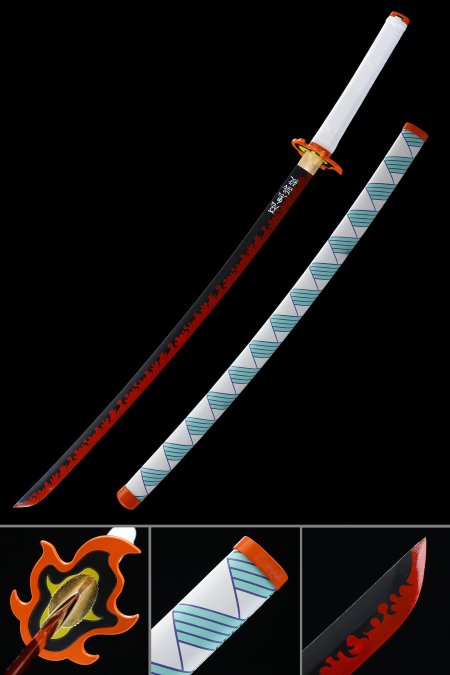
The hamon on every katana in this collection is a genuine differential temper line, not an acid-etched or bead-blasted simulation. Each blade is coated with clay along the spine before the hardening quench - a process known as tsuchioki. The clay insulates the mune, causing it to cool slowly and remain relatively tough, while the uncoated ha cools rapidly and hardens. This creates a distinct transition zone visible as the hamon. Under close inspection or angled light, you can observe activities like nie (larger crystalline structures) within and near the temper line - a hallmark of authentic differential heat treatment. Decorative hamons, by contrast, are purely cosmetic surface treatments that do not reflect the actual hardness profile of the blade and carry no collector significance beyond aesthetics.