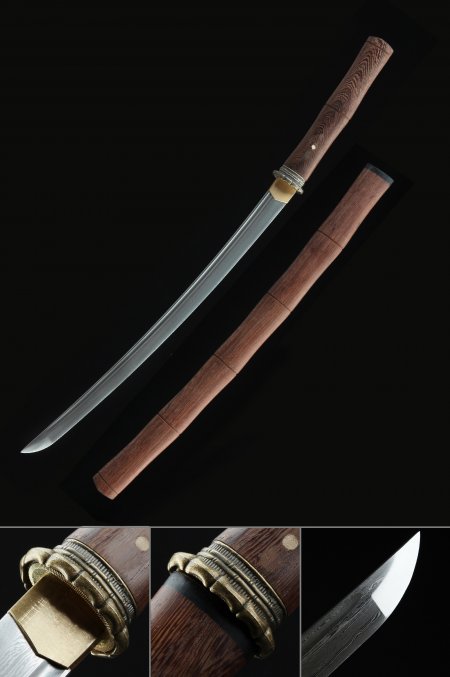
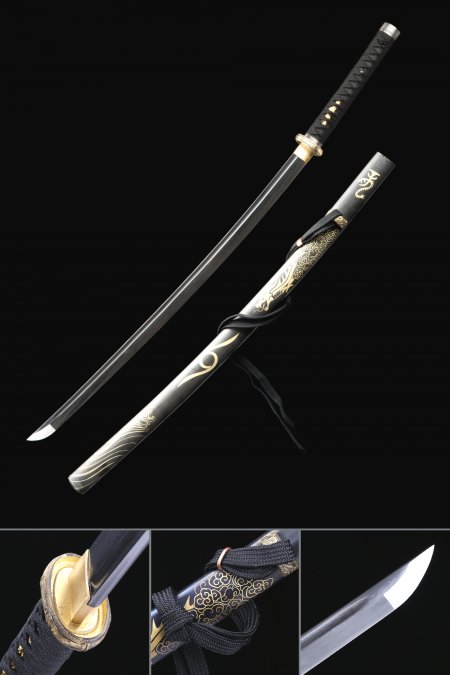
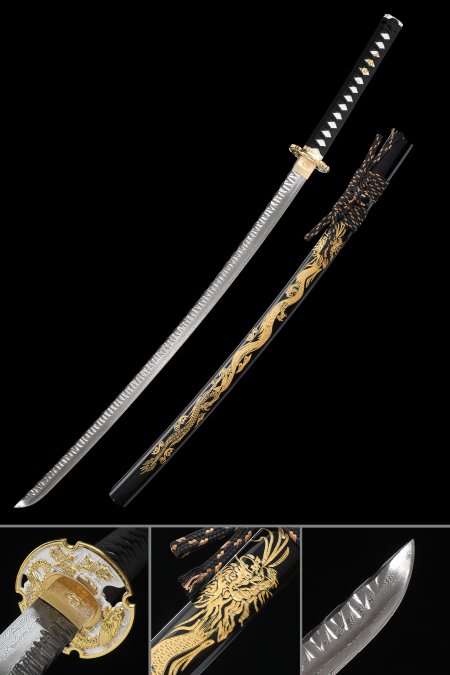
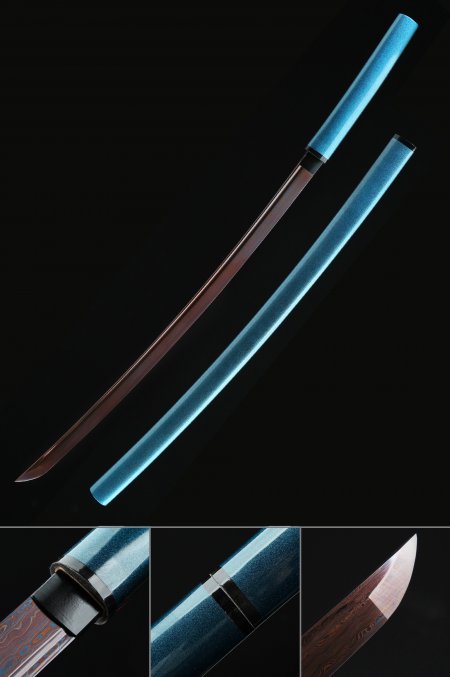
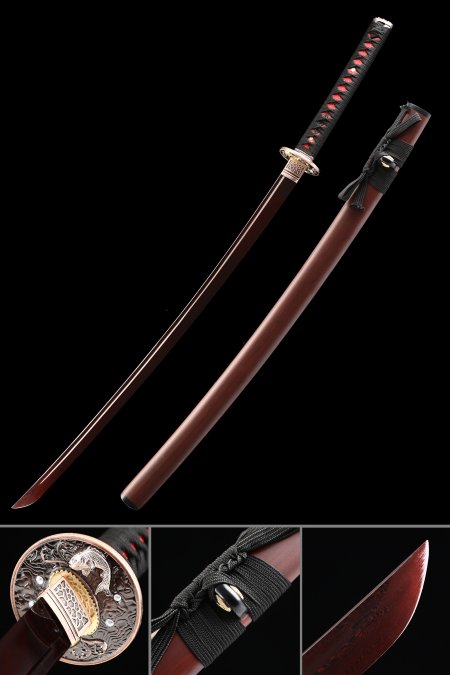
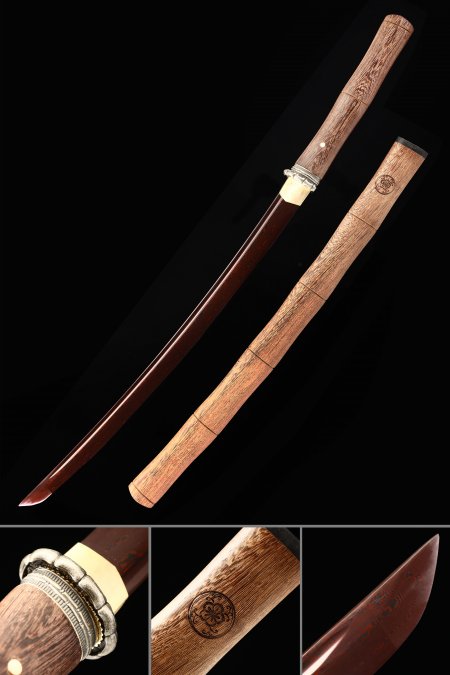
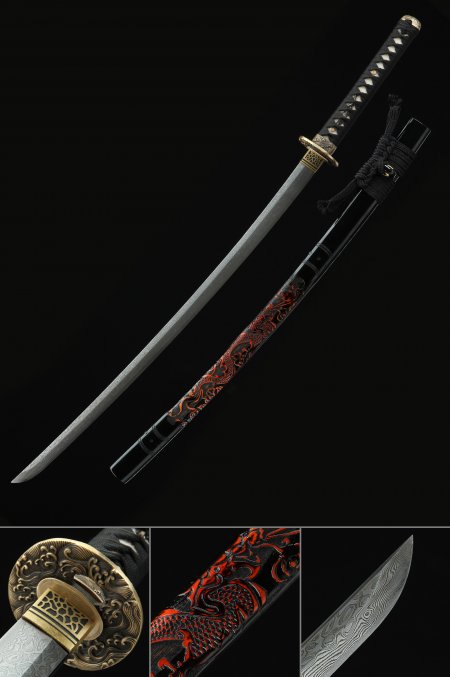
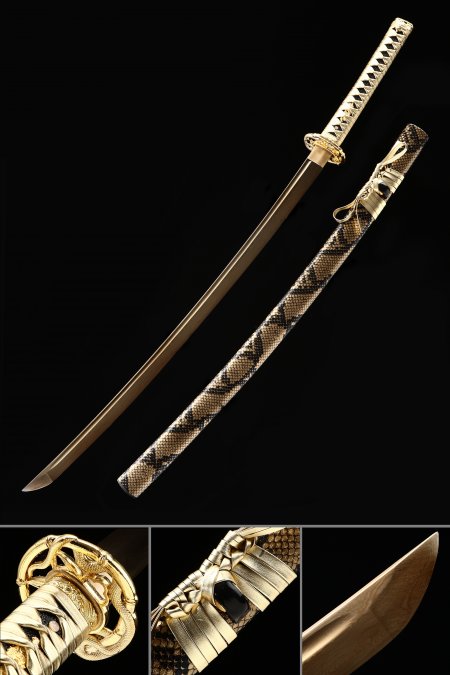
What makes Damascus steel visually unique on a katana blade?
Updated Mar 2026
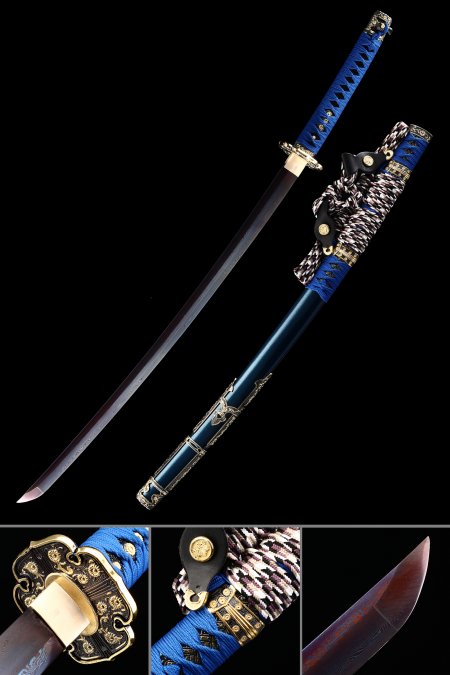
Damascus steel — more precisely called pattern-welded steel in modern sword-making — is produced by forge-welding two or more steel alloys together, then repeatedly folding and drawing out the billet. This process creates a layered internal structure that, once the blade is ground and acid-etched, reveals a flowing surface grain called hada. No two Damascus blades produce the exact same pattern; the undulating lines, swirls, or ladder motifs are a direct result of how the smith manipulated the layers during forging. On a red-black katana, this organic surface texture contrasts dramatically against the polished fittings and lacquer, making the blade itself the focal point of the display piece.