How does T10 clay-tempered steel differ from manganese steel in a tanto?
Updated Mar 2026
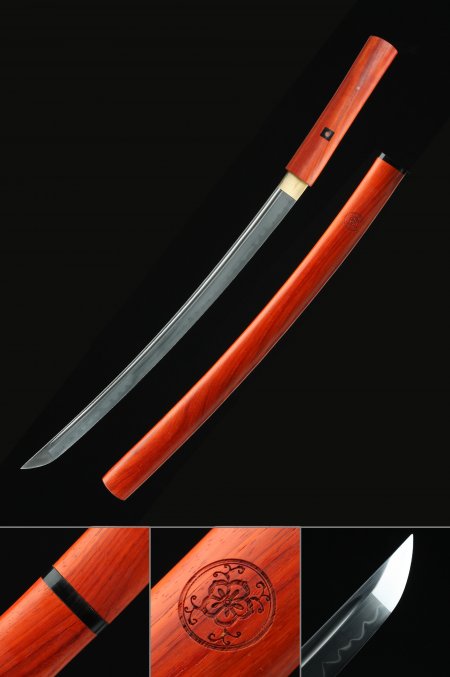
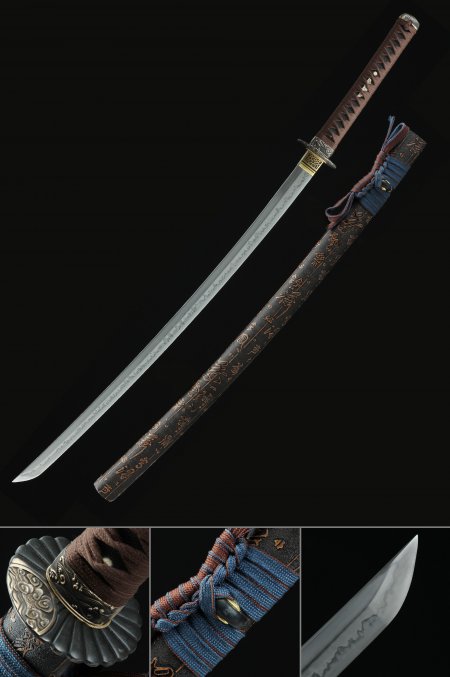
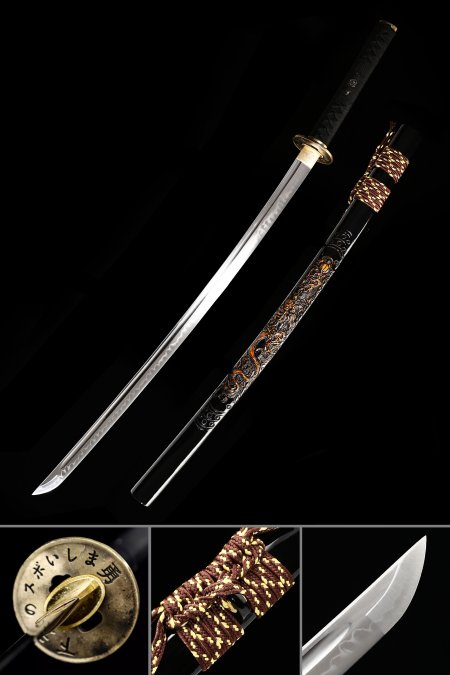
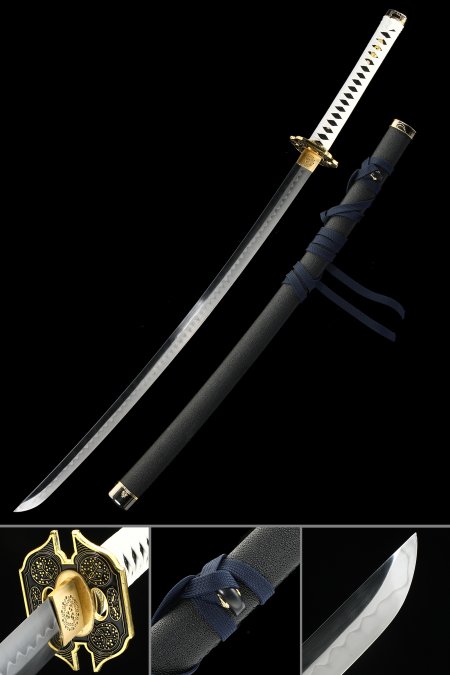
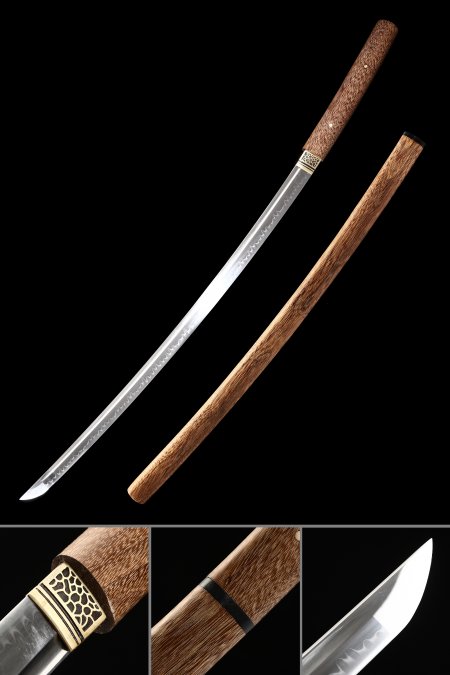
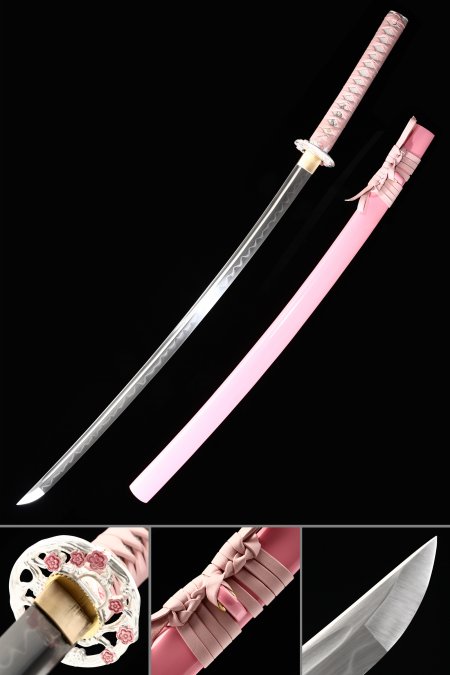
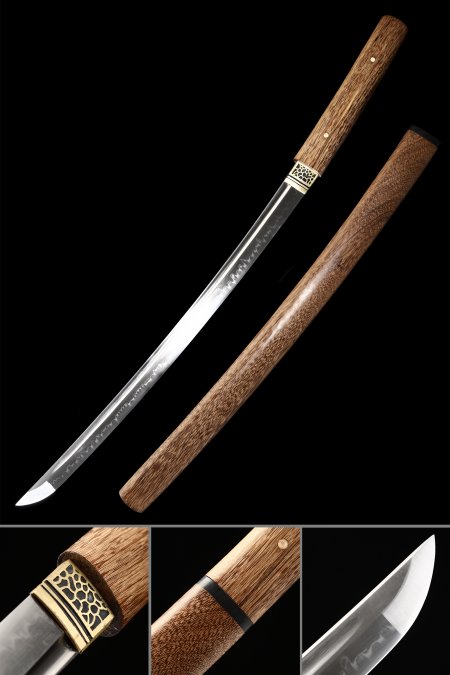
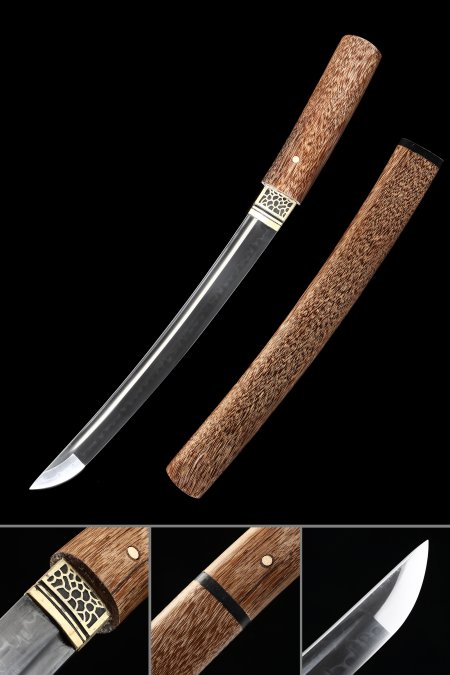
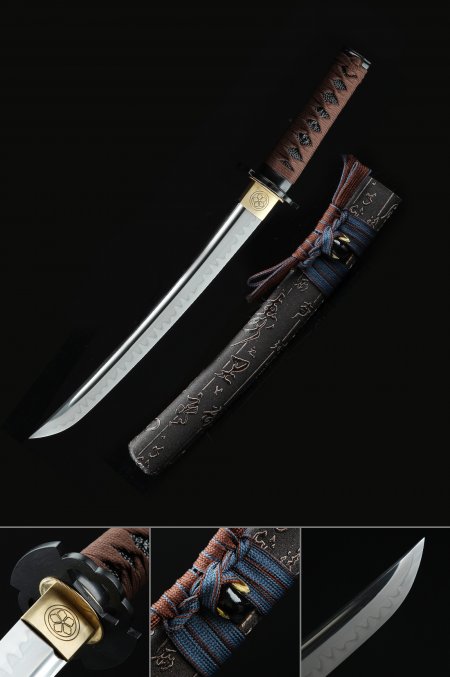
T10 is a high-carbon tool steel with trace tungsten content that improves wear resistance and edge retention. When clay is applied to the blade before quenching — covering the spine while leaving the edge exposed — the differential cooling rate produces a genuine hamon: a visible transition line between the hardened edge zone and the softer, more flexible spine. This hamon is a direct artifact of the heat-treatment process and is unique to each blade. Manganese steel, by contrast, derives its toughness from manganese alloying rather than differential tempering, and typically does not produce a natural hamon. It offers good resilience and a consistent hardness profile suited to the tanto's angular tip geometry. The choice between them is a matter of collector priority — T10 clay-tempered work rewards close visual inspection and carries more traditional craft significance, while manganese steel offers reliable uniformity and a bold surface finish.