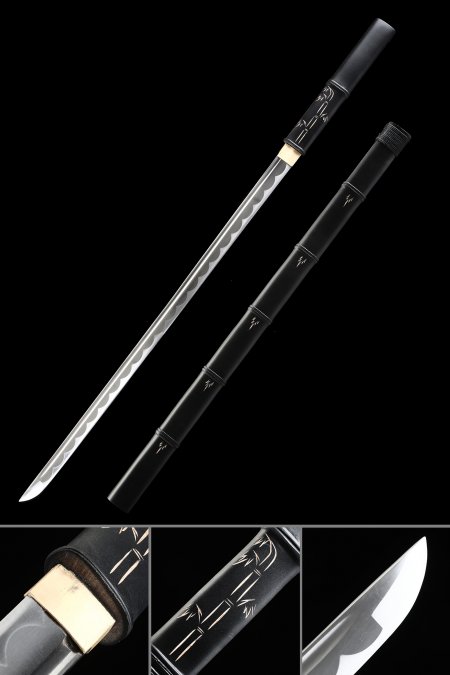
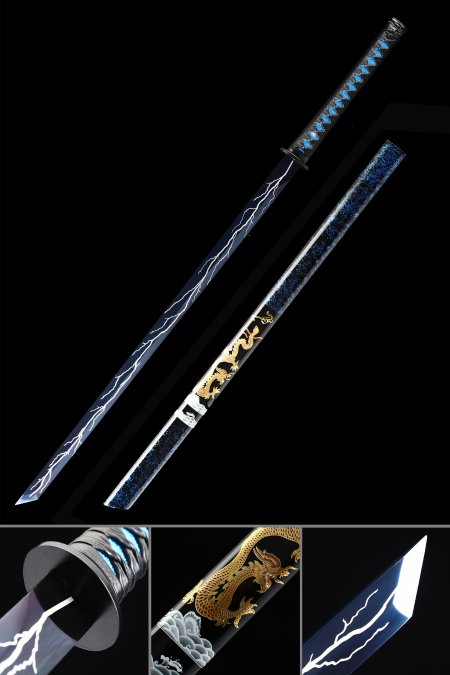
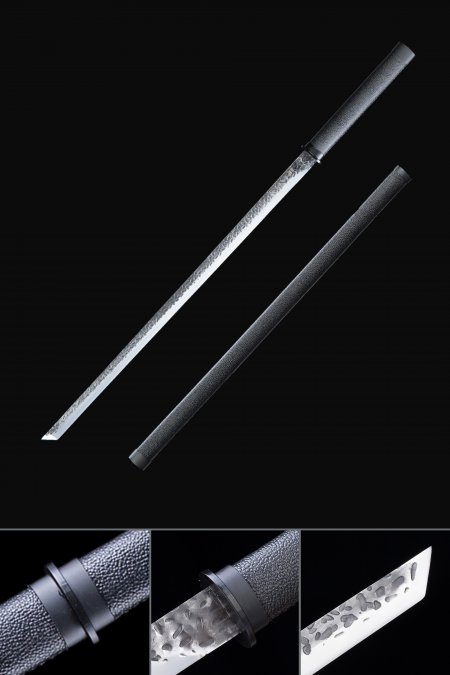
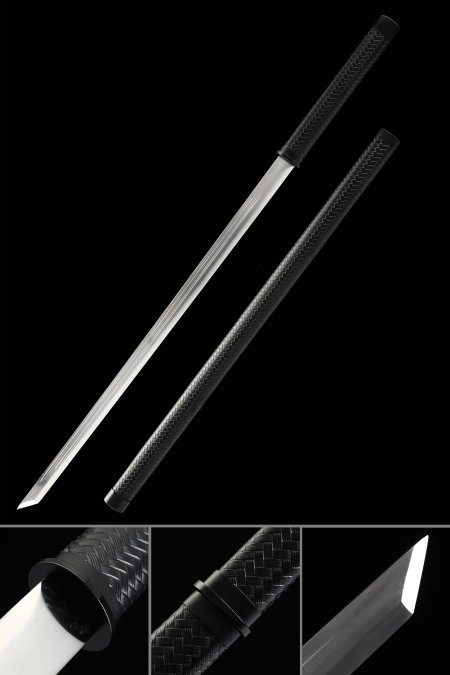
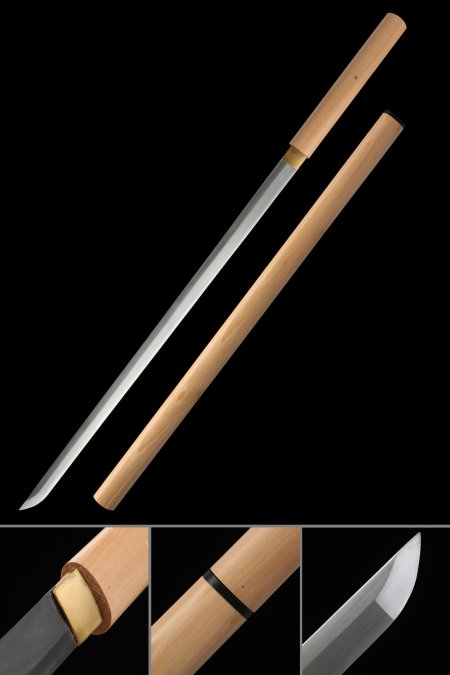
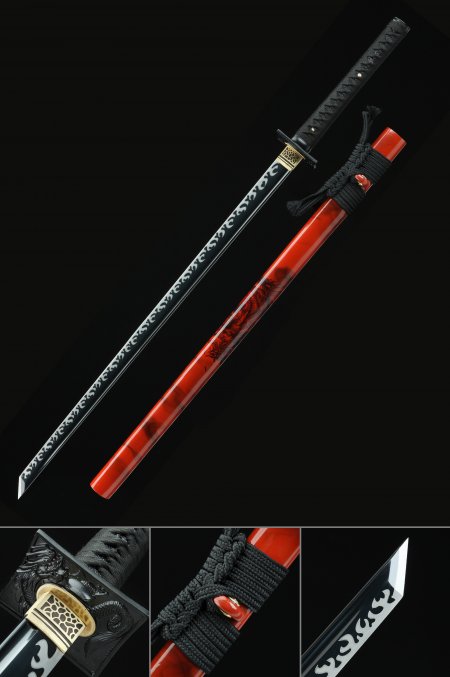
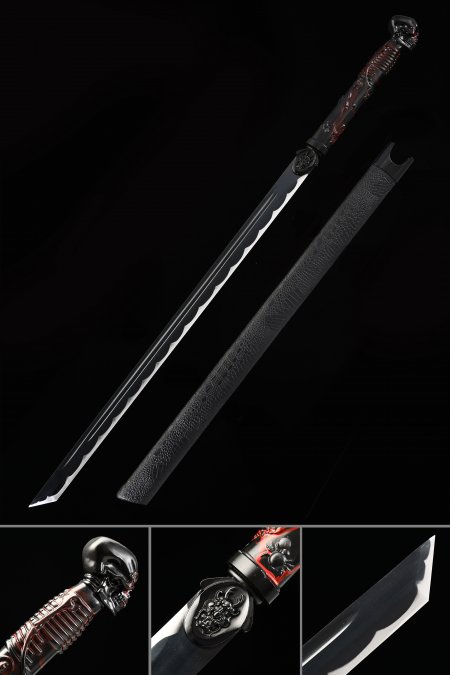
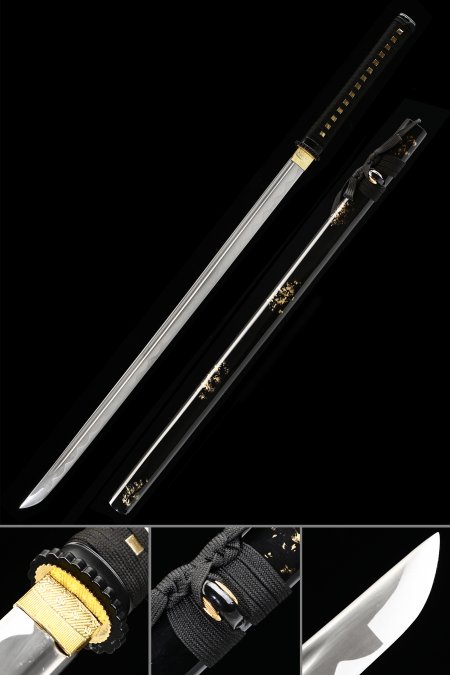
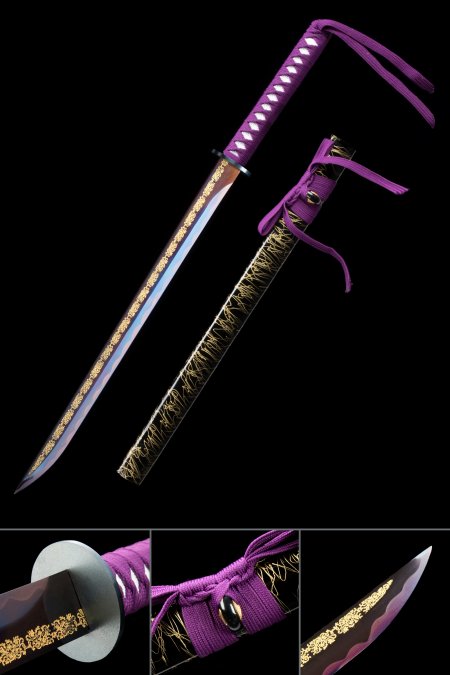
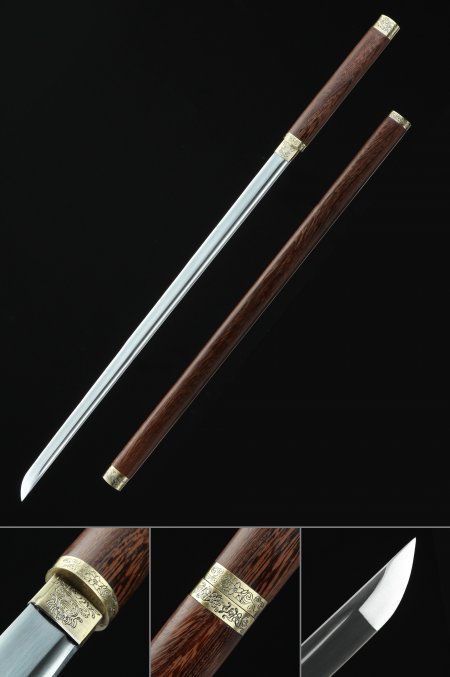
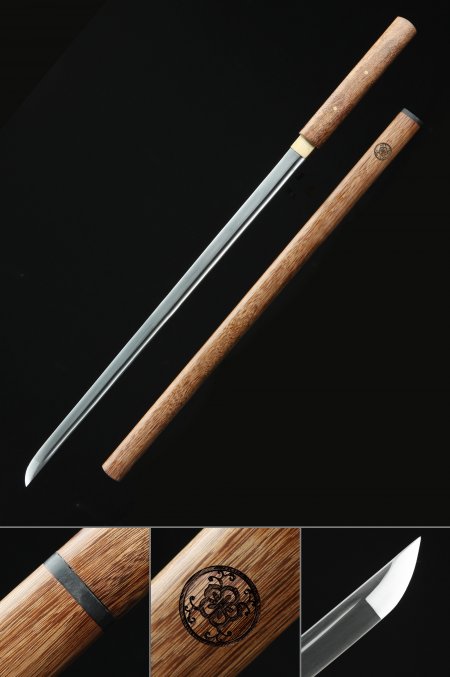
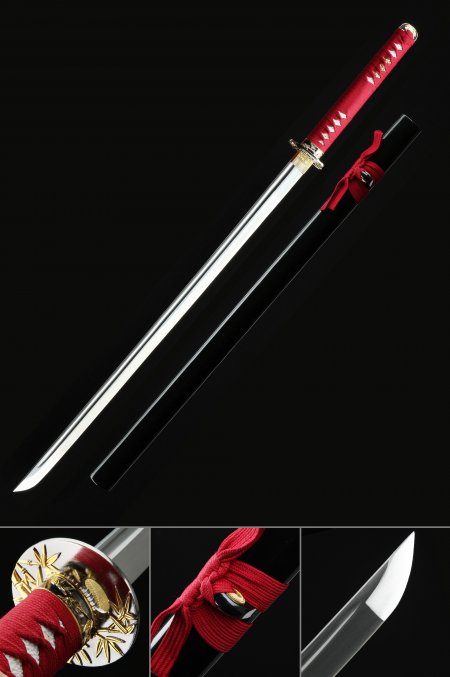
The most immediate difference is blade geometry. A katana features a pronounced curve developed through differential hardening and centuries of samurai tradition, while a ninjato has a straight or near-straight blade that gives it a distinctly utilitarian profile. The tsuba is another key distinction - katana guards are typically circular or oval with refined artistic detailing, whereas ninjato guards are often square or geometric in shape, reflecting a more direct, unadorned aesthetic. Handle construction follows similar differences: ninjato grips in this collection are typically wrapped in black cord or lacquered hardwood, reinforcing the dark, cohesive visual identity of the piece. From a collector's perspective, the ninjato represents a different chapter of Japanese history - one associated with shinobi culture rather than samurai court tradition - which gives it a unique and compelling place in a curated display.