Why do gold fittings raise a ninjato's collectible appeal?
Updated Mar 2026
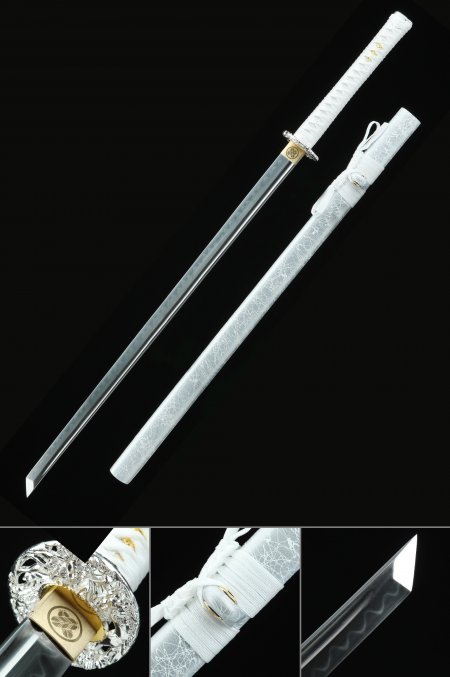
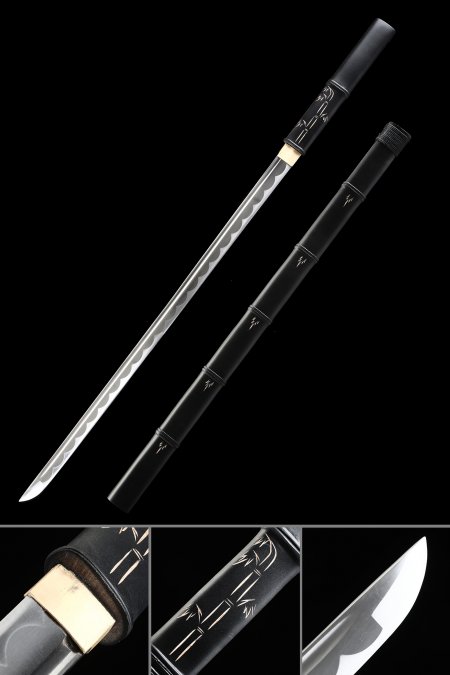
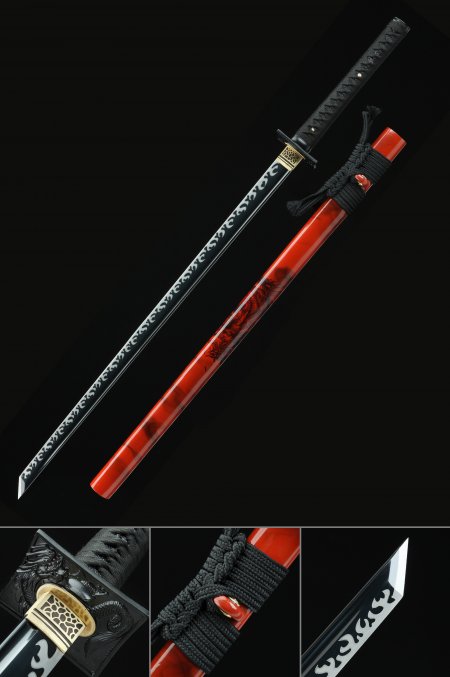
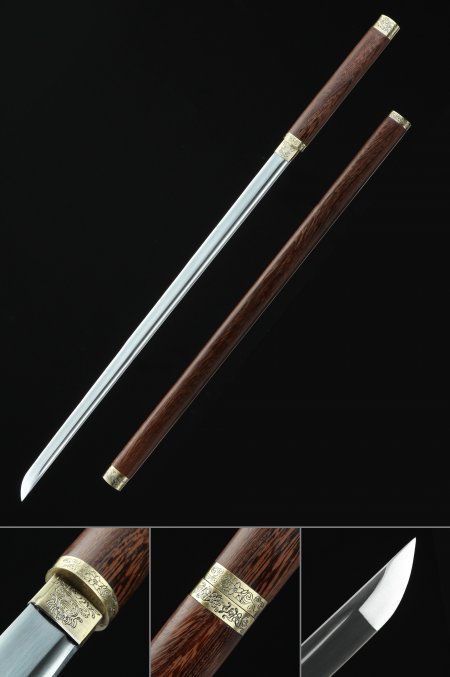
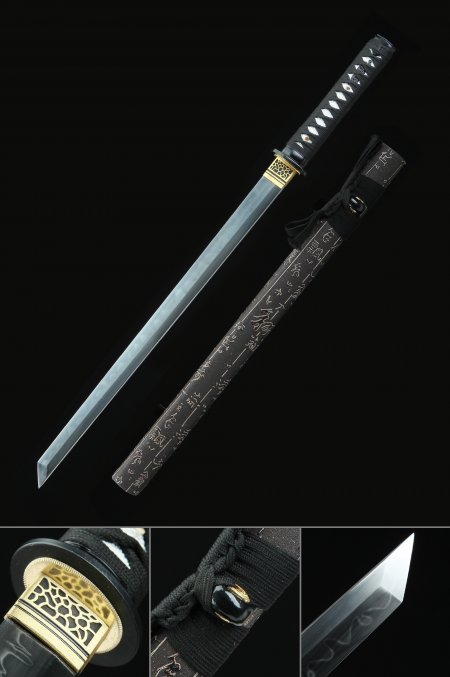
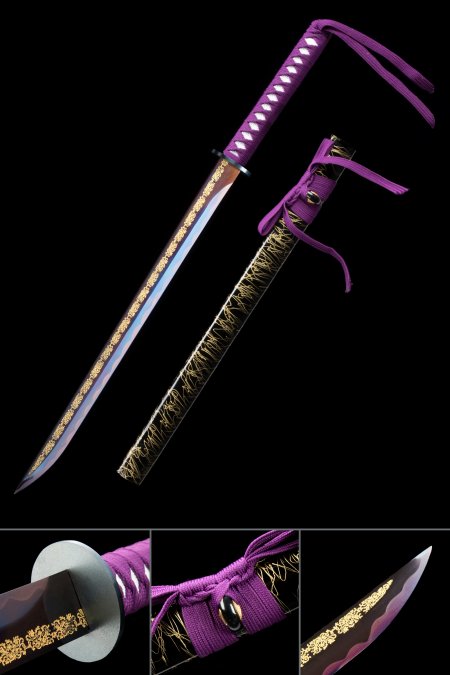
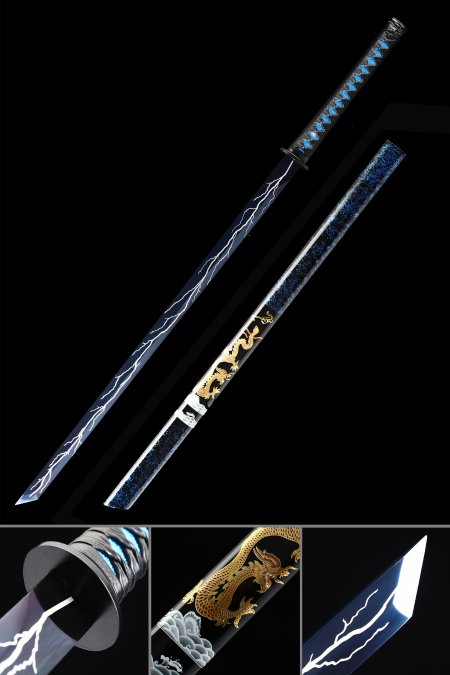
Gold alloy fittings — tsuba, fuchi, and kashira — introduce a level of visual hierarchy that plain iron or blackened steel fittings simply cannot match. In Japanese decorative tradition, gold tones have historically signaled prestige and craftsmanship, appearing across lacquerware, armor fittings, and ceremonial sword furniture. On a ninjato, where the straight blade already creates a bold visual statement, gold fittings add warmth and contrast that makes the piece stand out in any collection. Motifs like the chrysanthemum tsuba, which appear in several pieces here, also carry historical resonance — the kiku pattern has been a symbol of refinement in Japanese culture for centuries. Practically speaking, gold alloy fittings also tend to be more display-stable than raw iron, which can oxidize over time without regular maintenance.