How does clay tempering affect a katana's visual appearance?
Updated Mar 2026
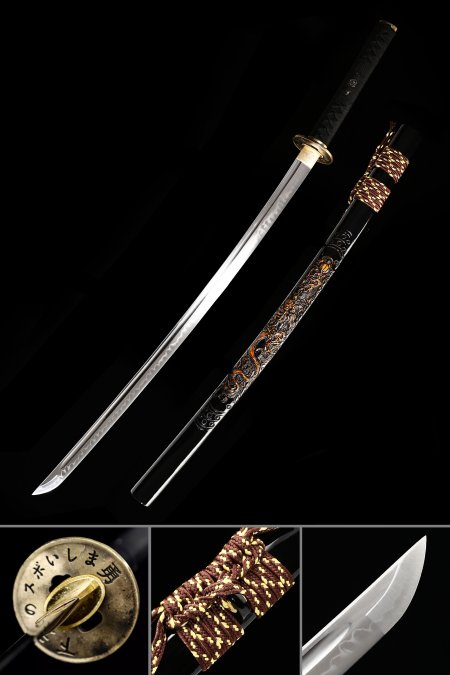
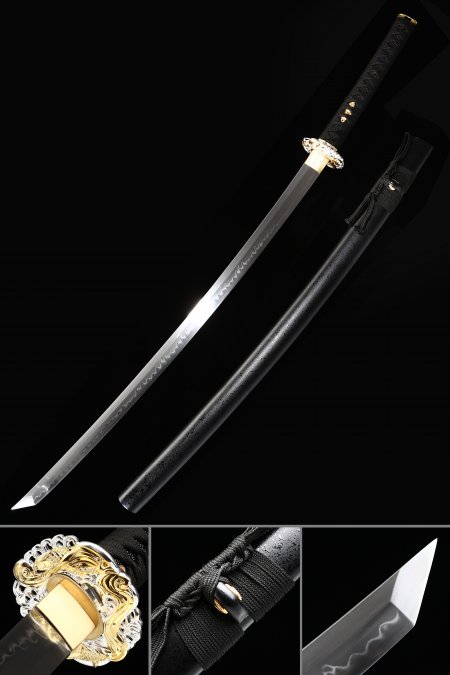
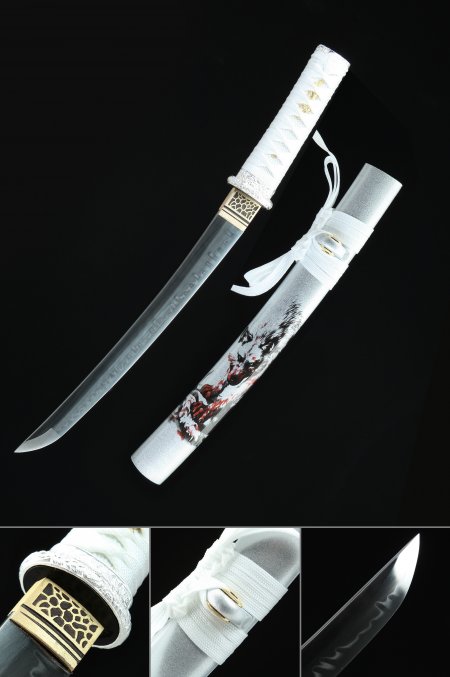
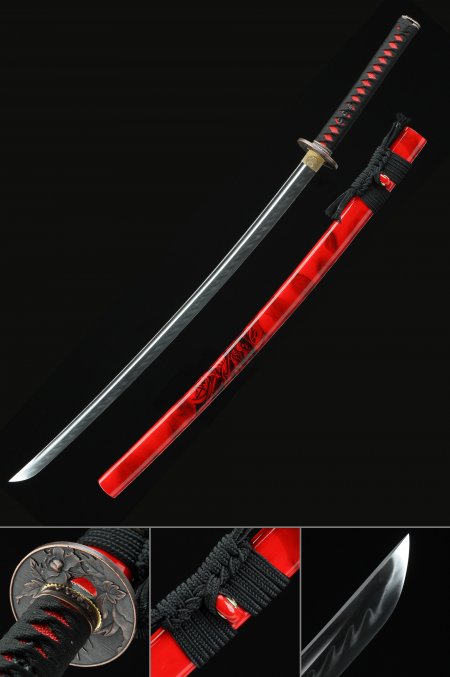
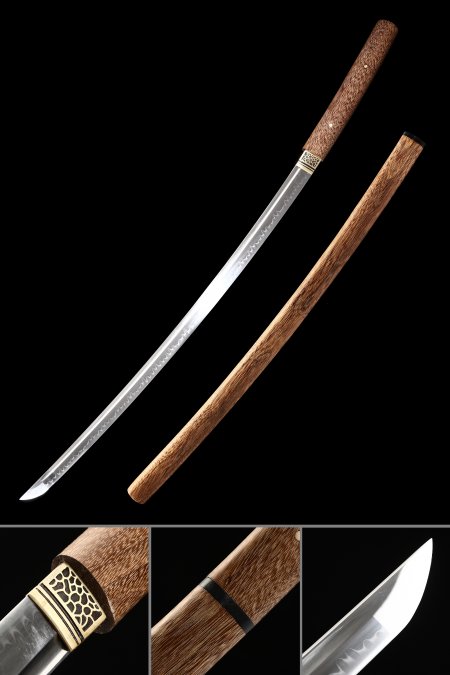
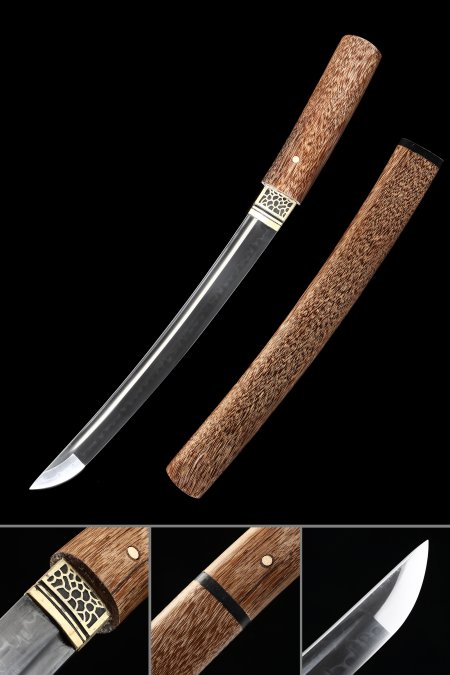
Clay tempering — known as tsuchioki — is the process of applying an insulating clay mixture to the spine and sides of the blade before the hardening quench. The edge, left exposed or thinly coated, cools faster and hardens into martensite, while the clay-insulated spine cools more slowly and remains relatively tough. The boundary between these two zones becomes the hamon: a visible temper line that runs the length of the blade. On a well-executed T10 or 1095 clay-tempered blade, the hamon is not uniform — it shows activity, nie (fine martensite crystals), and sometimes nioiguchi (a bright, cloud-like boundary). This is entirely distinct from an acid-etched or sandblasted hamon, which mimics the look without the underlying metallurgical structure. Collectors who know the difference find clay-tempered hamon significantly more compelling as a display and investment piece.