What makes a double-edged tanto different from a standard tanto?
Updated Mar 2026
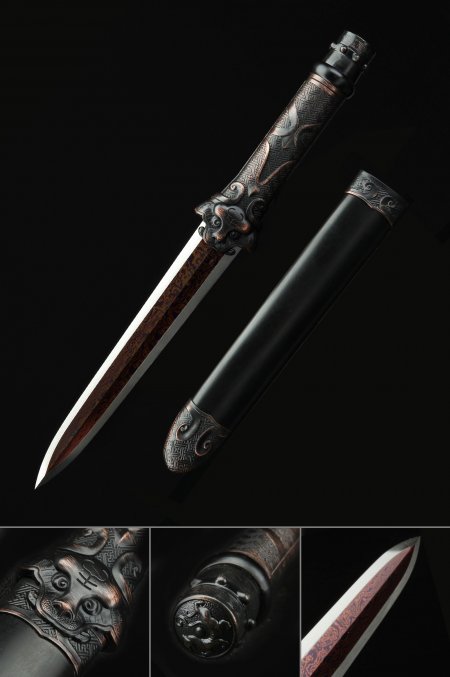
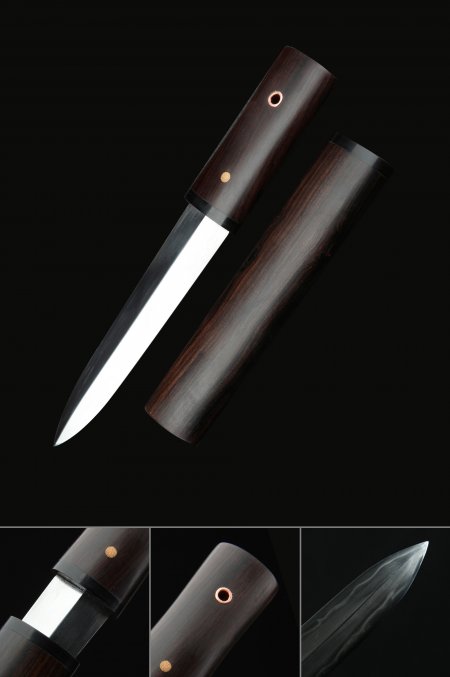
A standard tanto has one sharpened edge and a flat or slightly curved spine, giving the smith a clear reference surface during the grind. A double-edged tanto removes that reference — both sides must be worked symmetrically, which makes maintaining a consistent blade geometry significantly harder. The kissaki must be shaped so both edges converge evenly, and the cross-section through the blade body has to be balanced left-to-right. For collectors, this means a well-executed double-edged tanto is a more demanding benchmark of the maker's skill, and any asymmetry in the grind or temper line becomes immediately visible during close inspection.