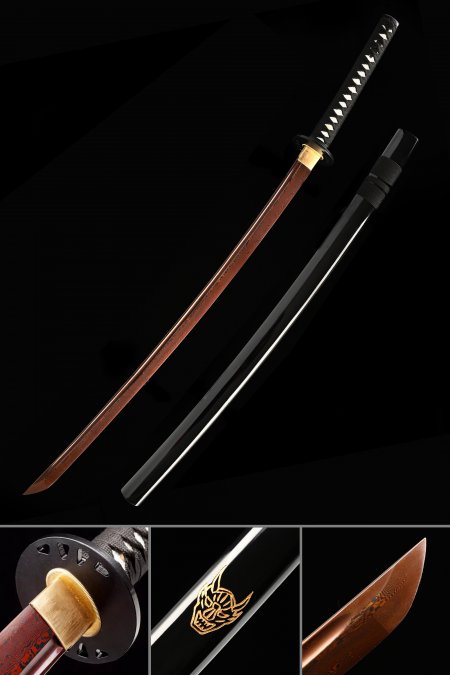
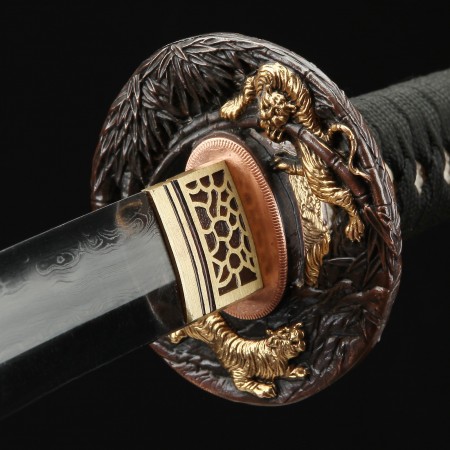
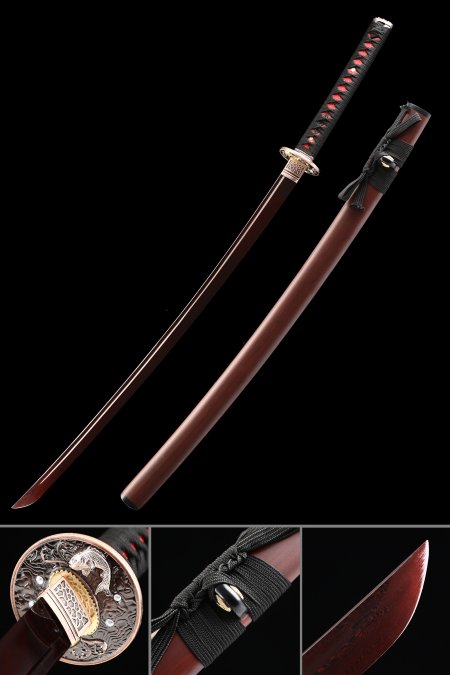
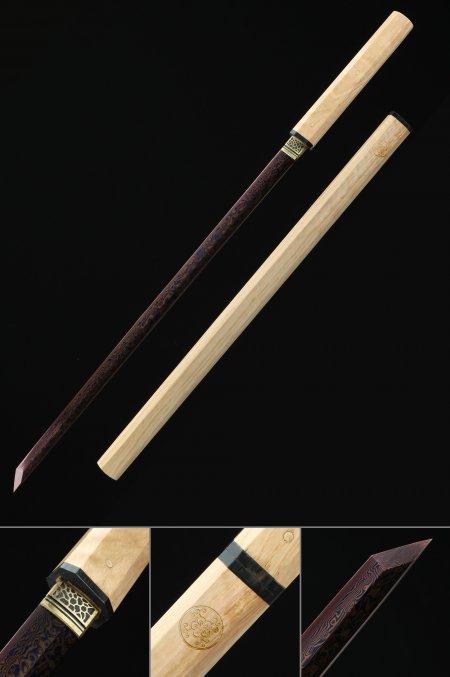
How are the Damascus patterns on these blades created?

 Updated Feb 2026

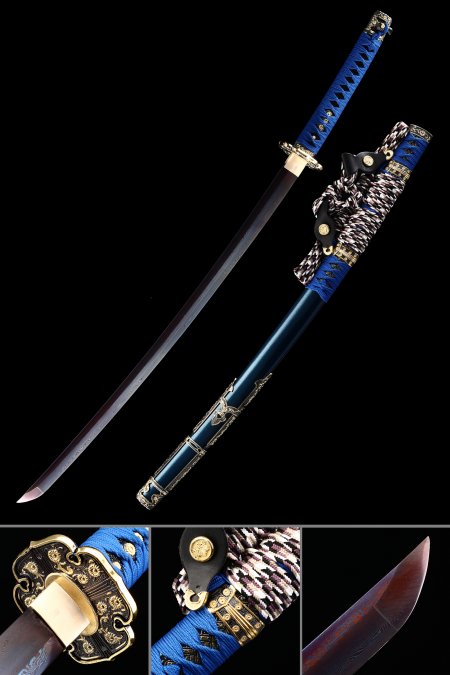
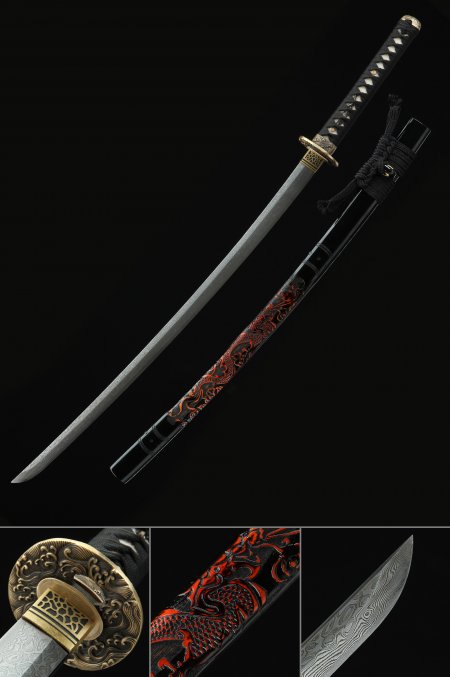
The patterns come from a process called pattern welding. Two or more steel types with different carbon contents are stacked into a billet, heated to welding temperature, and hammer-forged together. The smith then folds the billet repeatedly — often 13 to 17 times — producing hundreds or even thousands of alternating layers. After forging and grinding, the blade is etched in a mild acid solution. Because each steel type reacts to acid at a different rate, the layered structure becomes visible as flowing, wood-grain-like lines. No two Damascus blades are identical; the fold count, hammering pressure, and any twist or manipulation the smith introduces during forging all affect the final figure.
Popular Products

20% OFFblack katana
159.00 USD
199.00 USD
15% OFFblack katana
179.00 USD
209.00 USD
15% OFFkill bill sword
199.00 USD
229.00 USD
15% OFFreal katana
649.00 USD
769.00 USD
15% OFFkatana sword
199.00 USD
239.00 USD
15% OFFshikomizue sword
229.00 USD
269.00 USD
15% OFFblack katana
179.00 USD
209.00 USD
20% OFFjapanese katana
229.00 USD
289.00 USD
20% OFFtachi sword
249.00 USD
309.00 USD
15% OFFkatana sword
199.00 USD
229.00 USD
15% OFFgolden katana
199.00 USD
229.00 USD
20% OFFdamascus katana
309.00 USD
389.00 USD
20% OFFblack katana
159.00 USD
199.00 USD
15% OFFblack katana
179.00 USD
209.00 USD
15% OFFkill bill sword
199.00 USD
229.00 USD
15% OFFreal katana
649.00 USD
769.00 USD
15% OFFkatana sword
199.00 USD
239.00 USD
15% OFFshikomizue sword
229.00 USD
269.00 USD
15% OFFblack katana
179.00 USD
209.00 USD
20% OFFjapanese katana
229.00 USD
289.00 USD
20% OFFtachi sword
249.00 USD
309.00 USD
15% OFFkatana sword
199.00 USD
229.00 USD
15% OFFgolden katana
199.00 USD
229.00 USD
20% OFFdamascus katana
309.00 USD
389.00 USD

Explore Our Collections