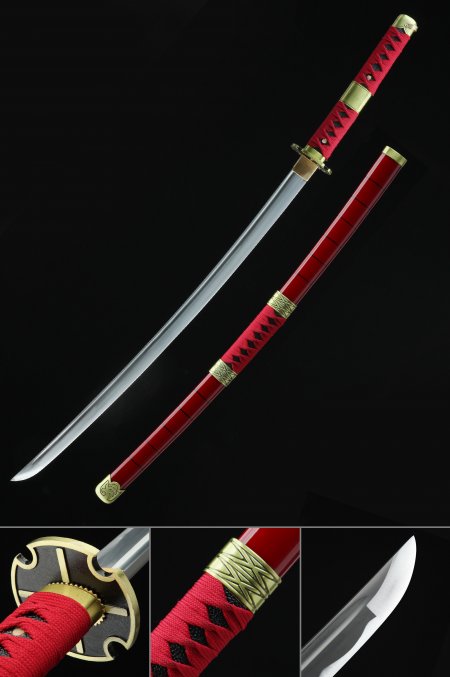
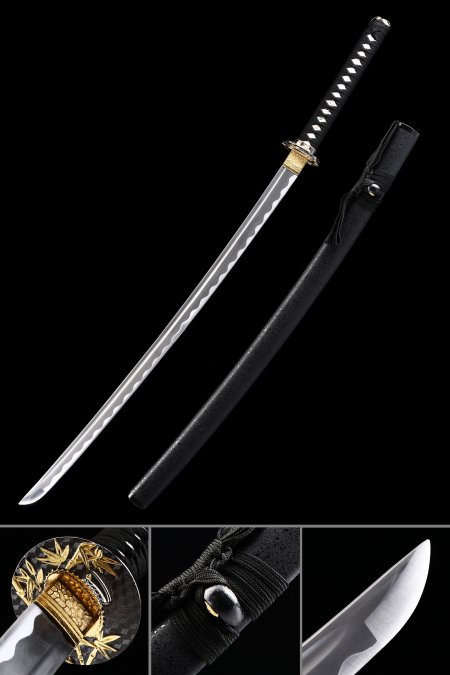
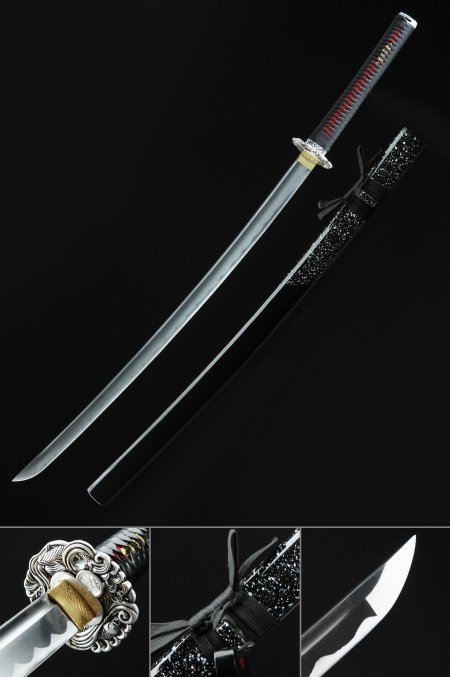
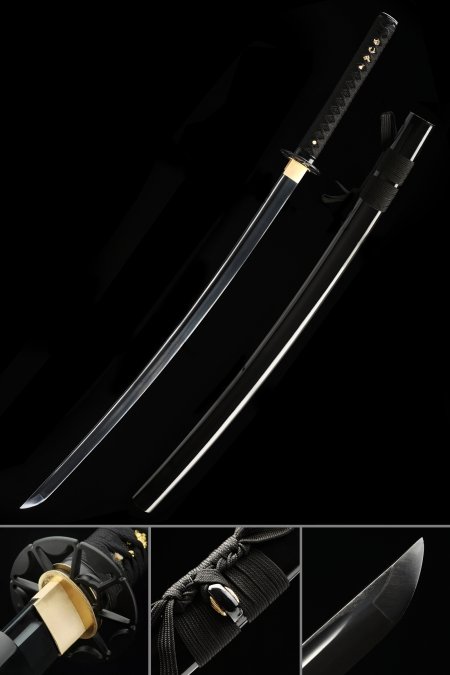
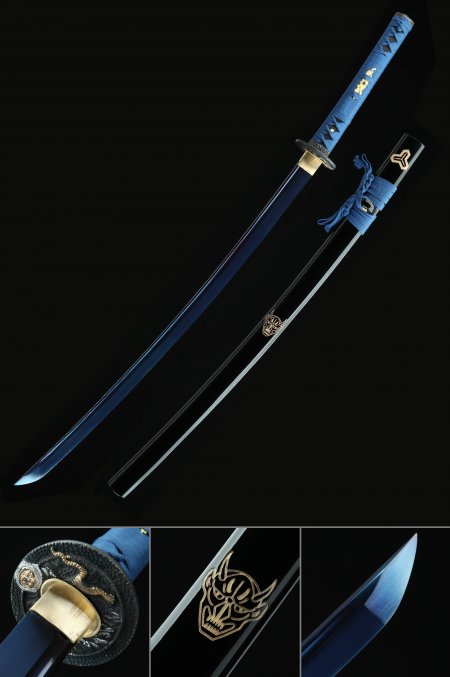
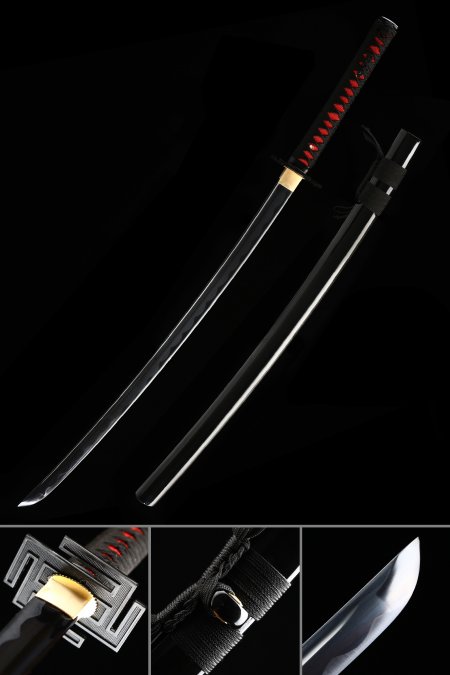
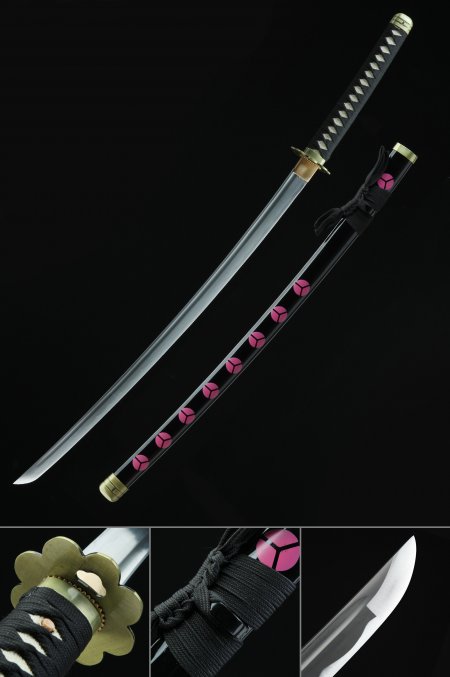
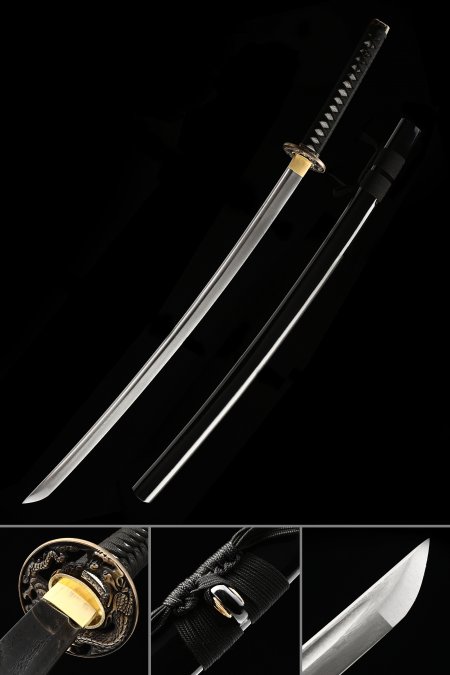
How is a real hamon different from a decorative etched line?
Updated Feb 2026
A real hamon is the visible boundary between the harder edge steel and the softer spine created during clay tempering. The smith coats the spine and flat of the blade with a thick clay mixture while leaving the edge thinly coated or bare, then heats and quenches the blade. The exposed edge cools rapidly and hardens into martensite, while the insulated spine cools slowly and remains as softer pearlite. This produces a genuine crystalline activity zone — called nie or nioi depending on grain size — visible along the temper line under good lighting. An etched hamon, on the other hand, is applied with acid on an already-hardened blade; it sits on the surface and lacks that three-dimensional crystalline structure. Collectors can usually distinguish the two by tilting the blade under a light source and looking for depth within the hamon.