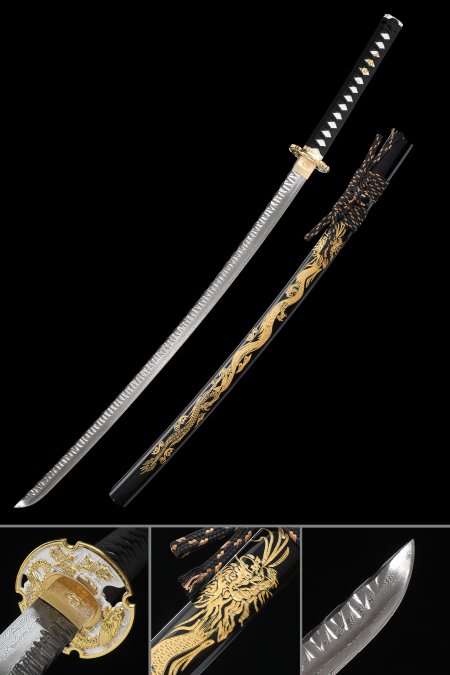
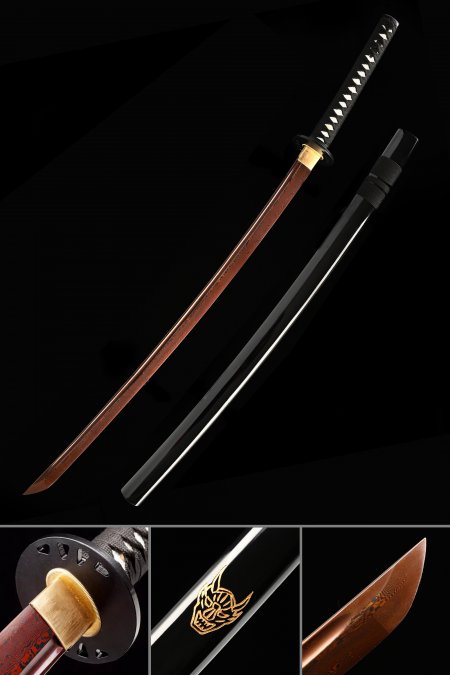
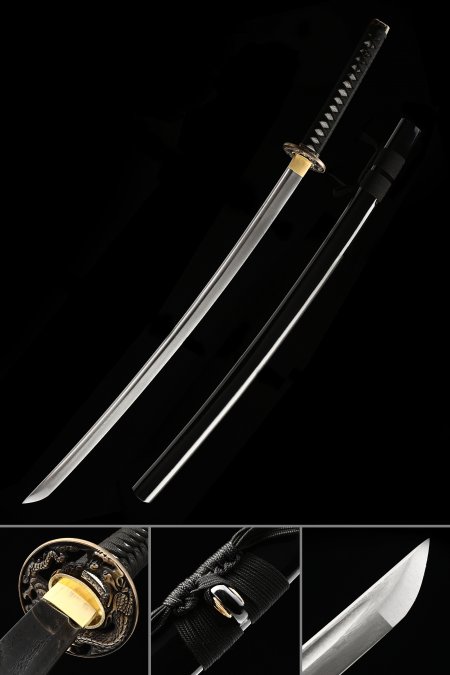
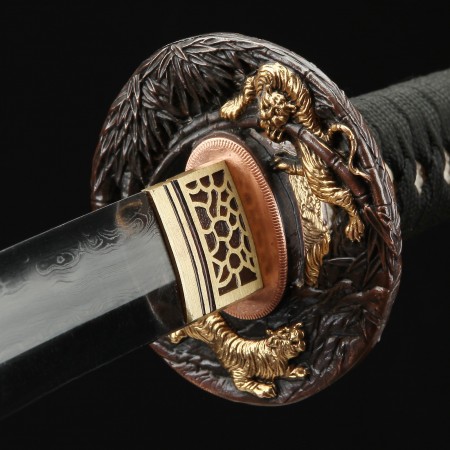
How is a real hamon produced on these folded steel tantos?
Updated Feb 2026
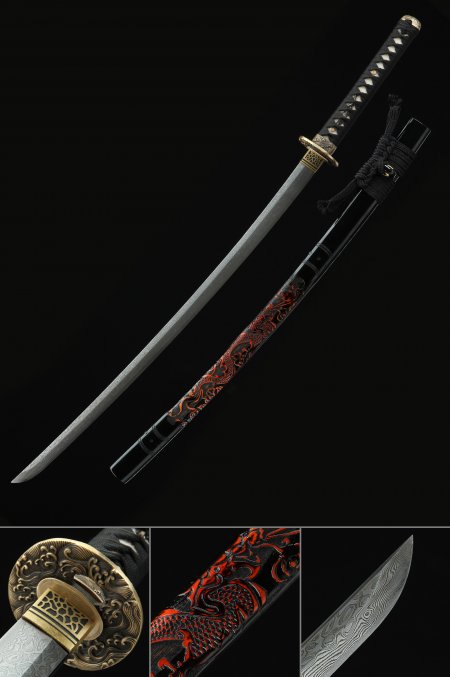
A genuine hamon is created through differential hardening, commonly called clay tempering. The smith applies a mixture of clay, charite powder, and ash along the spine and sides of the blade in a carefully controlled pattern, leaving the edge area thinly coated or exposed. When the blade is heated to critical temperature and quenched in water, the exposed edge cools rapidly and transforms into hard martensite, while the insulated spine cools slowly and retains a softer, more flexible pearlite structure. The boundary between these two crystalline zones is the hamon. On a folded steel blade the hamon interacts visually with the layered jihada beneath it, producing an especially complex surface. This is distinct from a wire-brushed or acid-etched decorative line, which is cosmetic only and does not reflect an actual change in the steel's internal structure.