What makes T10 steel different from 1095 for a ninjato blade?
Updated Feb 2026
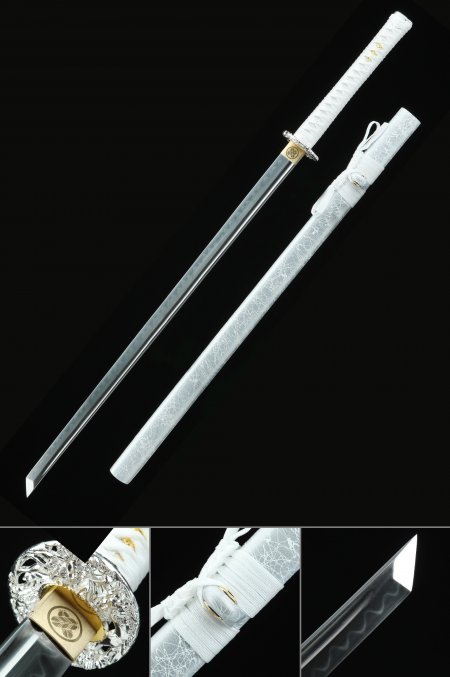
Both T10 and 1095 are high-carbon steels, but T10 contains a small percentage of tungsten — typically around 0.3 to 0.5 percent. This addition refines the grain structure during forging, which translates to better edge retention and slightly higher overall hardness after heat treatment. In practical terms for a collectible ninjato, the tungsten content means the clay-tempered edge zone can reach approximately 60 HRC while resisting micro-chipping more effectively than plain 1095. The spine, left softer by the differential tempering process, maintains resilience. For collectors, the most visible benefit is that T10 tends to produce crisper, more defined hamon lines during quenching, adding to the display appeal of each piece.