What makes a naginata different from a katana or other Japanese swords?
Updated Feb 2026
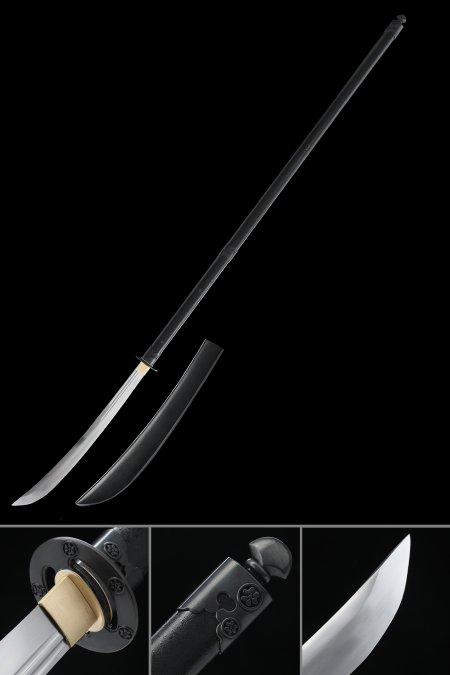
A naginata is a polearm rather than a hand-held sword. Its curved blade — typically 30 to 60 centimeters long — is mounted on an extended wooden shaft that brings the overall length well past one meter. This design originated to give foot soldiers and temple guardians superior reach. Structurally, the blade geometry resembles a katana's curve but is proportioned differently, with a wider base tapering toward the tip for sweeping arcs. For collectors, the naginata offers a display profile that no katana can replicate: the long shaft, prominent tsuba area, and dramatic blade create an imposing vertical or horizontal presentation that commands wall space in a way shorter swords simply cannot.