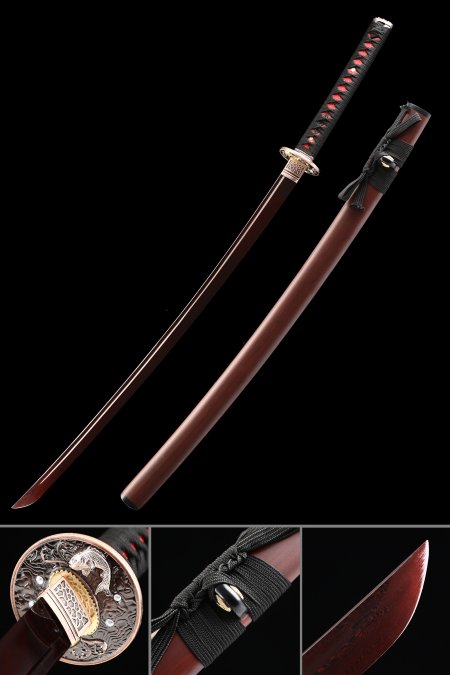
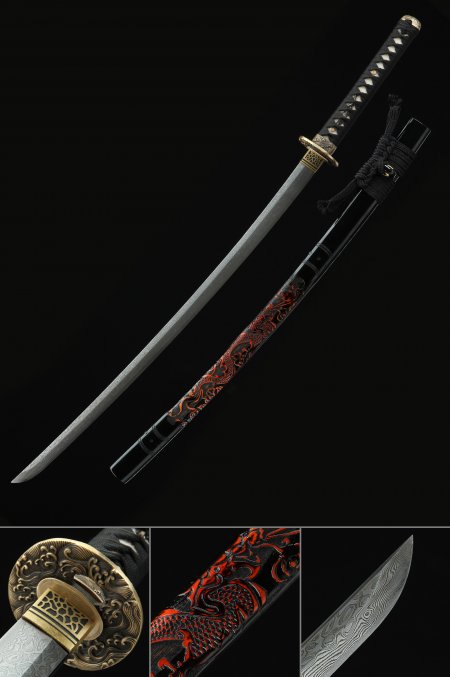
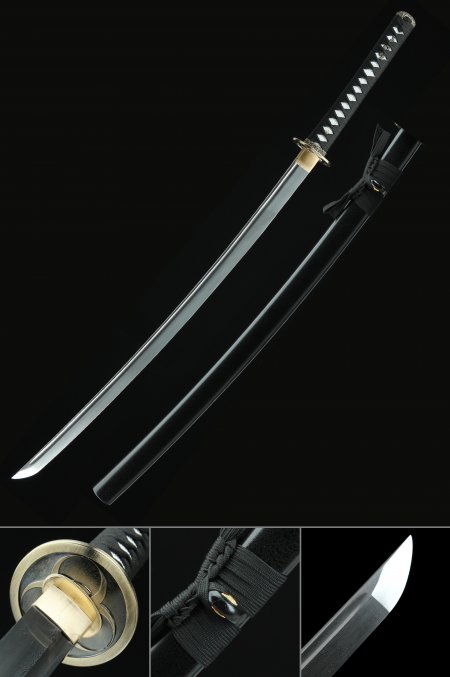
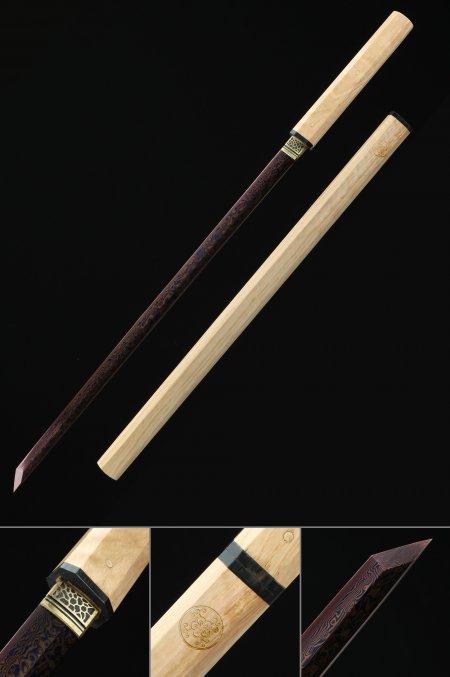
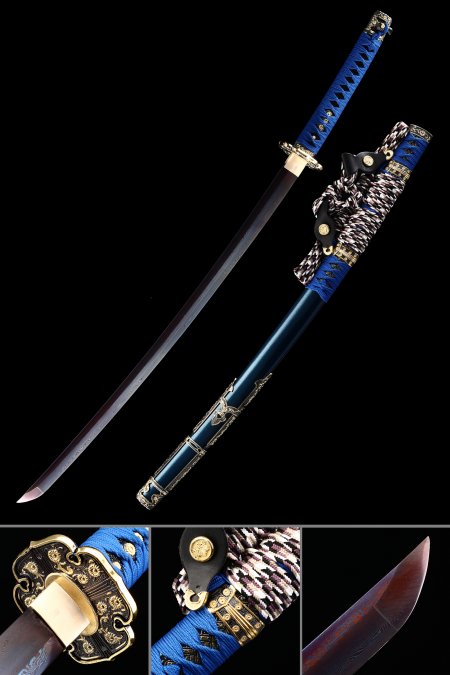
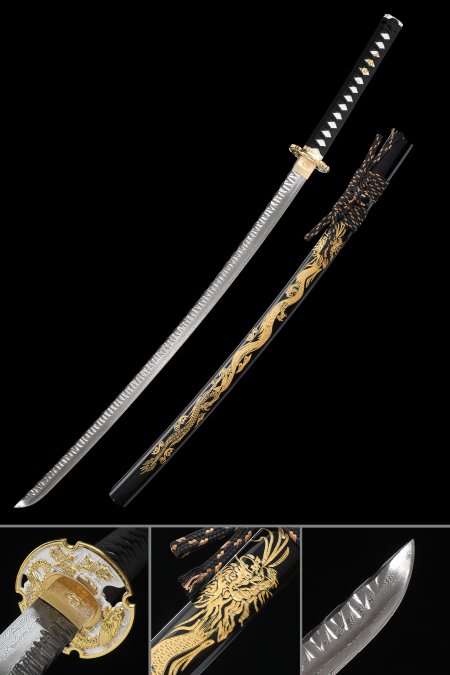
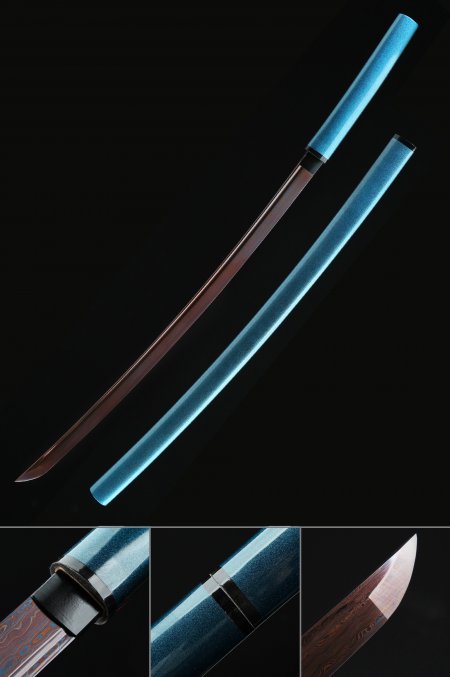
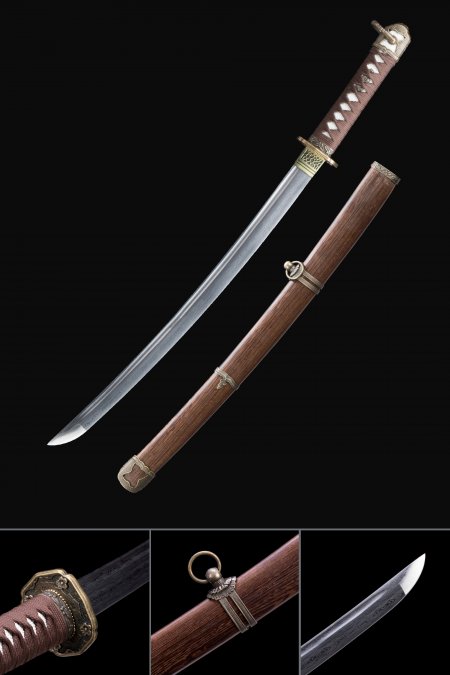
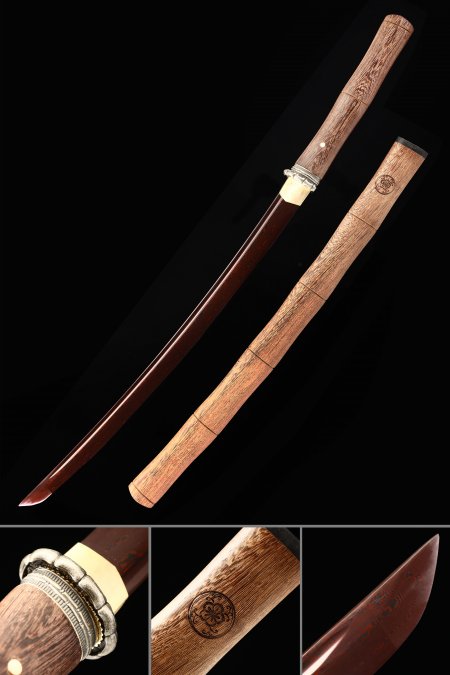
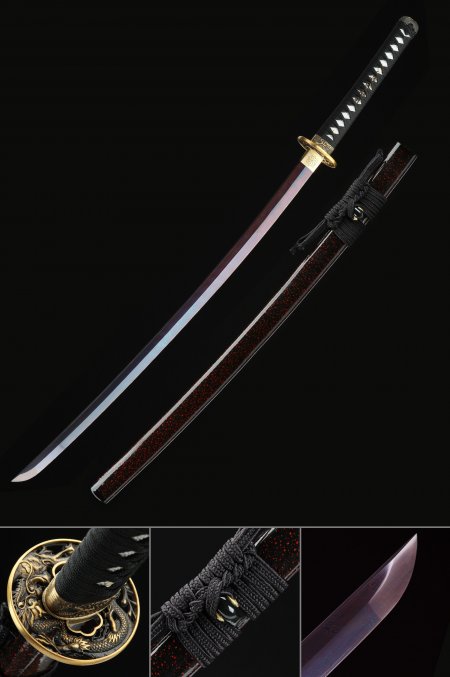
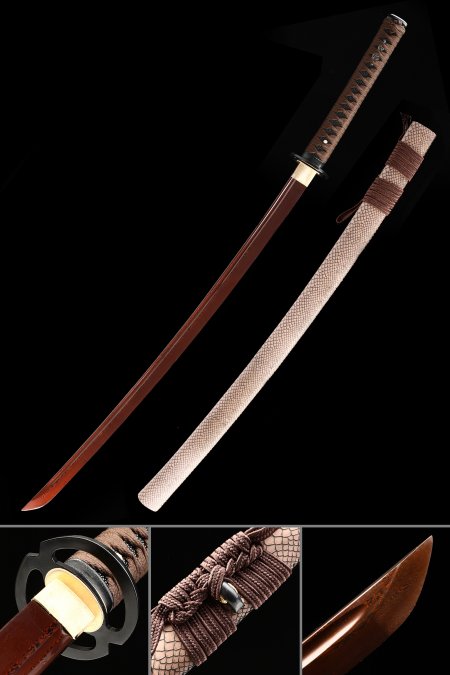
Which steel types are used in these real hamon tanto?
Updated Feb 2026
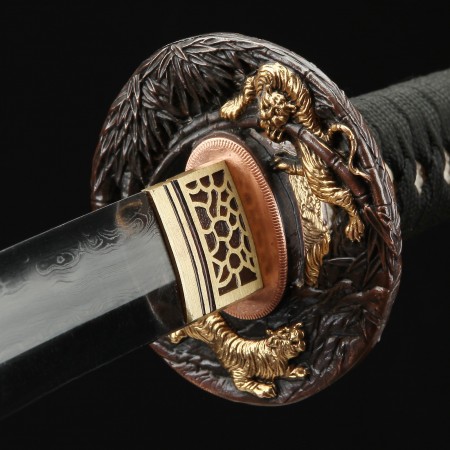
This collection features several steels chosen for their compatibility with clay tempering. T10 tool steel is the most common — its elevated carbon content (around 0.95–1.04%) plus trace tungsten allows it to form dramatic, high-contrast hamon lines and hold an edge well. Damascus steel billets, folded from alternating layers of high- and low-carbon steel, produce visible grain patterns that interact beautifully with the hamon beneath. You will also find 1045 carbon steel models that offer a balance of toughness and affordability, as well as manganese steel pieces valued for their resilience. Each steel responds slightly differently to the clay-tempering process, which means no two hamon patterns are identical even within the same steel category.