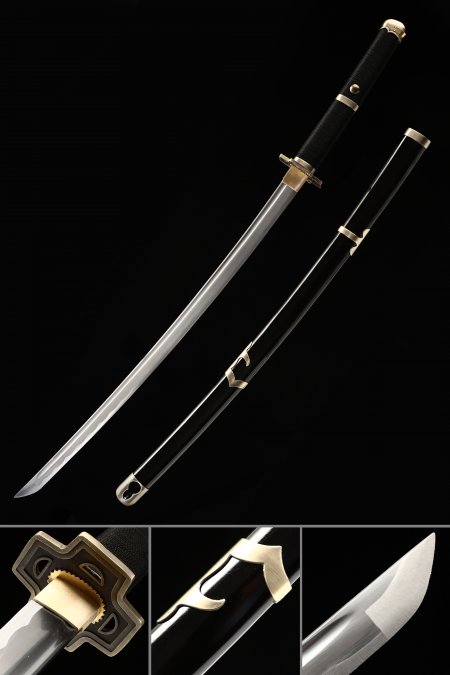
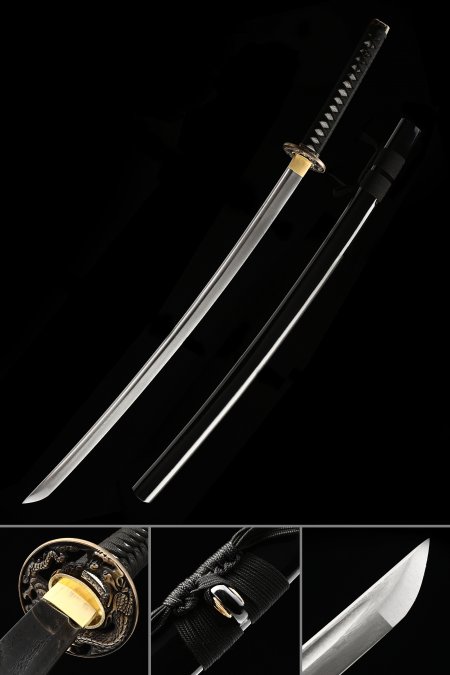
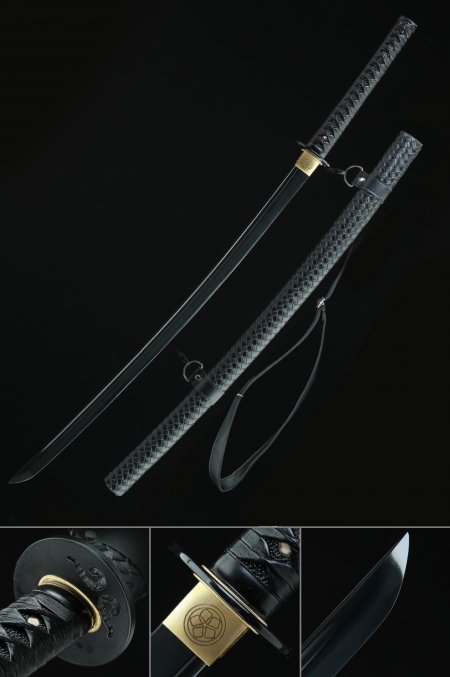
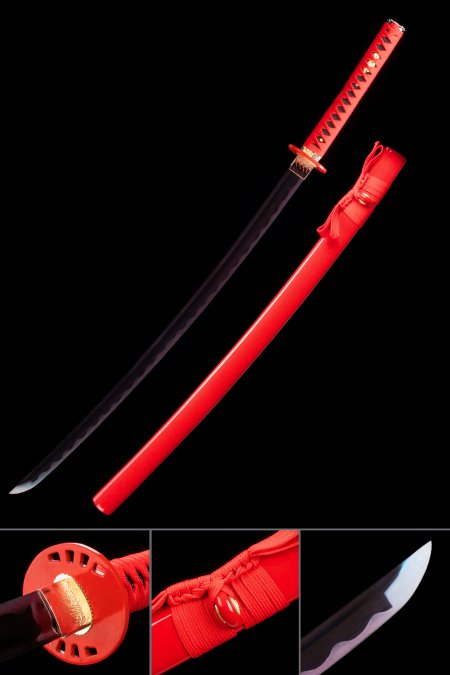
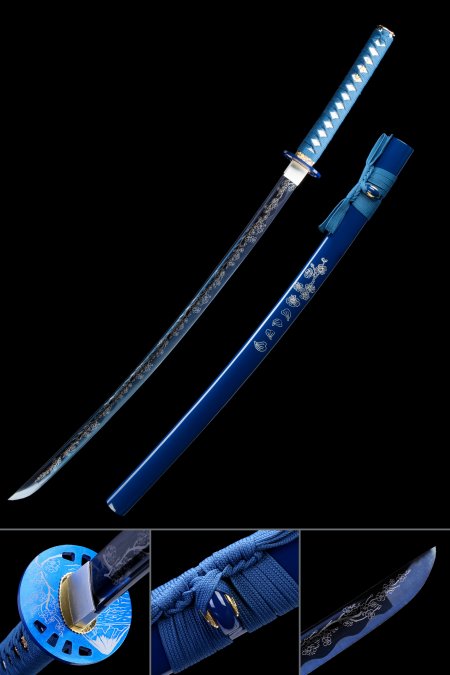
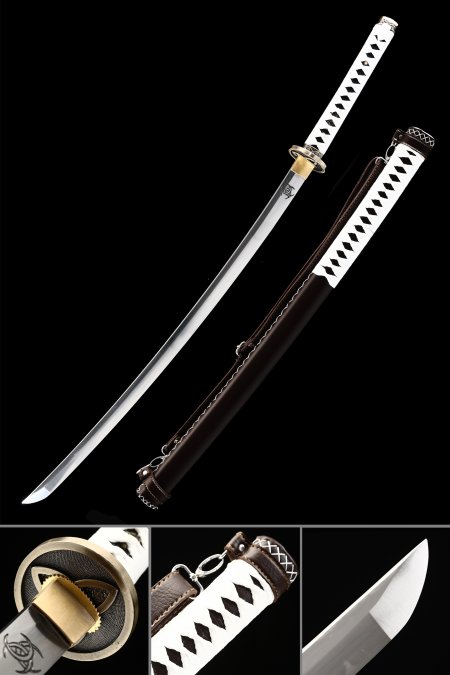
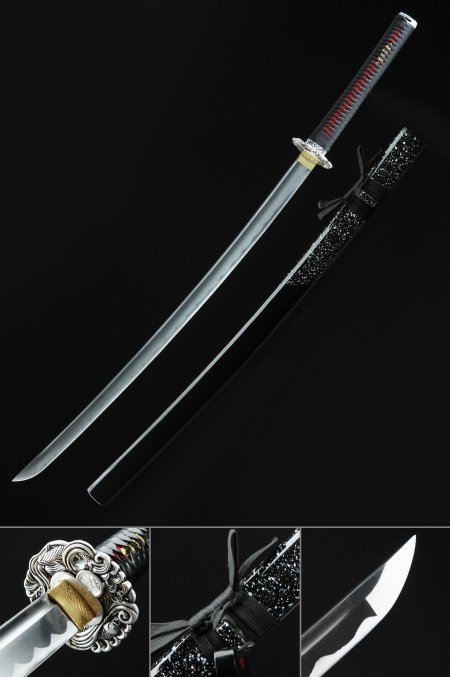
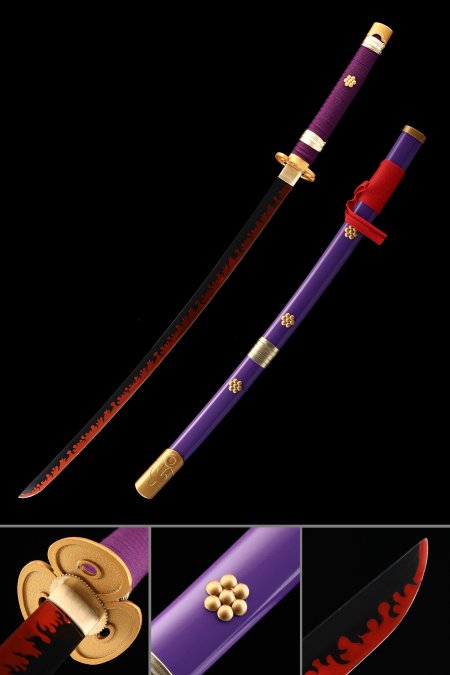
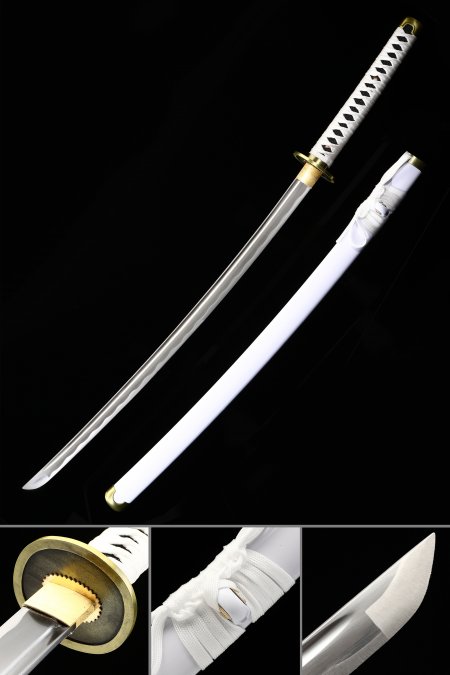
Most katana feature a hamon that runs as a single line along the cutting edge — the boundary between the hardened ha and the softer body of the blade. A hitatsura hamon, by contrast, covers nearly the entire blade surface with temper activity, including the mune. Achieving this requires covering far less of the blade in clay before the quench, exposing more steel to rapid cooling. The risk of warping or cracking increases significantly, and the final pattern — featuring notare (wave) and midare (irregular) activity across both sides — demands precise timing and consistent water temperature. On a Sakabato collectible that reproduces this hamon on a reverse-ground blade, the technical challenge is compounded, making these pieces genuinely uncommon in the display sword market.