What does clay tempering mean on a display katana?
Updated Feb 2026
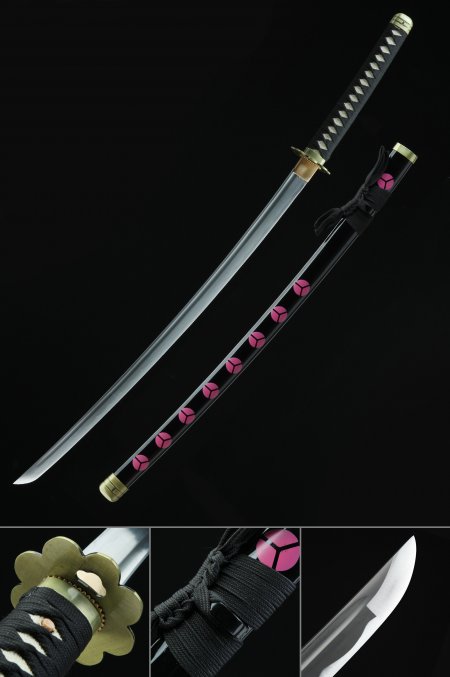
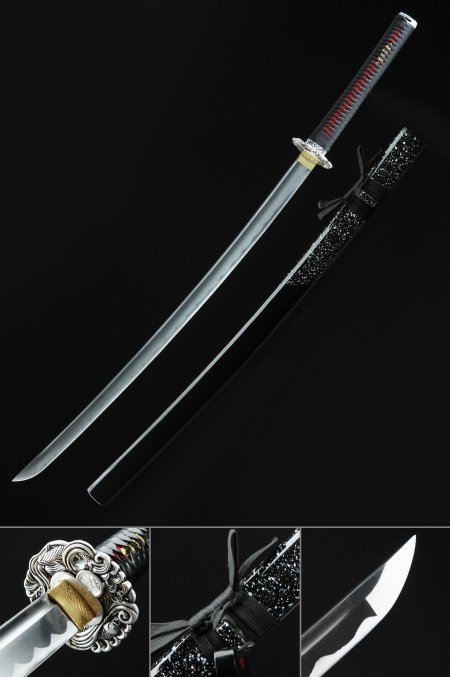
Clay tempering — called tsuchioki in Japanese smithing — is a heat-treatment technique where a mixture of clay, ash, and water is applied unevenly to the blade before quenching. The edge receives a thinner clay coat and cools rapidly during the water quench, hardening into a dense martensitic structure. The spine retains a thicker clay layer, cools slowly, and stays comparatively tough and flexible. The boundary between these two zones creates the hamon — the wavy or straight temper line visible along the blade. On collectible-grade pieces, a visible hamon is one of the most prized aesthetic markers, signaling that real differential hardening occurred during production rather than being chemically etched for appearance only.