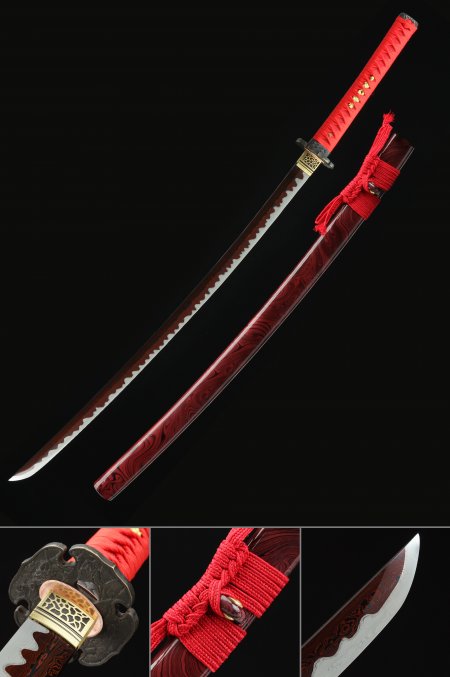
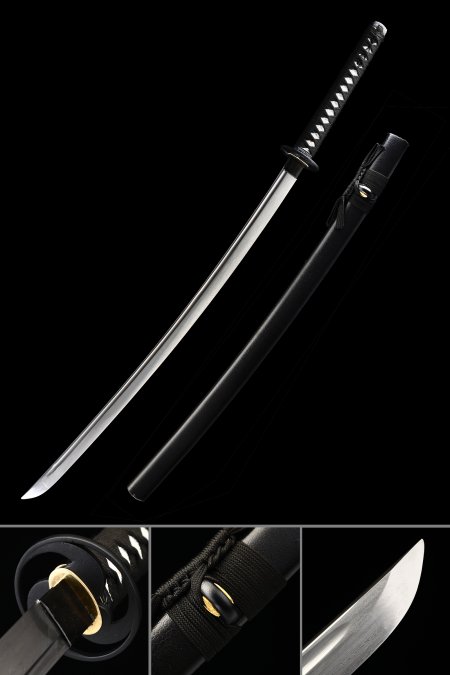
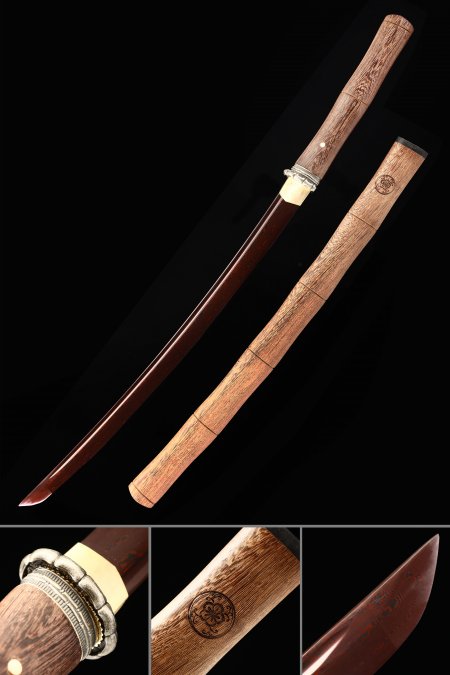
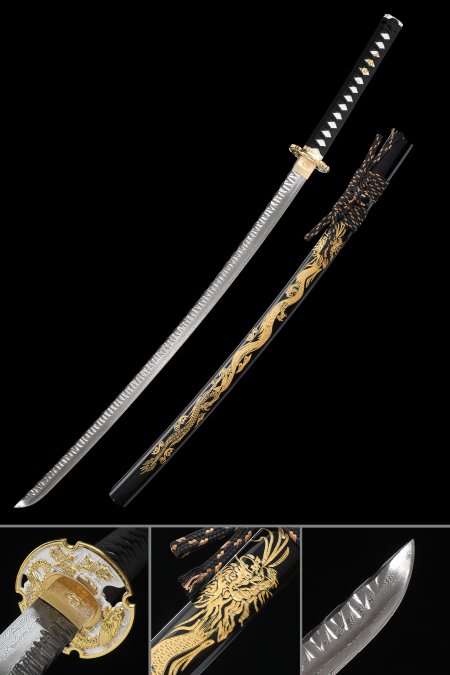
What is the difference between Damascus and T10 steel in these katanas?
Updated Feb 2026
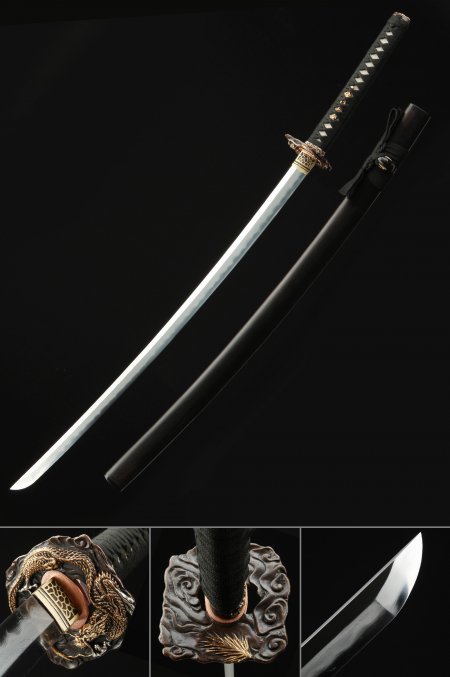
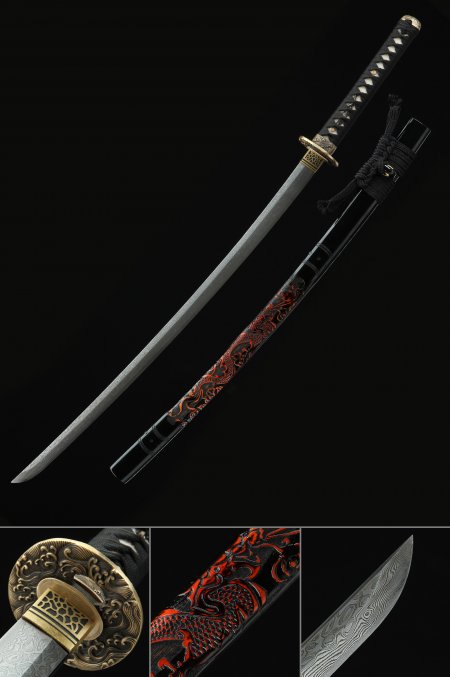
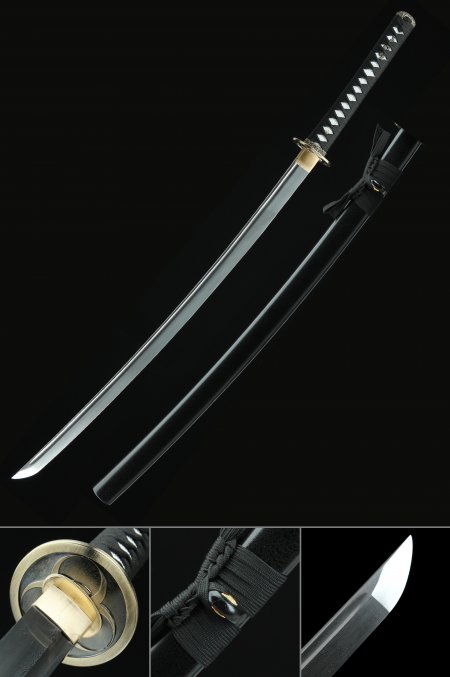
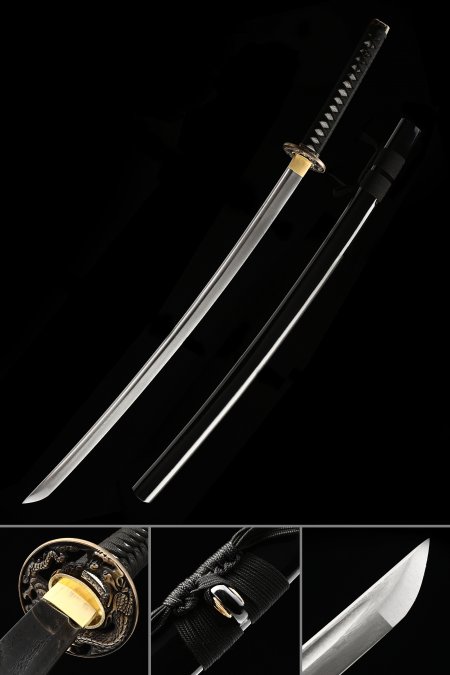
Damascus steel and T10 carbon steel represent two distinct approaches to blade construction, each with its own visual and metallurgical identity. Damascus steel is produced by forge-welding and folding multiple steel layers together, which creates the flowing, watered patterns visible on the blade surface. The layering process also distributes carbon more evenly through the steel. T10, on the other hand, is a high-carbon tool steel with a specific tungsten content that improves edge retention and wear resistance. When clay-tempered, T10 produces a visible hamon and a blade with a clean, uninterrupted surface that showcases the steel's natural grain. Collectors who prioritize surface artistry often favor Damascus; those focused on metallurgical authenticity and hamon character tend to gravitate toward T10.