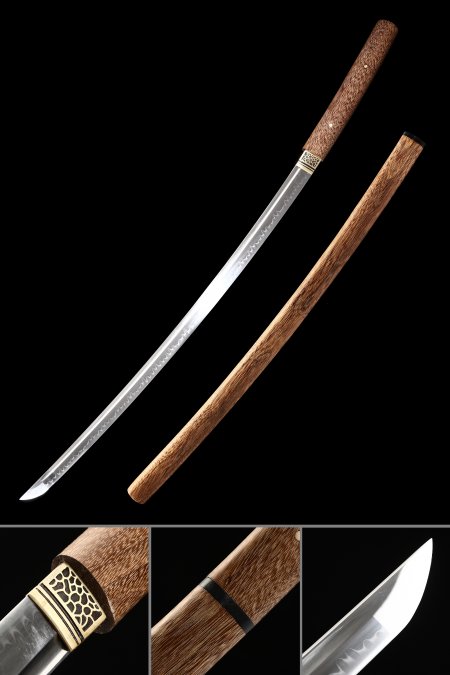
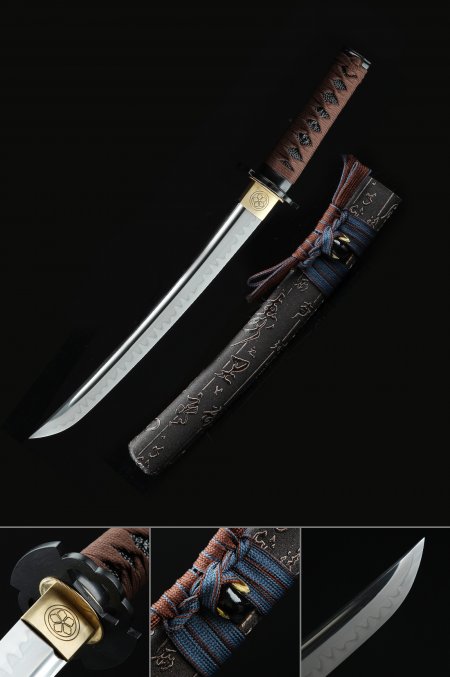
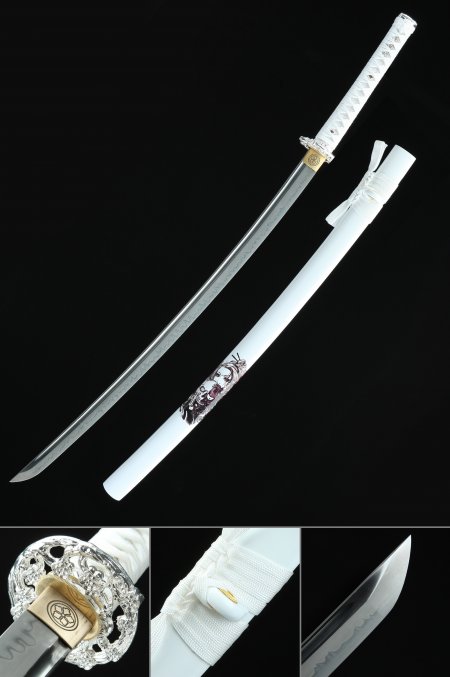
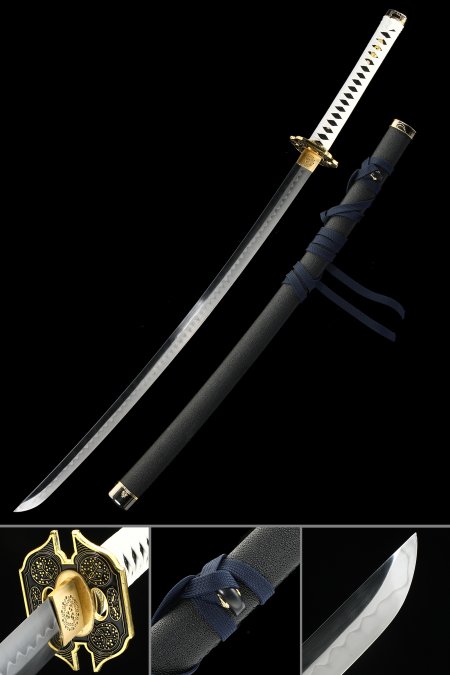
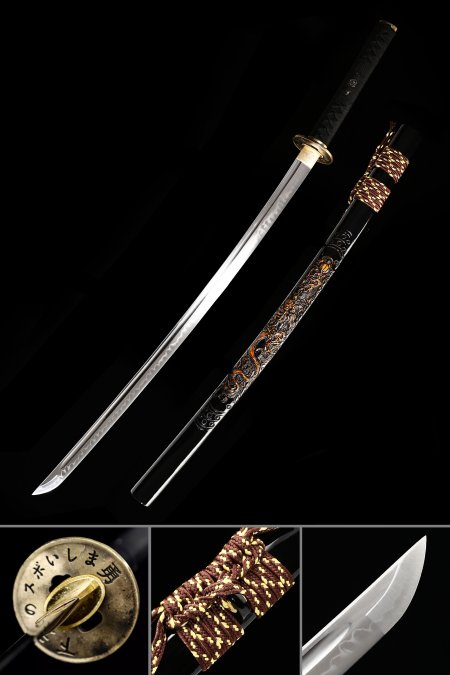
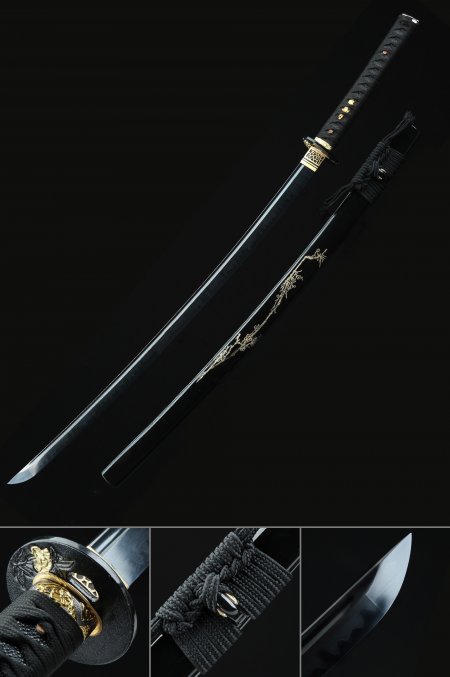
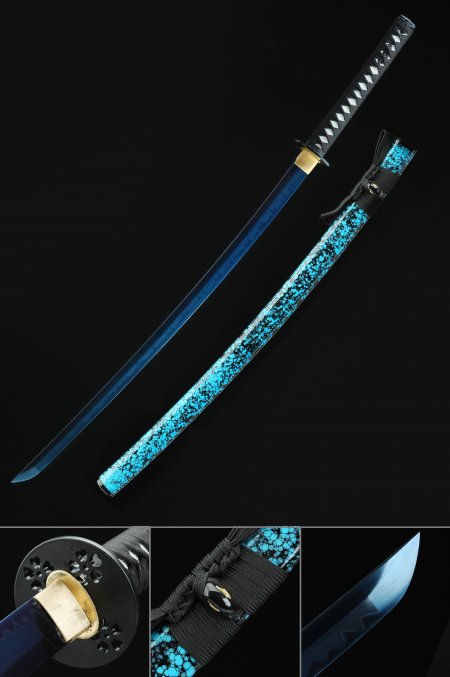
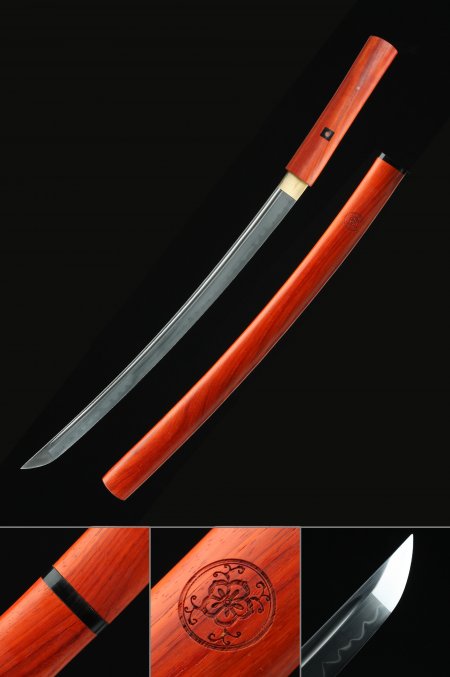
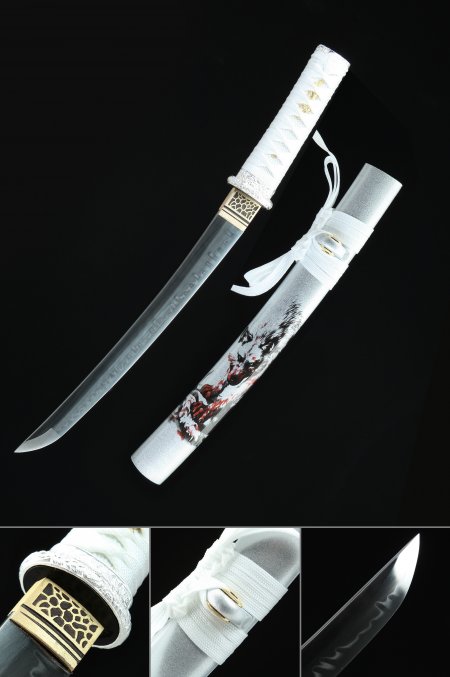
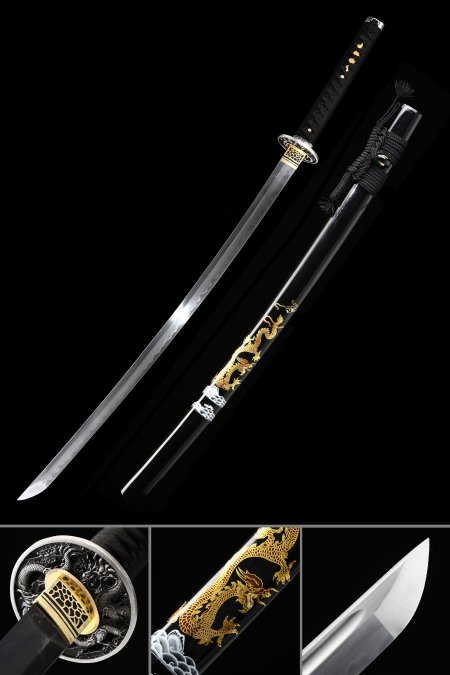
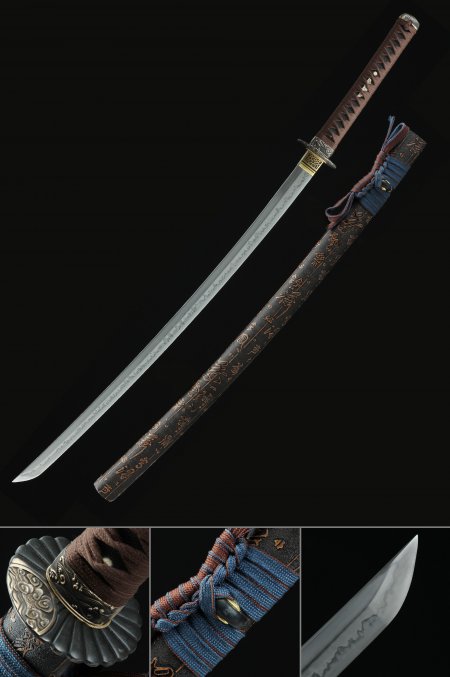
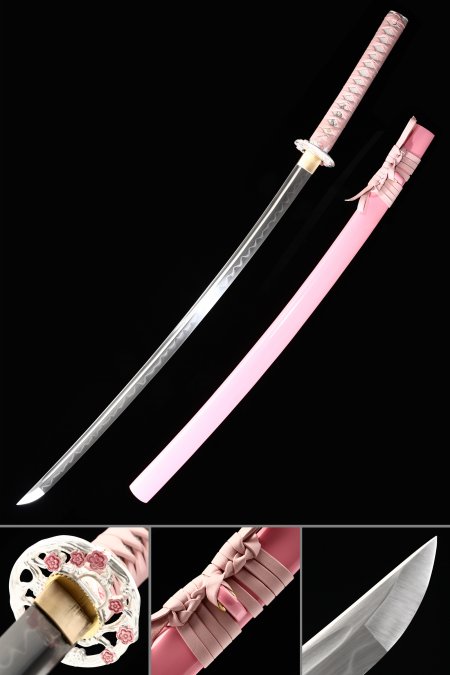
A genuine hamon is a temper line that forms naturally during the clay tempering process: a swordsmith applies a clay mixture along the spine of the blade before quenching it in water, causing the edge and spine to cool at different rates. This differential hardening creates a visible boundary line — the hamon — where the crystalline structure of the steel transitions. Because this process is entirely physical and heat-dependent, no two hamons are identical in shape or character. An etched or acid-simulated hamon, by contrast, is a surface treatment applied after the blade is finished — it mimics the visual appearance but does not reflect any difference in the steel's internal structure. On T10 and 1095 clay-tempered blades in this collection, the hamon is genuine, making each piece a unique expression of the smith's process.