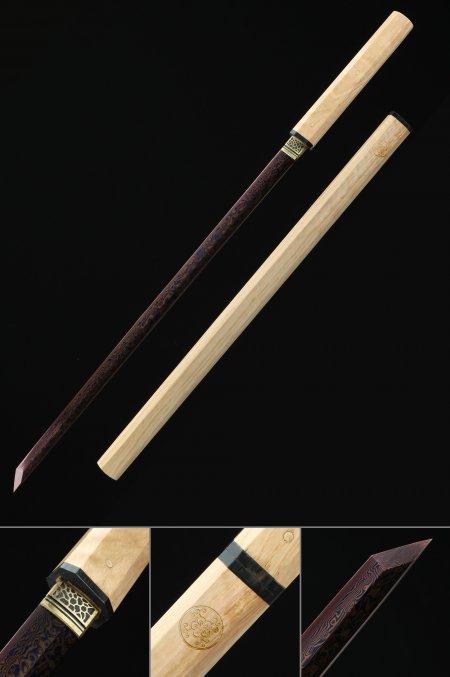
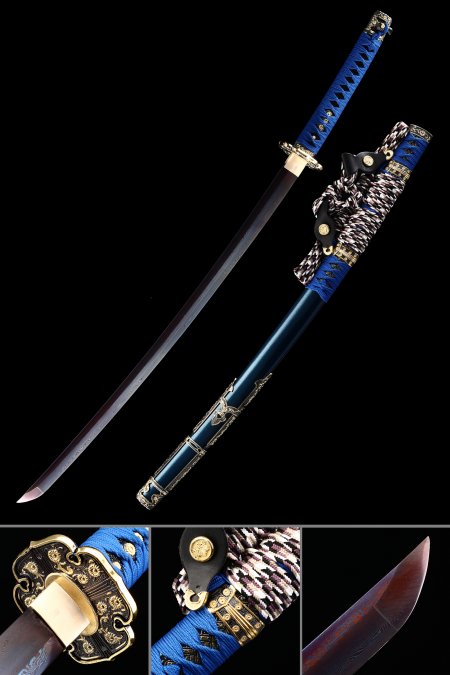
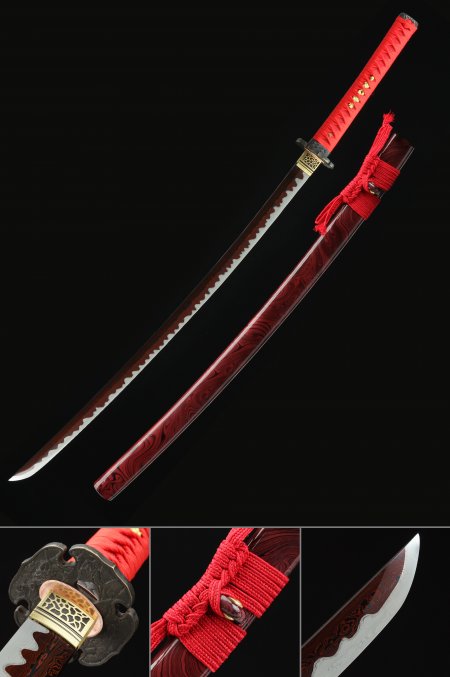
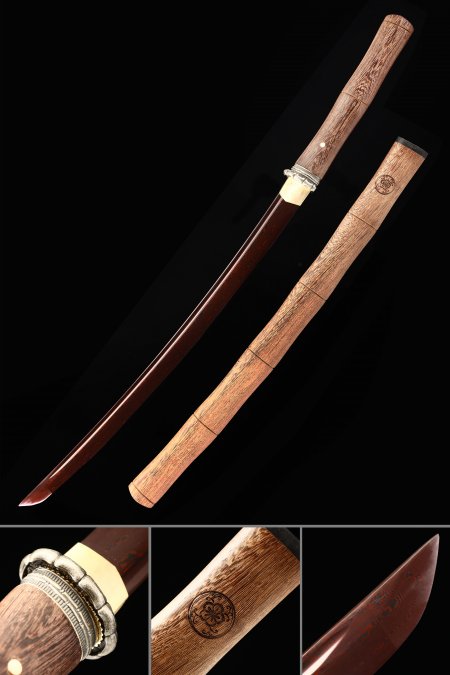
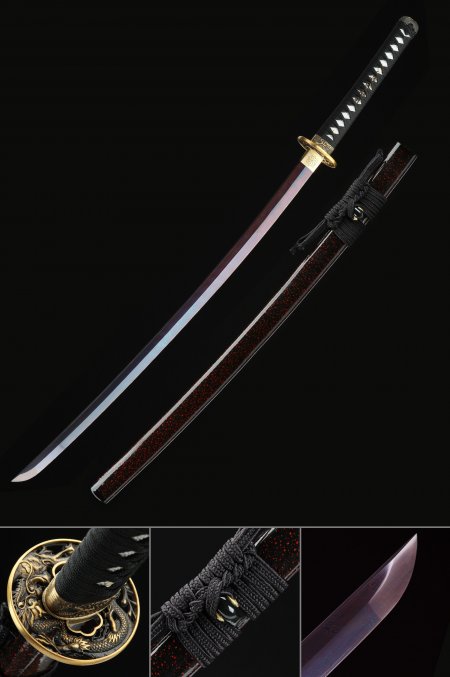
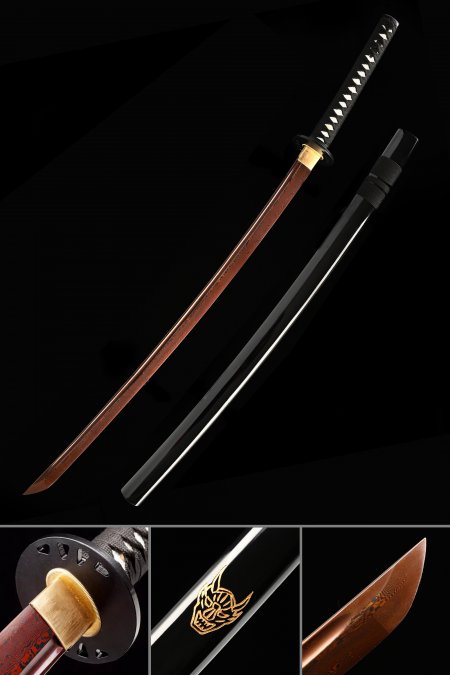
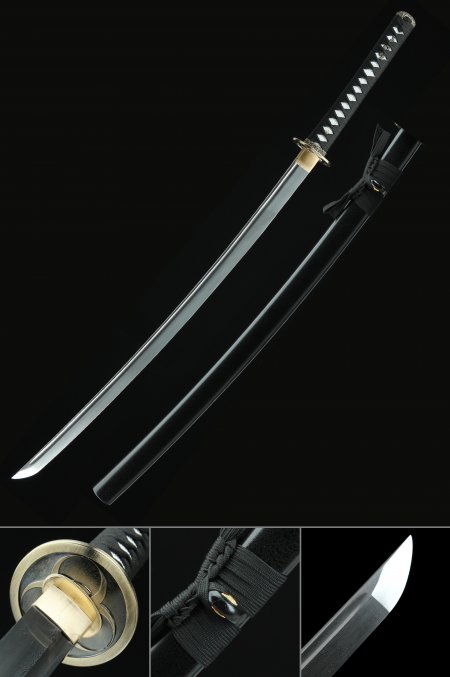
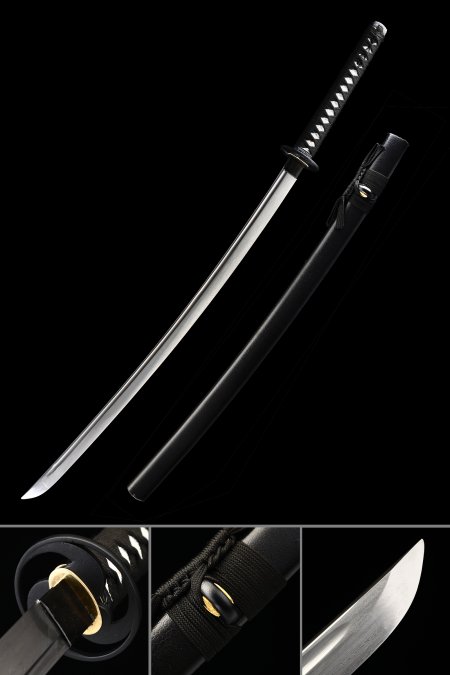
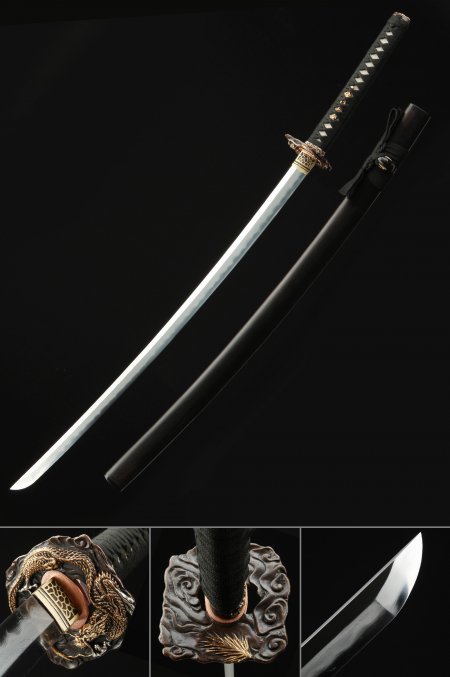
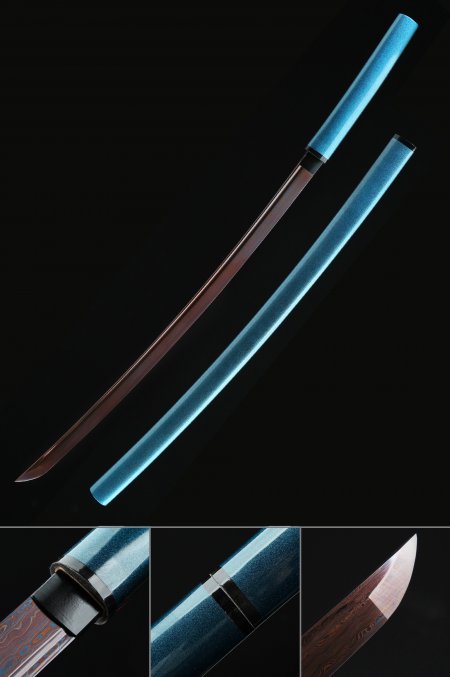
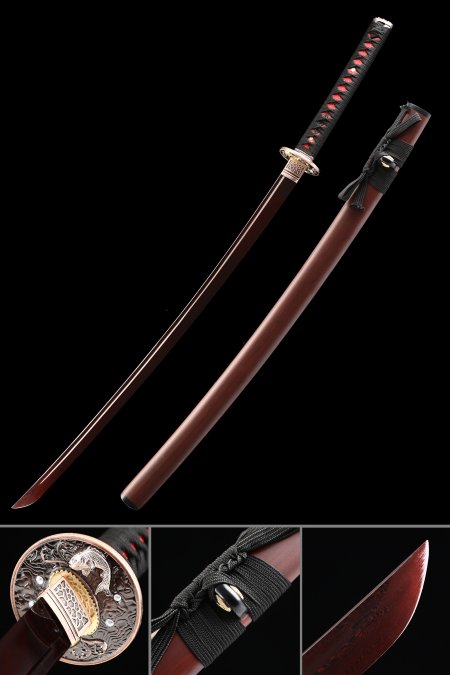
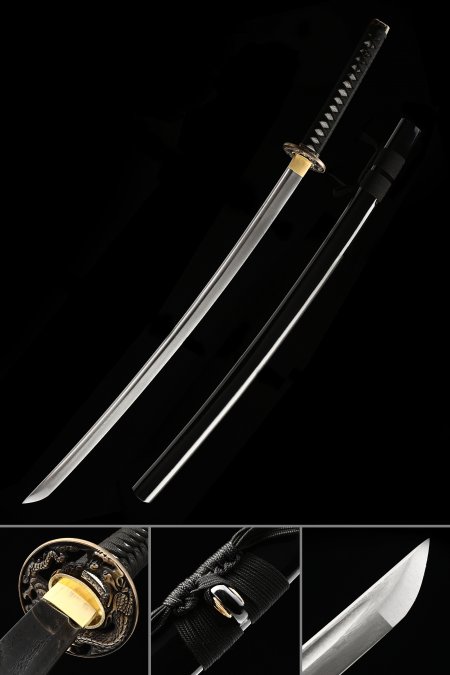
How do Damascus and high-carbon steel differ in these katana?
Updated Feb 2026
Damascus steel in this context refers to blades formed by folding and forge-welding multiple layers of steel together, producing the distinctive flowing grain pattern visible on the polished surface. This layering process creates a blade with visible texture and depth that is highly prized by collectors for its visual appeal. High-carbon options like 1045, 1060, and 1095 steel are single-composition blades that vary in carbon content — 1095 being the hardest and most capable of holding a fine edge among the three. T10 clay tempered steel adds another dimension: a clay coating applied before quenching creates a differential hardening process that produces a visible hamon (temper line) along the blade, a feature many serious collectors specifically seek out for its aesthetic and traditional significance.