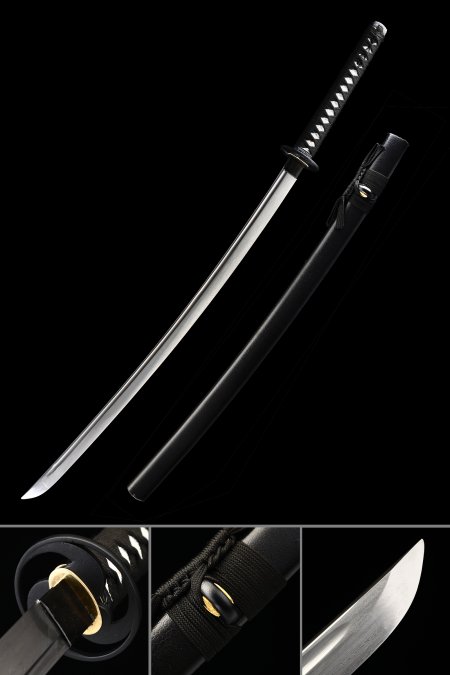
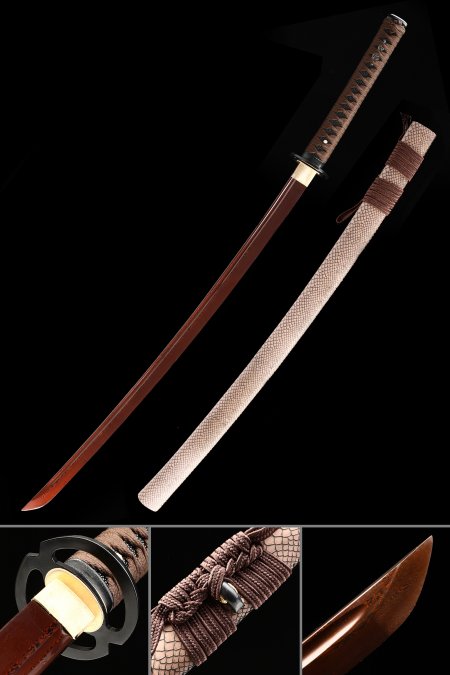
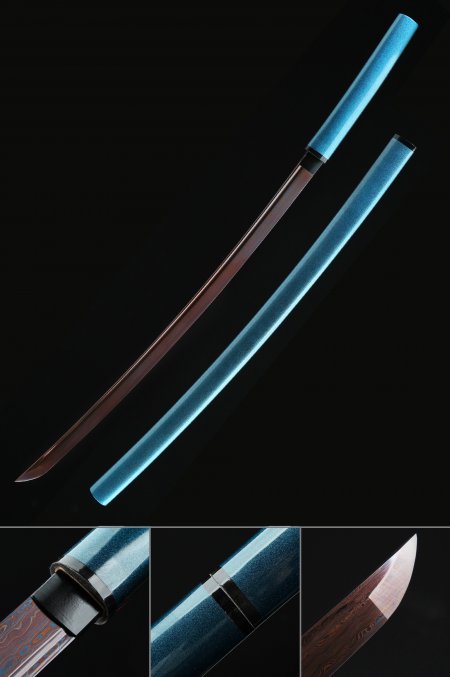
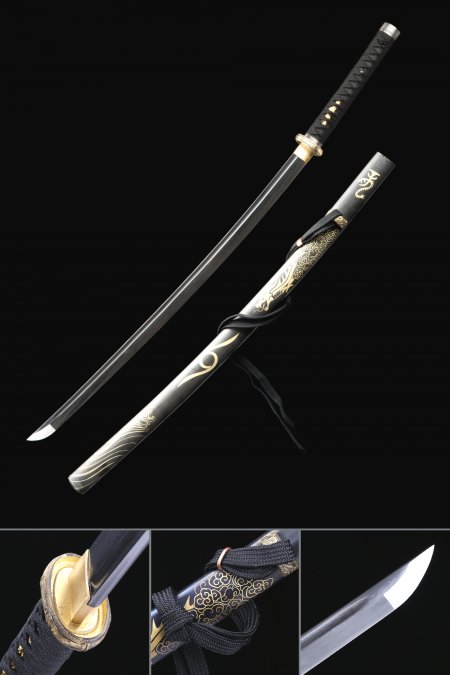
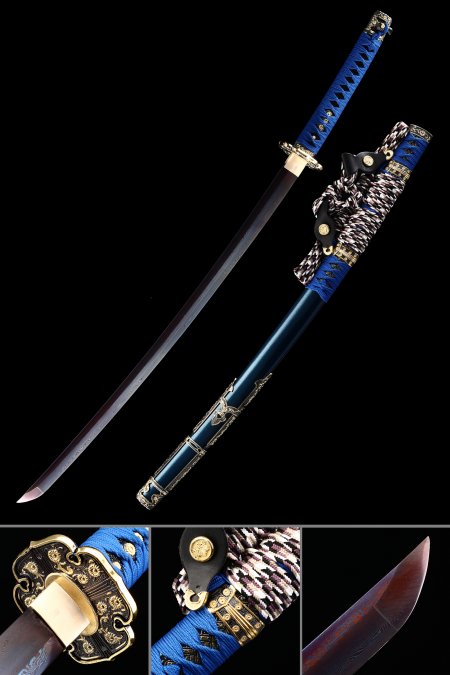
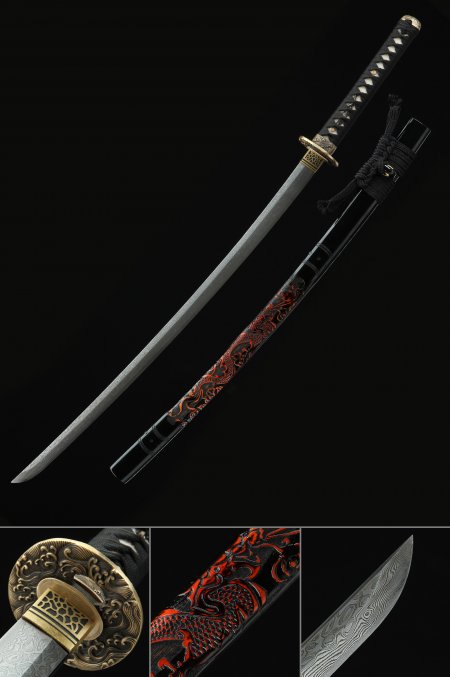
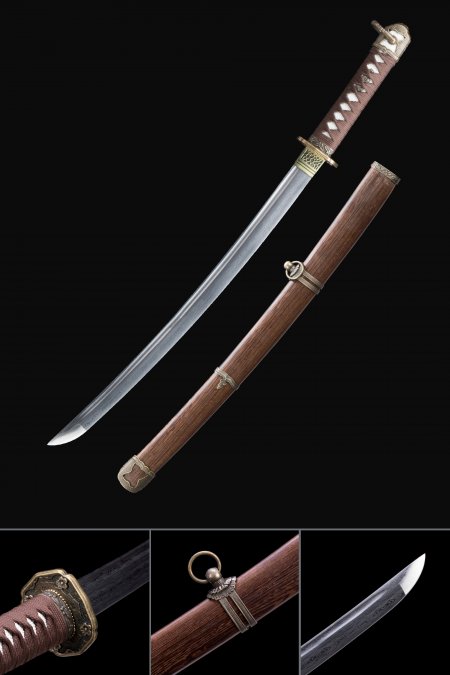
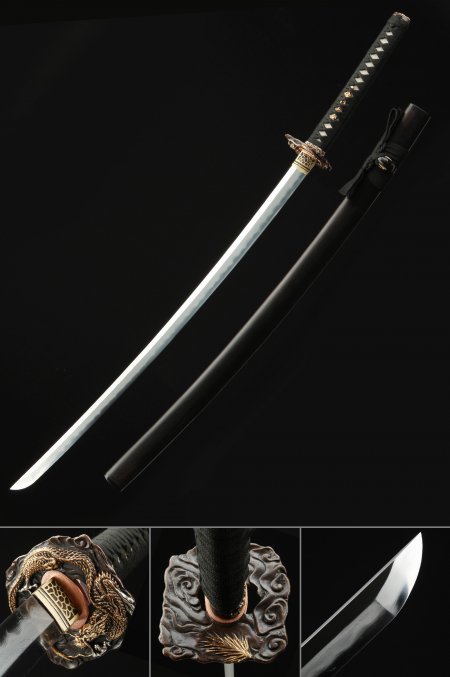
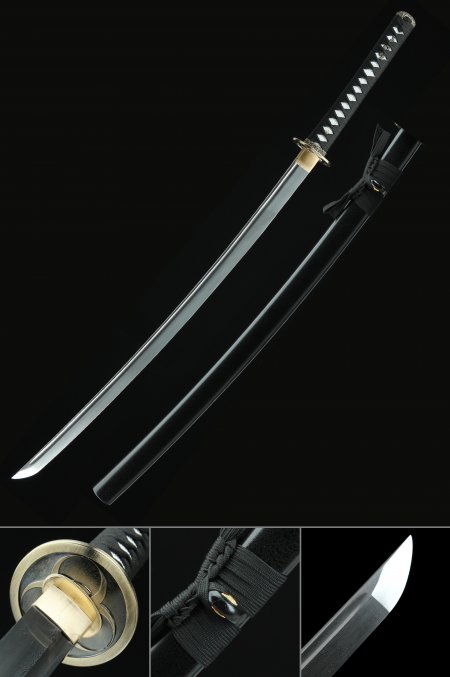
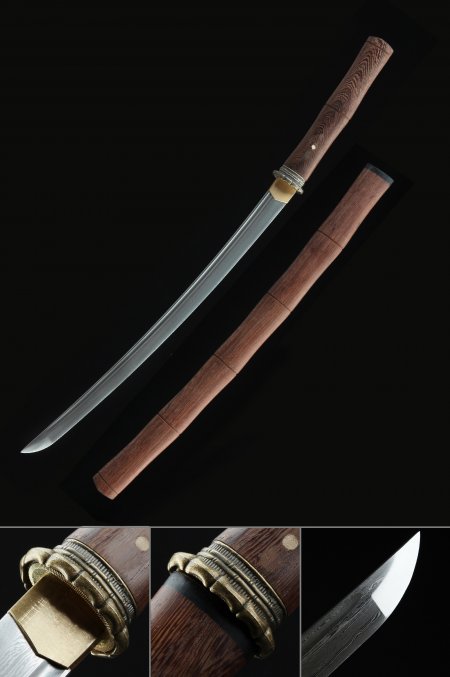
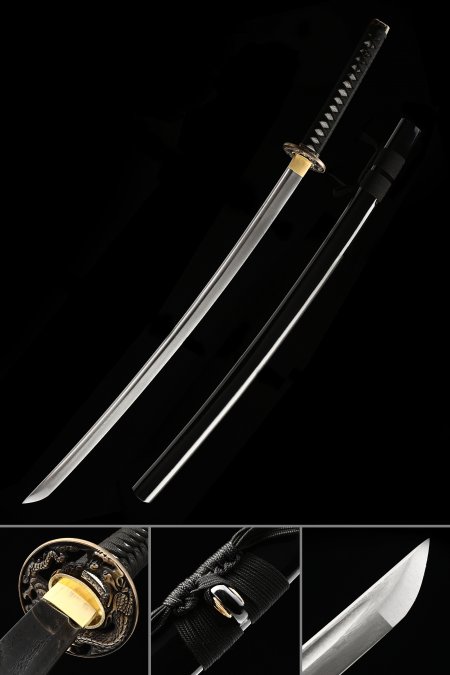
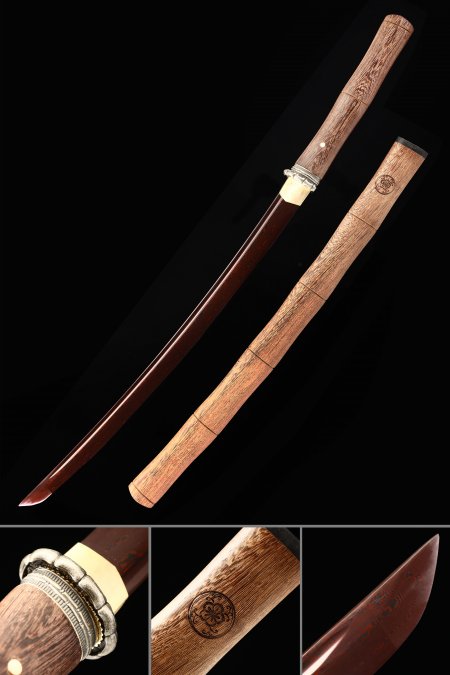
What makes a clay-tempered hamon look different on T10 vs. Damascus?
Updated Feb 2026
On T10 carbon steel, clay tempering produces a clean, high-contrast hamon because the steel has a uniform grain structure — the boundary between the hardened edge and the softer spine appears as a sharply defined, milky-white line with fine activity called nie and nioi. On Damascus (pattern-welded) steel, the layered construction introduces its own visual texture, so the hamon often blends with the fold pattern, creating a more complex, layered appearance where the temper line interacts with the banding of the steel itself. Neither is superior for display; they simply offer different visual characters. Collectors who prefer bold, readable hamon lines often favor T10, while those drawn to overall surface complexity tend to gravitate toward Damascus pieces.