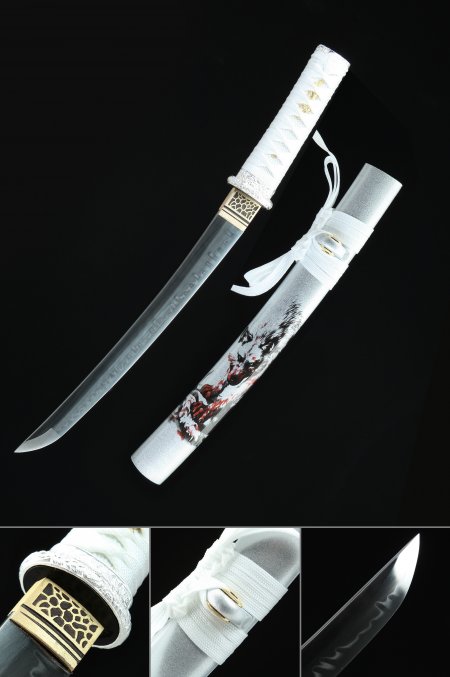
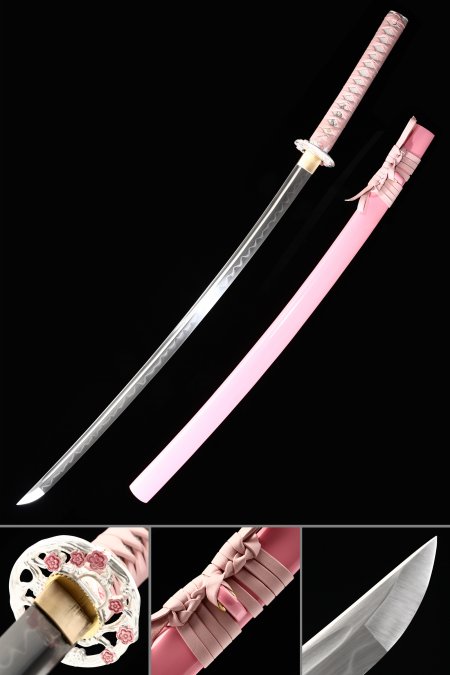
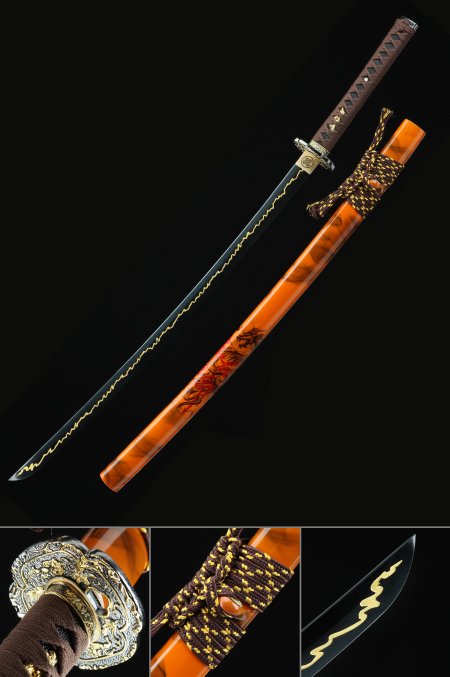
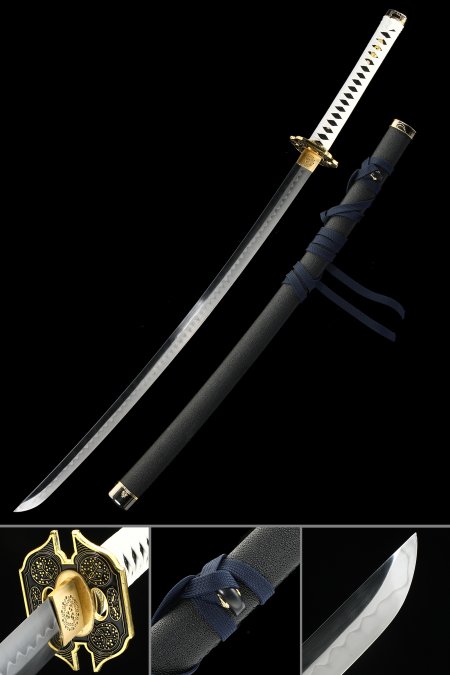
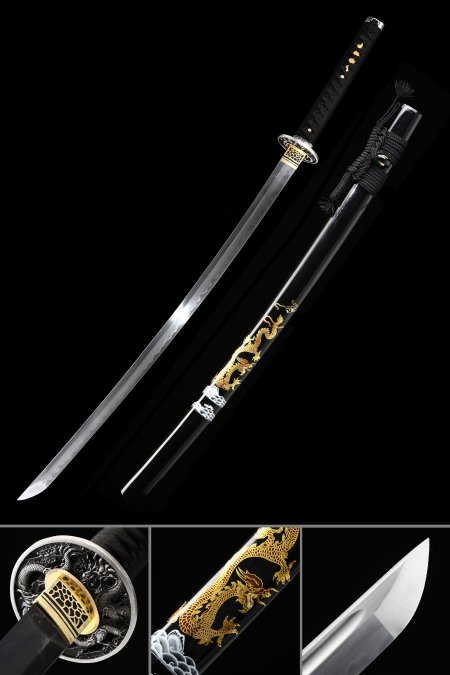
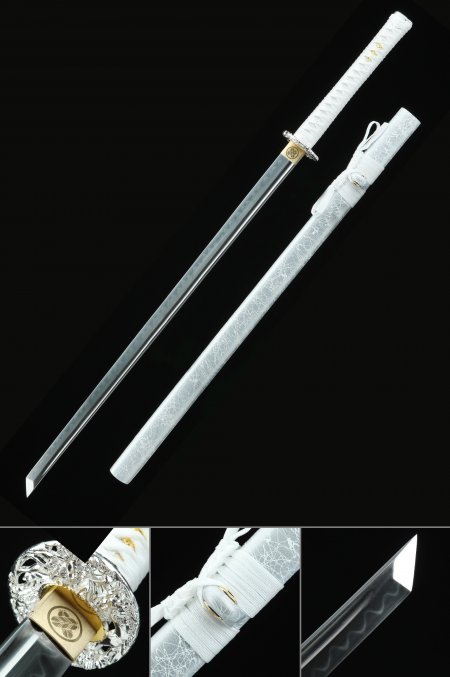
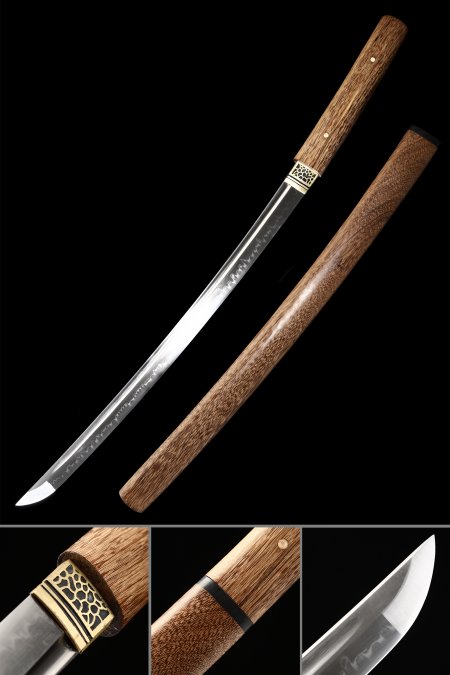
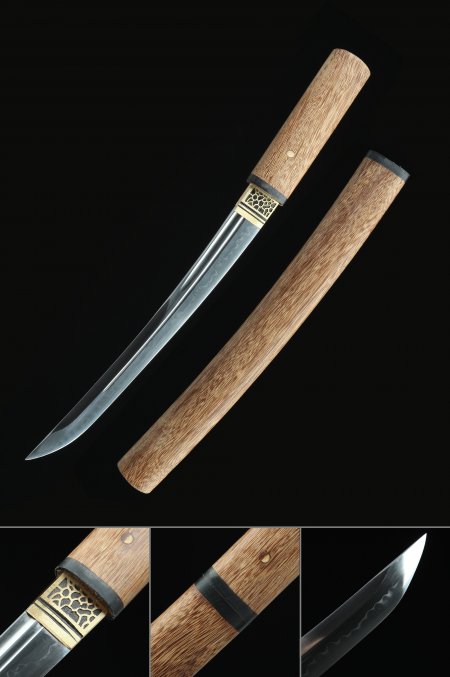
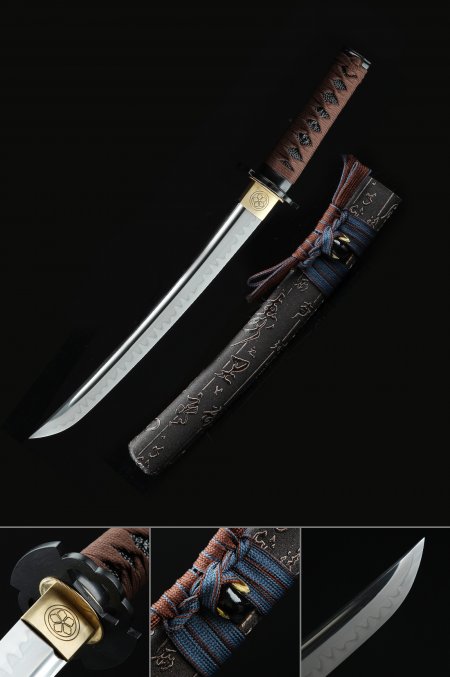
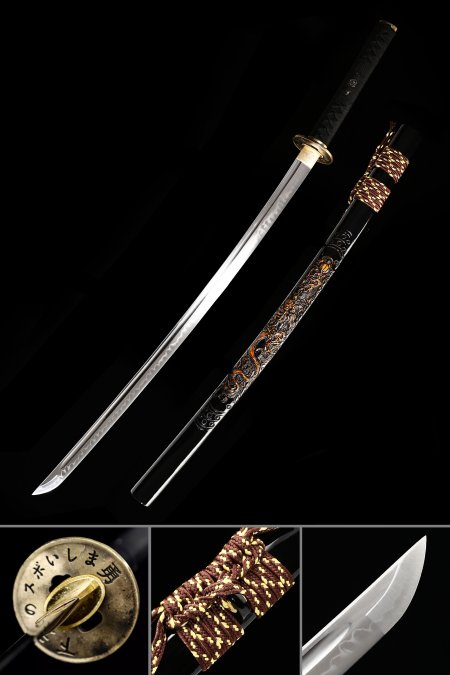
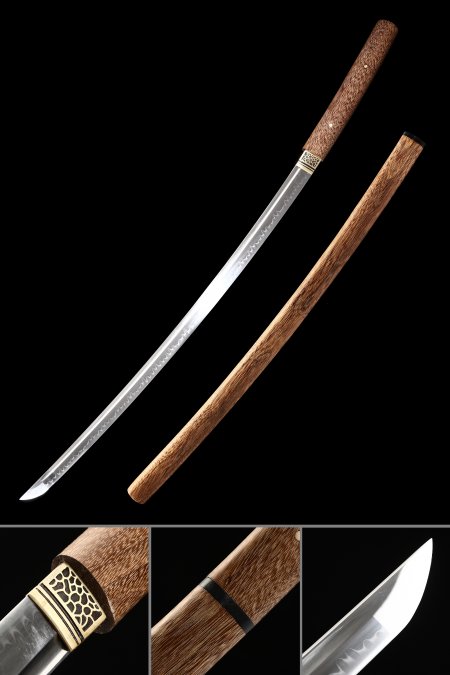
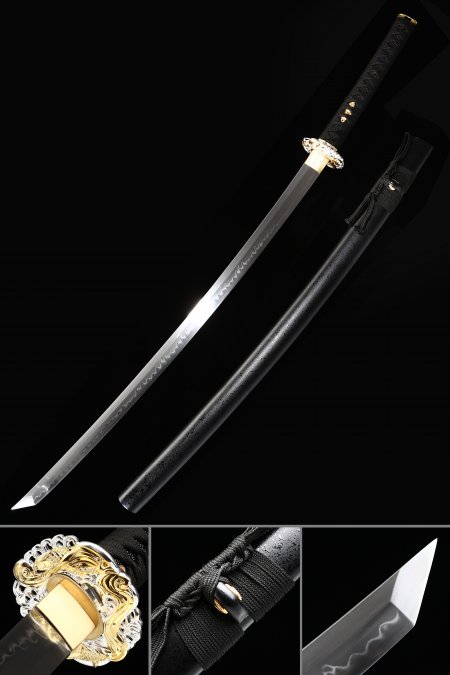
Clay tempering is a traditional Japanese heat-treatment technique in which a layer of refractory clay is applied to the blade spine before the hardening process. Because the clay-covered spine cools more slowly than the exposed edge, the two zones develop different hardness levels. This differential cooling causes the blade to curve naturally and produces the hamon—an irregular, wave-like temper line along the edge. On T10 steel, this line is particularly crisp and detailed due to the steel's fine carbide structure. Collectors regard a genuine, clay-tempered hamon as one of the most important markers of authentic Japanese sword craftsmanship, distinguishing it from acid-etched imitations found on lower-grade pieces.