What does the white sageo signify on a tachi?
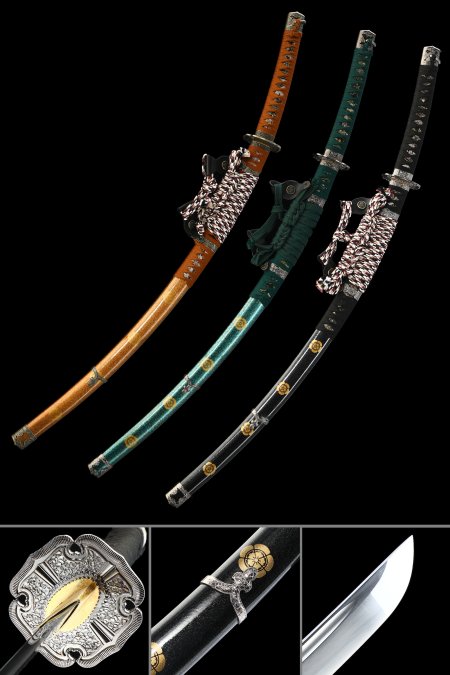
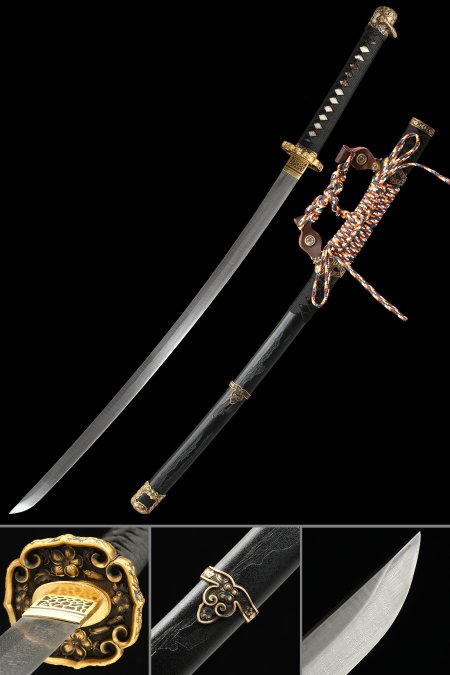
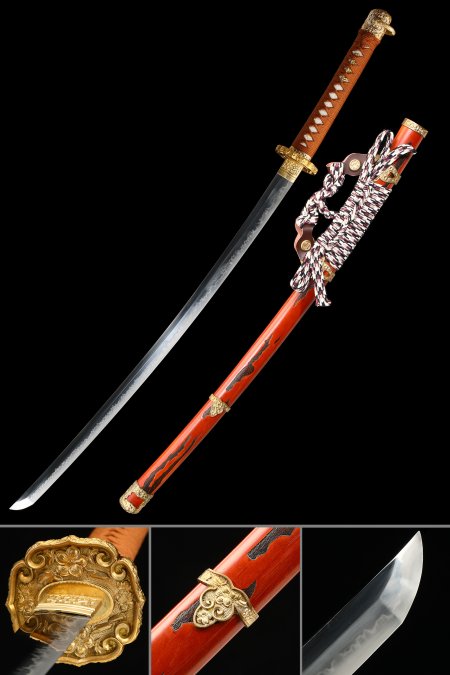
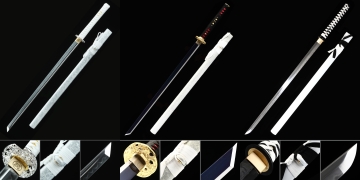
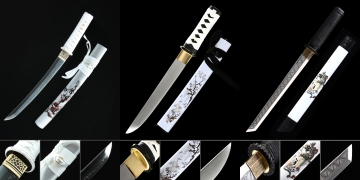
In Japanese sword culture, the sageo - the braided cord attached to the saya - carried both practical and symbolic weight. White in particular is associated with formality, purity, and ceremonial occasion in Japanese aesthetics, drawing from Shinto traditions where white garments and objects signal ritual significance. On a tachi mounting, a white sageo was often reserved for formal court contexts, distinguishing it from the earthier tones used in field settings. For display collectors today, choosing a white sageo tachi is a way of positioning the piece within that ceremonial visual tradition, creating a clean contrast against lacquered scabbards and ornate metal fittings that reads as intentional and historically grounded.
How does a tachi differ from a katana in construction?
While both are single-edged Japanese swords with curved blades, the tachi and katana differ in several meaningful ways. The tachi typically has a longer blade - often exceeding 70 cm - and a more pronounced curvature (sori), measured from a different reference point than on a katana. The tachi was traditionally worn edge-down suspended from the belt by the sageo, which is why sageo attachments and saya hardware on tachi mountings are configured differently than on katana. Katana, worn edge-up thrust through the obi, emerged later historically as the dominant samurai sidearm. For collectors, these differences are visible in blade geometry, the placement of the mei (signature) on the tang, and the overall balance point of the finished piece.
What steel types are used in display-quality tachi blades?
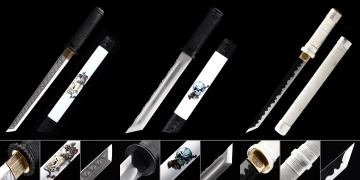
Display-quality tachi in this collection are offered in three main steel types, each with distinct visual and structural characteristics. Damascus steel features layered folded patterns across the blade surface that become especially visible under directional lighting - a visually striking choice for wall display. T10 high-carbon steel, when clay-tempered, produces a genuine hamon temper line along the edge, a detail that serious collectors associate with traditional craft accuracy. 1095 high-carbon steel provides a clean, well-polished finish with reliable structural consistency, often preferred for full sets where visual uniformity across multiple pieces matters. None of these are stainless steel, so all three benefit from periodic light oiling with choji or mineral oil to maintain the blade surface during long-term display.
How should I care for a white sageo to keep it looking its best?
The white sageo is one of the most visually prominent elements of the mounting and also one of the most vulnerable to discoloration over time. Cotton and silk braids can yellow when exposed to direct sunlight, absorb oils from handling, or attract dust in open display settings. To preserve brightness, avoid touching the sageo with bare hands when repositioning the piece - white cotton gloves are the standard recommendation among collectors. Store or display the tachi away from direct UV exposure, ideally in a display case with UV-filtering glass. If light dust accumulates, a soft natural-bristle brush applied gently along the braid direction is usually sufficient. Avoid moisture, which can cause the braid to lose its structure or develop mildew staining in humid environments.
Is a white sageo tachi a good gift for a Japanese sword enthusiast?
A white sageo tachi makes a compelling gift for collectors who appreciate the full-mounting presentation of Japanese swords rather than the blade alone. The white sageo immediately signals that the piece was chosen with aesthetic intentionality - it is not a default color, and enthusiasts recognize it as a deliberate style reference to ceremonial tachi traditions. For gifting, pieces with ornate tsuba - gold floral or peony designs in particular - photograph exceptionally well and present with obvious visual richness out of the box. If the recipient collects across multiple sword types, a tachi with compatible lacquer tones can coordinate with existing display pieces. Adding a dedicated display stand to the gift ensures the tachi can be shown at its proper horizontal orientation, which is traditional for this sword format.