What makes manganese steel a good choice for display ninjato?
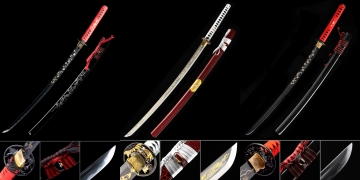
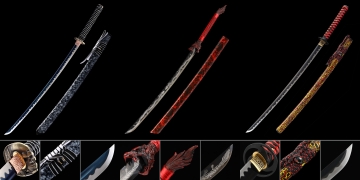
Manganese steel is an alloy that blends iron with manganese content, which significantly improves hardness and surface durability compared to basic mild steel. For display collectibles, this matters in two practical ways: the steel accepts polishing exceptionally well, enabling the bright silver and mirror finishes that define this collection, and it resists minor surface abrasion during handling and repositioning far better than softer alloys. The result is a blade that retains its visual sharpness and reflective quality over years of display without requiring constant refinishing.
How does a ninjato differ from a katana in shape and design?
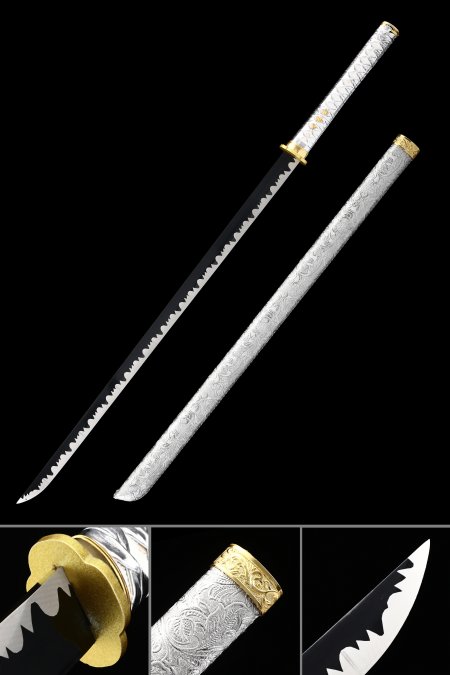
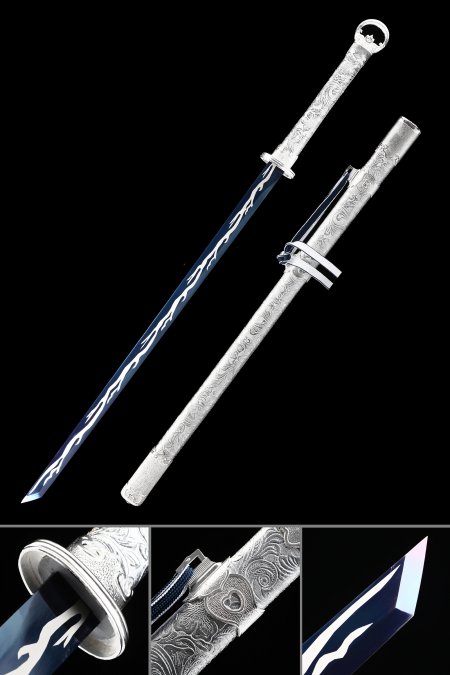
The most immediate visual distinction is the blade profile. A katana features a pronounced curved blade — the result of traditional differential hardening techniques — while a ninjato is characterized by a straighter blade geometry with a simpler, more utilitarian silhouette. The ninjato also typically features a square or rectangular tsuba rather than the rounded guard common on katana, and a shorter overall blade length. These design differences give ninjato collectibles a bold, graphic presence when displayed that contrasts effectively with the flowing lines of curved blade pieces in a mixed collection.
How should I maintain the silver finish on these ninjato pieces?
The silver-toned blade surface on manganese steel is achieved through careful polishing and, in some pieces, a fine surface treatment that enhances reflectivity. To maintain this finish, apply a thin coat of choji oil or a neutral mineral oil every two to three months using a clean, lint-free cloth. Wipe along the length of the blade rather than across it. Always store the piece in its saya when not on display to minimize dust accumulation, and avoid storing in high-humidity environments, which can encourage light surface oxidation even on well-maintained manganese steel. Cotton gloves during handling prevent fingerprint oils from etching into the polished surface.
Are the engravings on the saya and tsuba hand-done or machine-produced?
The vine and dragon engravings featured across this collection are hand-finished by artisans, meaning individual pieces carry subtle variations in line depth and decorative detail that distinguish them from machine-stamped fittings. On the vine-engraved sayas, botanical patterns are worked into the silver-accented lacquered surface with enough relief to cast small shadows under directional lighting — a quality that becomes especially apparent when these pieces are displayed under spotlight or gallery-style illumination. The gold tsuba pairings are cast and then hand-detailed, following classical Japanese metalworking traditions where tsuba were treated as independent art objects separate from the blade itself.
Can these ninjato be wall-mounted, and what display setup works best?
Yes — the straight blade profile of a ninjato is particularly well-suited to horizontal wall mounting, and the clean silhouette reads clearly against most wall textures and colors. A two-point horizontal mount that supports both the saya and the handle allows the decorated scabbard to remain visible as part of the overall display composition. For collectors who prefer to show the blade itself, a stand that holds the ninjato with the saya partially drawn creates an elegant layered effect. Pairing a silver-finish ninjato with dark wood or matte black display hardware creates the strongest visual contrast and directs attention to the ornamental fittings and blade surface.