What makes a Shin Gunto different from a traditional katana?
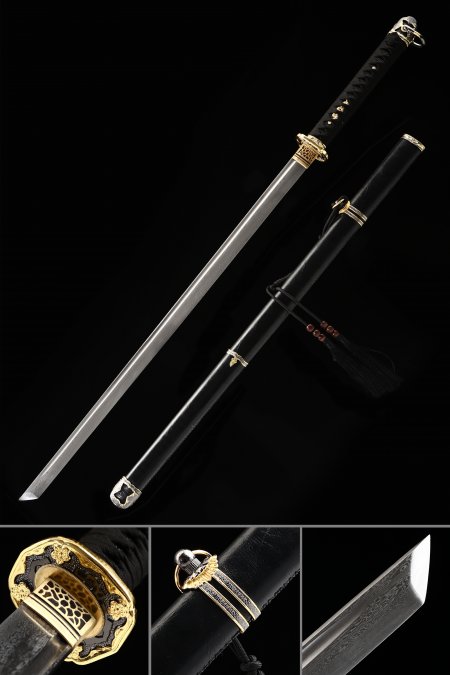
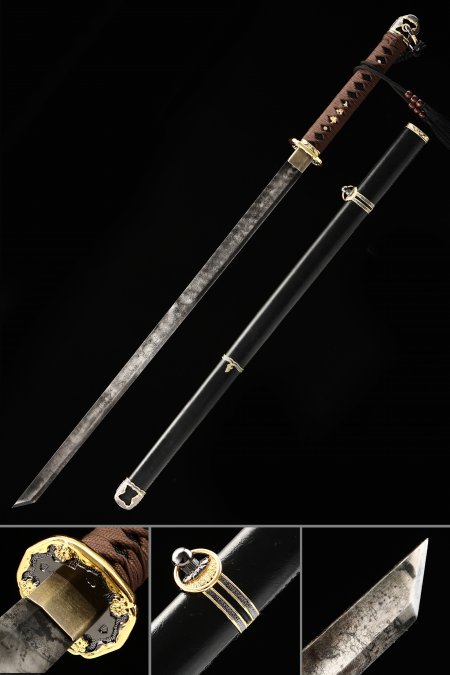
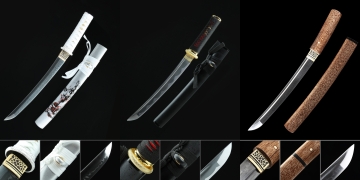
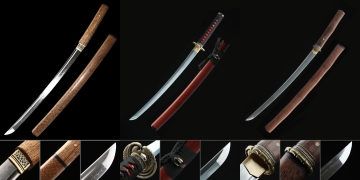
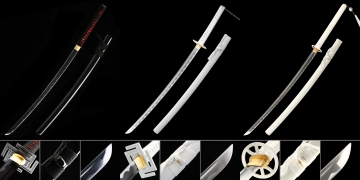
The Shin Gunto was developed in early 20th-century Japan as a standardized officer's sword, so its mounts follow military specification rather than classical samurai convention. Key differences include a regulation tsuka wrapped in brown or black ito over same (rayskin), a brass habaki, and a tsuba stamped with the Imperial chrysanthemum or cherry-blossom mon. The saya is typically finished in black lacquer with metal throat and drag fittings rather than the silk-wrapped or wood-finish scabbards of earlier periods. The blade geometry can closely resemble a traditional tachi or katana grind, but the overall koshirae — the full mounting assembly — is unmistakably military Showa-era in character.
Is Damascus steel or 1090 carbon steel better for display?
For pure visual impact on a display stand, Damascus steel is hard to beat — the folded layers create a flowing hada pattern across the flat of the blade that catches light differently depending on angle and finish. A hand-folded Damascus blade with an etched surface reveals its construction history in a way no monosteel blade can replicate. That said, 1090 high-carbon steel with a stone-washed or hand-rubbed finish has its own understated appeal, producing a matte, aged appearance that suits the utilitarian character of a military-era reproduction particularly well. Both steels hold a fine edge geometry and are structurally sound as display pieces — the choice ultimately comes down to whether you prioritize dramatic visual layering or period-accurate restraint.
How should I store a Shin Gunto or ninjato long-term?
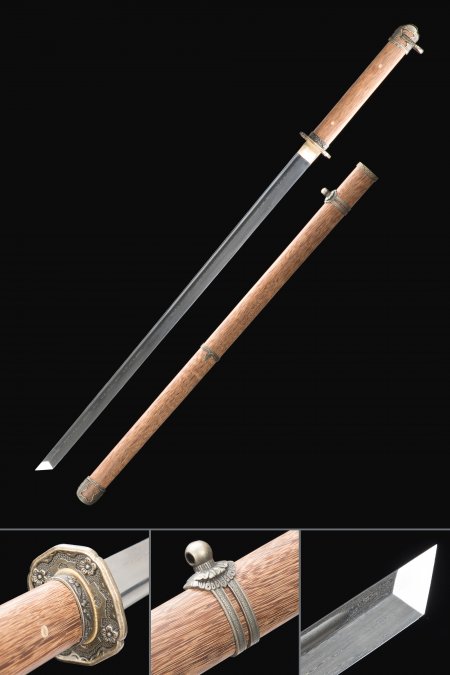
Store the sword horizontally on a dedicated sword rack, blade edge facing upward when using a traditional two-tier stand. Before storage, wipe the blade clean with a soft cotton cloth, then apply a very thin, even coat of choji oil or mineral oil to prevent oxidation. Avoid storing in a leather scabbard for extended periods, as leather retains moisture and can cause surface rust. A natural hardwood or lacquered wooden saya is the correct long-term home for the blade. Keep the storage area away from direct sunlight and humidity extremes — a stable indoor environment between 40–55% relative humidity is ideal. Inspect the blade every three to four months and re-oil as needed.
What is the significance of the tsuba on a Type 98 Shin Gunto?
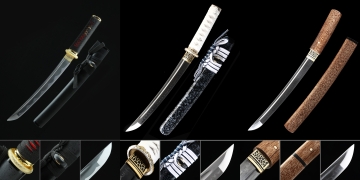
The tsuba on a Type 98 Shin Gunto is one of the most immediately identifiable details for collectors. Regulation issue tsuba were typically round or slightly oval, made from iron or brass alloy, and featured stamped Imperial motifs — most commonly the cherry blossom, which carried deep symbolic resonance in wartime Japanese culture. The gold-and-black finish seen on certain officer-grade reproductions reflects the distinction between enlisted and commissioned fittings, where higher rank permitted more ornate hardware. On a quality reproduction, the tsuba should fit snugly against the habaki with minimal play — excessive movement is a sign of poor fitting tolerances and detracts from both the display quality and the historical accuracy of the piece.
Does a ninjato make a good gift for a Japanese history collector?
A ninjato is an excellent gift choice for someone fascinated by the covert traditions and shadow culture of feudal Japan. Its distinctive straight-blade silhouette and squared tsuba make it one of the most visually recognizable Japanese sword forms, and its association with ninjutsu lore gives it a storytelling quality that many collectors find compelling. For gifting, look for a piece with a full-tang construction, a fitted hardwood or lacquered saya, and a properly assembled koshirae — these details signal quality and longevity as a display collectible. Pairing it with a matching sword stand and a basic maintenance kit (oil, cloth, and a brass mekugi punch) turns a single item into a complete collector's presentation.