What steel is used in these ninjato, and does it affect appearance?
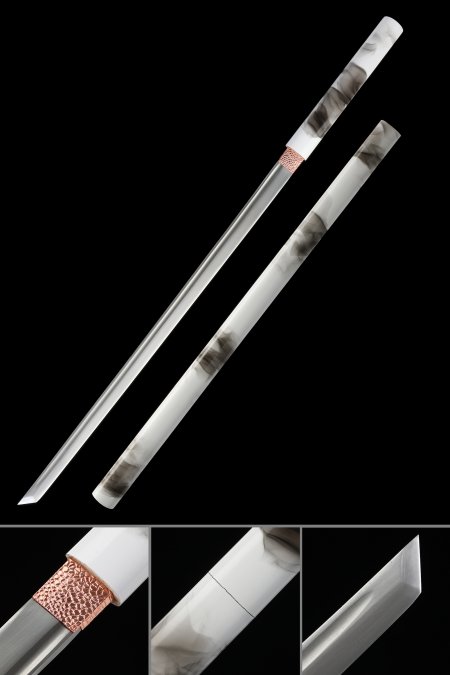
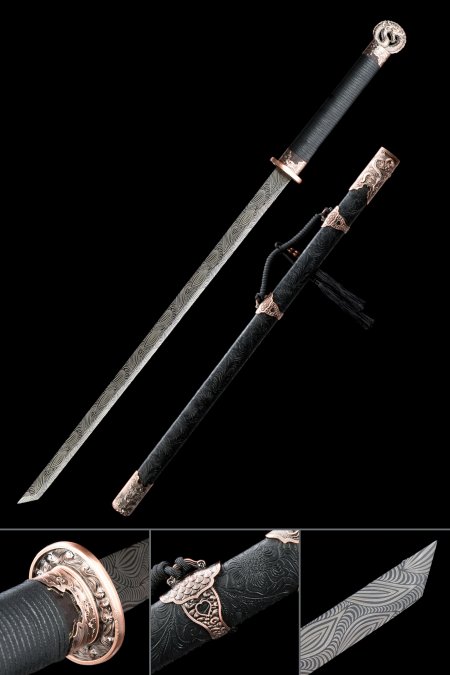
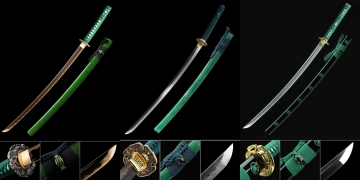
The collection features two distinct steel types, each with its own visual character. Manganese steel offers a slightly warmer, harder surface that responds well to engraving - the wave-pattern blade in this collection is a good example of how the material holds fine decorative detail without losing edge clarity. 1060 high-carbon steel, by contrast, produces a denser grain structure and a cooler, more uniform matte tone under display lighting. Neither is purely decorative in construction - both are hand-forged and full-tang - but for a collector focused on how a piece looks mounted on a wall or stand, manganese steel tends to reward close inspection, while 1060 carbon steel has a quieter, more classical presence.
Why is rose gold used for the tsuba instead of traditional iron or brass?
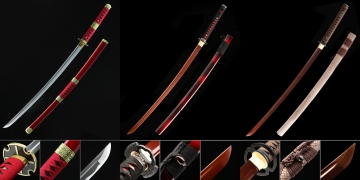
Traditional Japanese tsuba were most commonly produced in iron, brass, or shakudo - a copper-gold alloy with deep historical roots. Rose gold as a hardware finish is a contemporary collector-market choice that draws on the same warm-toned metallic tradition while offering a brighter, more immediately eye-catching result. Against a dark or engraved steel blade, the warm pink-gold tone of the tsuba creates high visual contrast that photographs well and reads clearly from a distance on a display stand. It also pairs exceptionally well with pale saya finishes like marble white lacquer, creating a three-tone composition - blade, fitting, scabbard - that feels considered and cohesive rather than assembled from mismatched parts.
How should I store a lacquered saya to keep it in good condition?
Lacquered saya are sensitive to two main environmental factors: humidity swings and direct sunlight. High humidity can cause the underlying wood to expand, which stresses the lacquer layers and may lead to fine surface cracking over time. Low humidity has the opposite effect. Aim for a stable indoor environment between 45-60% relative humidity. Keep the piece away from windows where UV exposure can yellow or fade the lacquer finish - particularly important for pale tones like marble white. When handling, avoid contact with skin oils on the lacquered surface; a soft cotton glove or microfiber cloth is recommended. Store horizontally or on a proper display stand rather than upright, which reduces stress on the koiguchi fitting where saya and tsuka meet.
How is a ninjato different from a katana for display purposes?
The most visible difference is blade geometry. A katana has a pronounced curve - the sori - that gives it a dynamic, sweeping silhouette. A ninjato or chokuto has a straight blade, which reads as more geometric and architectural in a display context. This makes straight-blade pieces particularly well-suited to minimalist or contemporary interior settings where the curved katana form might compete with other visual elements. The straight profile also means the saya tends to be squared or gently rectangular rather than following a curve, which affects how it sits on a horizontal stand. For collectors who own both curved and straight-blade pieces, the visual contrast between the two types creates an interesting compositional balance on a wall or shelf display.
Is a rose gold tsuba ninjato a good gift for a sword collector?
It depends on the collector's existing focus. For someone who primarily collects classical iron-tsuba katana, a rose gold fitting may feel outside their aesthetic, so knowing their taste matters. However, for a collector who appreciates decorative sword furniture, mixed-material assemblies, or contemporary takes on traditional forms, a rose gold tsuba ninjato is a genuinely distinctive gift - visually bold, clearly hand-assembled, and different enough from standard carbon steel katana configurations to stand out in any collection. The straight-blade format also tends to be less commonly represented in beginner collections, so it fills a gap while adding visual variety. Pairing it with a display stand makes the gift immediately usable without additional purchases.