What makes tamahagane steel different from high-carbon steel?
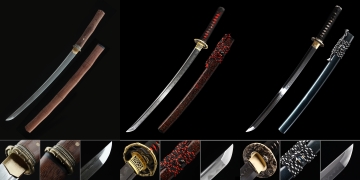
Tamahagane is produced in a clay tatara furnace using iron sand and charcoal, a process that creates steel with a naturally uneven carbon distribution — ranging from low-carbon to high-carbon zones within the same bloom. Smiths then fold and work specific sections to concentrate carbon where hardness is needed. The result is a blade with a hamon that emerges organically from the steel's internal structure, not purely from clay tempering. Commercial high-carbon steels like 1095 are manufactured to a precise, uniform carbon percentage and are consistent throughout. Tamahagane's variability is considered a feature by collectors: it means no two blades produce an identical hamon pattern, making each piece genuinely one-of-a-kind at the metallurgical level.
Why is purple ito used on this katana collection?
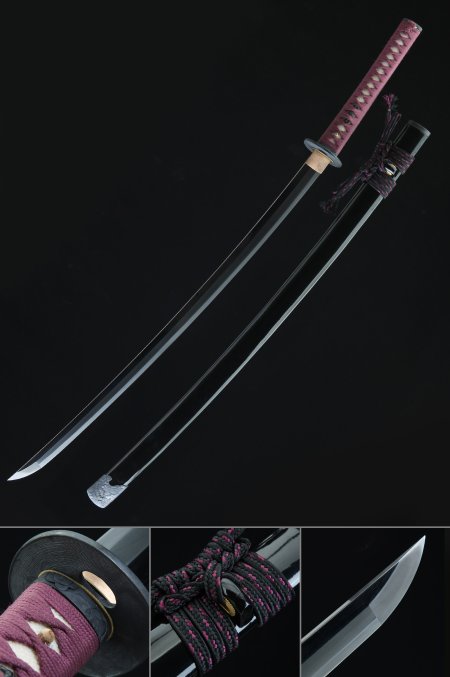
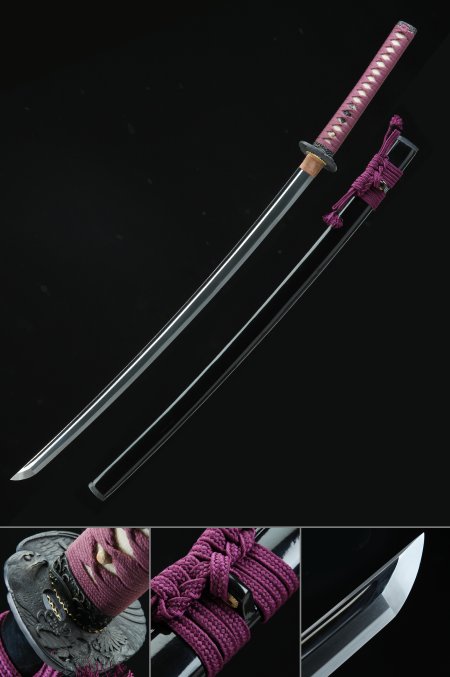
Purple dye was historically expensive and labor-intensive to produce in pre-industrial Japan, making it a color associated with elevated status among samurai households and court nobility. Using purple ito (handle wrap) on a collector-grade katana nods directly to that historical symbolism while creating a visually distinctive display piece. On these specific katanas, the deep violet wrapping contrasts sharply against the ray skin beneath it and the black lacquer saya, producing a color palette that reads as both historically informed and aesthetically bold. For collectors focused on display impact, purple ito creates an immediate focal point that more conventional black or brown wrappings simply do not.
How do I maintain a tamahagane blade for long-term display?
Tamahagane is not stainless, so surface care is essential. After any handling, apply a very thin coat of choji oil using a soft, lint-free cloth — excess oil should be wiped off, not left pooled on the surface. Store the katana on a proper horizontal stand with the edge facing upward, which is the traditional resting position and helps prevent uneven stress on the habaki (blade collar). Keep the display environment between 40–60% relative humidity and away from direct sunlight, which can fade the ito and accelerate lacquer degradation. Never seal the saya in an airtight plastic bag; the lacquer and organic fittings need modest airflow. Inspect the blade every two to three months and re-oil as needed.
Is a tamahagane katana a good gift for a Japanese culture collector?
Yes — a tamahagane katana is among the most historically grounded gifts you can give someone who collects Japanese cultural artifacts or appreciates traditional craft. Unlike decorative wall hangers made from unspecified alloys, tamahagane carries a documented material lineage tied directly to classical Japanese blade-making. The process of smelting iron sand in a tatara furnace is recognized as living cultural heritage in Japan, which adds a layer of narrative value that purely aesthetic pieces lack. For gifting purposes, the purple ito variant is particularly distinctive since the color choice telegraphs intentionality and knowledge of historical samurai aesthetic codes — qualities an informed recipient will recognize and appreciate immediately.
What is the significance of a real hamon on a tamahagane blade?
The hamon — the wavy or undulating temper line visible along the blade's edge — is the visual record of the differential hardening process. A clay mixture is applied to the blade before quenching: thickly along the spine, thinly near the edge. When quenched in water, the lightly coated edge cools rapidly and transforms into hard martensite, while the spine cools slowly and remains relatively tough. Where these two zones meet, the hamon forms. On a tamahagane blade, the naturally variable carbon content adds complexity to the hamon's activity — producing nie (fine martensite crystals visible in raking light) and nioi (a misty boundary line) — details that trained collectors examine closely. A genuine hamon formed through this process is considered the primary authentication marker of serious craft-level work.