Phoenix Tsuba Wakizashi
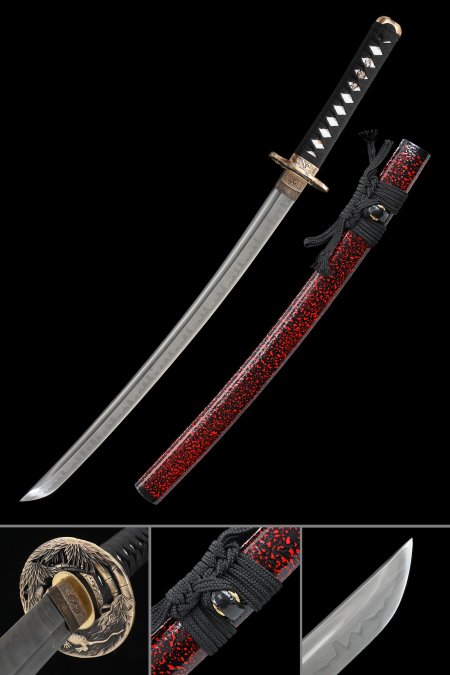
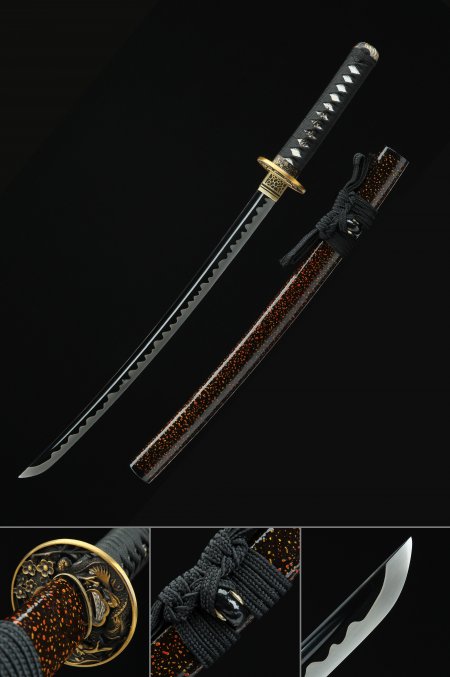
The Phoenix Tsuba Wakizashi collection pairs distinctive cast-metal phoenix guard designs with hand-assembled fittings, offering collectors a companion blade that stands on its own as a serious display piece. Each wakizashi features either high manganese or T10 carbon steel construction with coordinated saya lacquer and ito wrap coloring chosen to complement the tsuba's motif. Free standard shipping is included on all orders, backed by our hassle-free return policy.
Free Shipping
269.00 USD
Related Collections
Skull Tsuba Katana28 items
Flame Blade Katana29 items
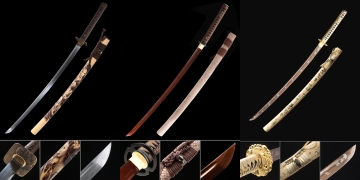
Beige Saya Katana32 items
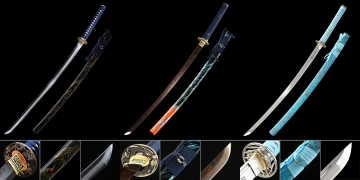
Crane Tsuba Katana29 items
Frequently Asked Questions
What does the phoenix symbol on the tsuba represent?
In Japanese iconography, the phoenix - called hō-ō - is associated with imperial dignity, renewal, and auspicious transformation. Unlike its Western counterpart, the Japanese phoenix is not primarily a fire symbol; it is linked to celestial virtue and appears in imperial court art, lacquerware, and architectural ornamentation going back to the Heian period. On a tsuba, the motif was historically chosen to signal rank and refinement. For modern collectors, a phoenix tsuba communicates both cultural literacy and aesthetic intention, making it one of the more meaningful guard designs available on display-grade wakizashi.
How does T10 carbon steel differ from high manganese steel?
T10 is a high-carbon tool steel containing roughly 1.0% carbon along with a small amount of silicon, which allows it to hold a fine edge and respond well to differential clay-hardening - the process that produces a visible hamon line along the blade. High manganese steel achieves its toughness through elevated manganese content rather than high carbon, making it more impact-resistant and slightly more forgiving of humidity exposure. For display collectors, T10 is often preferred for its authentic hamon and surface character, while high manganese offers a more uniform finish that suits blackened blade aesthetics particularly well.
What is the meaning behind the red splatter lacquer saya finish?
The splatter lacquer technique echoes traditional Japanese lacquerware styles such as negoro-nuri and sprinkled-finish methods used on ceremonial objects and sword fittings from the Muromachi period onward. In negoro-nuri, a red lacquer base is allowed to wear through a black top coat, creating irregular color variation that was originally accidental but became deliberately reproduced for its aged aesthetic. The red splatter saya on these wakizashi references that tradition in a modernized form - the irregular pattern keeps each saya visually unique while tying the color palette directly to the ito wrap and tsuba metalwork for a cohesive overall composition.
How should I oil and store a display wakizashi long-term?
Apply a thin, even coat of choji oil or food-grade mineral oil to all exposed steel surfaces using a soft, lint-free cloth every two to four months. Before re-sheathing, wipe away excess to avoid pooling inside the saya, which can soften the wood lining over time. Store the blade horizontally or at a slight downward angle toward the habaki to prevent oil from migrating toward the handle. Keep the display environment below 60% relative humidity - a small silica gel packet placed near the storage area is sufficient for most home setups. Always handle the blade with cotton gloves or clean dry hands, as skin oils are the most common cause of spotting on polished carbon steel.
Can a Phoenix Tsuba Wakizashi be displayed as part of a daisho set?
Yes - the wakizashi's role in classical Japanese sword culture was specifically as the shorter blade of a daisho pair, displayed or worn alongside a katana with matching fittings. Collectors assembling a unified display set should look for a katana with a coordinating phoenix tsuba, matching ito color, and compatible saya lacquer. A horizontally mounted daisho on a two-tier stand, with the katana on the upper rail and the wakizashi below, is the traditional display orientation. The visual symmetry of matched fittings, particularly a shared tsuba motif, is what defines a true daisho presentation and significantly elevates the overall display impact.