Marble Manganese Steel Wakizashi
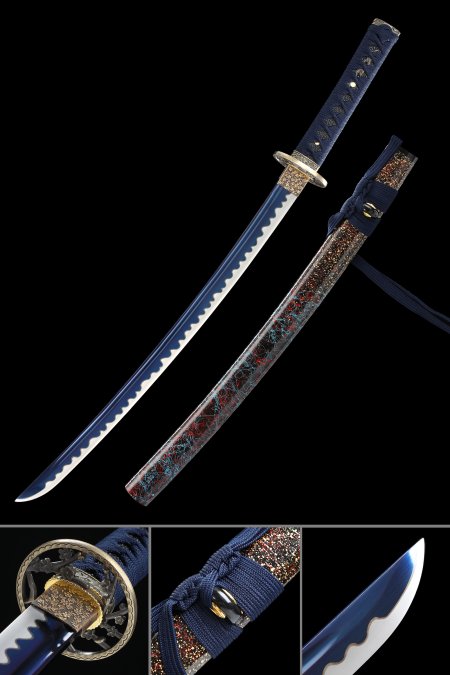
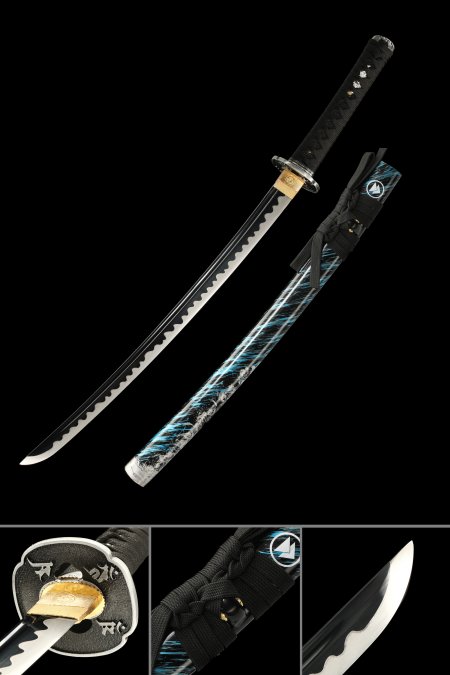
Marble manganese steel wakizashi stand apart through a distinctive forging process that draws swirling, stone-like patterns across the blade surface - each one unrepeatable. Paired with lacquered hardwood saya and hand-wrapped handles, these mid-length collectibles capture the refined aesthetics of Edo-period companion swords with a bold, contemporary edge. Every order ships free with hassle-free returns, so adding one to your display is completely risk-free.
Related Collections
White Manganese Steel Katana14 items
Blue Manganese Steel Ninjato10 items
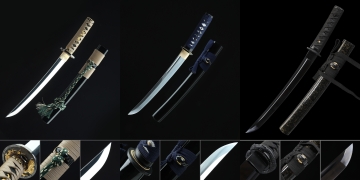
Black Manganese Steel Tanto15 items
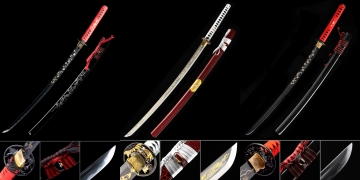
Darkred Manganese Steel Katana12 items
Frequently Asked Questions
What makes marble manganese steel blades look different?
The marble effect is produced through a controlled surface treatment - typically involving heat and chemical reaction - that causes the steel to develop organic, swirling tonal contrasts across the blade flat. Because manganese content influences how the steel responds to this process, the resulting pattern is never fully predictable or repeatable. Each blade that emerges has a unique arrangement of light and dark veining, much like natural stone. This is not a painted or printed finish; it is a direct result of the material's interaction with the treatment process, which means it is inherently part of the steel's surface rather than a coating applied on top.
How does manganese steel compare to high carbon steel for display pieces?
High carbon steel - particularly 1045, 1060, or T10 grades - is prized in functional and collector blades for its ability to be differentially hardened, producing a visible hamon (temper line). Manganese steel, by contrast, offers superior toughness and surface hardness through its alloy composition rather than differential heat treatment. For display and collectible purposes, this means manganese steel resists surface wear and minor abrasion more effectively than standard high carbon equivalents. It does not develop a natural hamon, but the marble treatment compensates with a visually striking alternative that no high carbon polish can replicate. If hamon aesthetics are your priority, high carbon is the choice; if bold, patterned surface drama matters more, marble manganese is the stronger pick.
Is a wakizashi a good standalone display piece without a katana?
Absolutely. While wakizashi were historically paired with katana as part of the daisho set, their proportions - shorter nagasa, refined geometry, and often more ornate fitting choices - make them exceptional standalone display pieces. The compact form fits comfortably on smaller stands, narrower shelves, and wall-mounted single-sword displays without requiring the clearance a full katana demands. Marble manganese wakizashi in particular tend to draw the eye on their own merits, since the blade pattern and coordinated saya color create a complete visual composition without needing a larger companion piece.
How should I oil and store a marble manganese steel wakizashi?
Apply a light, even coat of choji oil or camellia oil to the blade every two to three months, or more frequently in humid environments. Use a soft, lint-free cloth or a traditional nuguigami paper to spread the oil in long strokes along the flat, then buff lightly to remove excess. Store the wakizashi within its saya, positioned edge upward on a horizontal stand - the traditional orientation that reduces stress on the habaki and saya throat over time. Keep the piece away from prolonged direct sunlight to protect lacquerwork on the scabbard, and avoid storage in sealed plastic cases, which can trap humidity and accelerate oxidation.
Do these wakizashi make good gifts for Japanese sword enthusiasts?
Marble manganese steel wakizashi are among the more distinctive gift options for collectors precisely because the marble patterning makes each blade visually individual - the recipient is unlikely to already own something that looks identical. The coordinated aesthetic between blade finish, tsuba design, and lacquered saya means the piece arrives as a complete, display-ready set rather than requiring any additional fittings or accessories. For enthusiasts who already own more traditional polished or hamon-bearing pieces, a marble manganese wakizashi offers genuine variety in their collection rather than duplicating what they have.