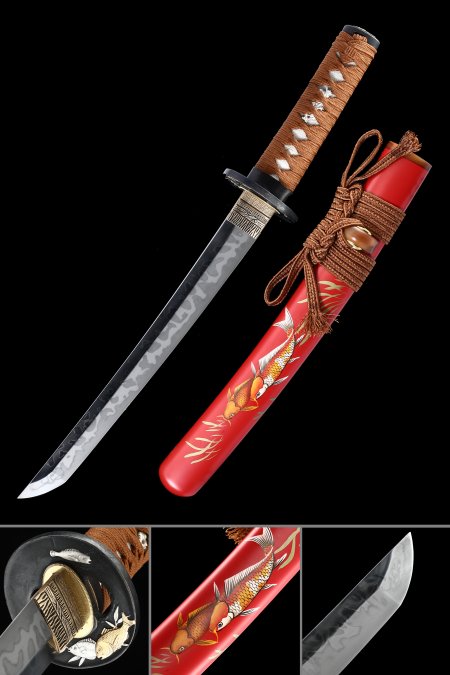
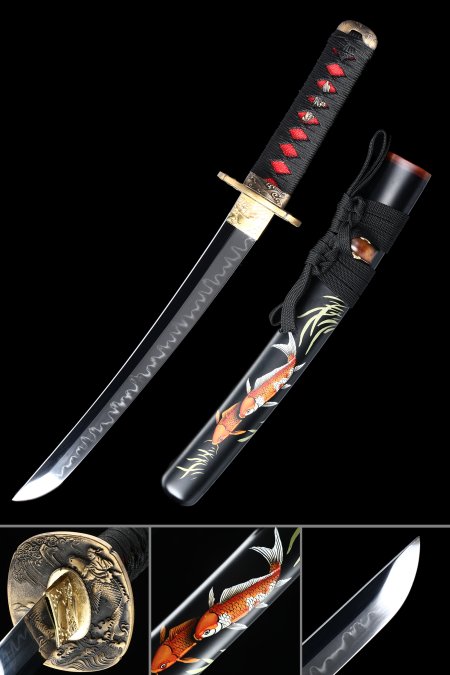
Koi Saya Tanto
Koi Saya Tanto blends traditional Japanese blade craft with hand-painted saya artistry. Each piece features a T10 carbon steel blade paired with a lacquered scabbard bearing detailed koi motifs — making them standout display collectibles for any serious enthusiast. Free standard shipping on all orders, with hassle-free returns.
Free Shipping
459.00 USD
Related Collections
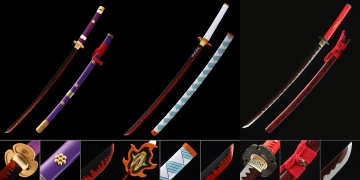
Flame Blade Katana29 items
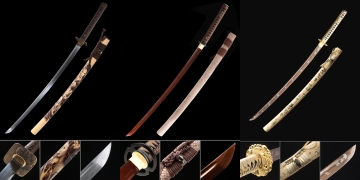
Beige Saya Katana32 items
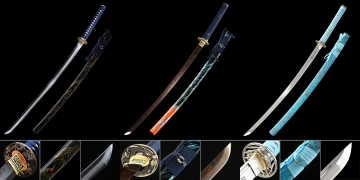
Crane Tsuba Katana29 items
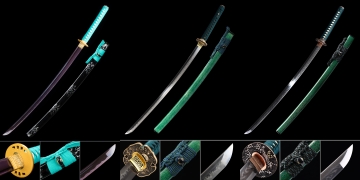
Teal Handle Katana37 items
Frequently Asked Questions
What makes T10 carbon steel a preferred choice for tanto collectibles?
T10 is a high-carbon tool steel containing roughly 1.0% carbon along with a small amount of silicon, which increases wear resistance compared to simpler high-carbon grades. For collectors, its most distinctive trait is the hamon — the visible temper line produced by clay-differential hardening — which gives each blade a unique, naturally occurring visual pattern. Unlike stainless steel, T10 has minimal corrosion resistance, so it requires light oiling for long-term display, but that same metallurgical purity is exactly what makes it attractive to serious collectors who value authentic blade character over low-maintenance convenience.
How is the koi design applied to the saya on these tanto?
The koi imagery on these saya is applied through a painted lacquer process over a hardwood scabbard base. The artwork is not a decal or printed transfer — it is hand-rendered detailing finished with a protective lacquer coat that gives the surface its signature gloss. The red and black saya variants in this collection each interpret the koi motif with different color palettes, offering collectors a choice between warm-toned warmth and high-contrast drama. The lacquered finish also serves a functional display purpose, protecting the wood from humidity fluctuations that can cause warping over time.
How does a koi tanto differ from a standard black or wood saya tanto?
A standard saya tanto typically features a plain lacquered, stained, or natural wood scabbard with no decorative surface artwork. The focus in those pieces is usually on the blade geometry, hamon, or tsuba design. A koi saya tanto shifts the aesthetic weight toward the entire package — the scabbard becomes an art object in its own right, with the koi motif carrying cultural symbolism related to perseverance and transformation. The addition of a matching koi tsuba, as seen on the black saya variant in this collection, further unifies the visual theme across blade, guard, and scabbard in a way that plain tanto configurations do not.
What is the best way to display and maintain a koi saya tanto?
For display, a horizontal tanto stand keeps the piece visible while preventing stress on the saya's lacquered surface. Avoid displaying in direct sunlight, as UV exposure can fade painted lacquerwork over time. Store or display in a space with relatively stable humidity — ideally between 45–55% RH — to prevent the hardwood saya from expanding or contracting. For the T10 blade, apply a thin coat of choji oil or food-grade mineral oil every few months to prevent surface oxidation. Wipe with a soft, lint-free cloth before re-sheathing to avoid transferring moisture or skin oils onto the steel.
Are these tanto a good gift for Japanese culture or blade enthusiasts?
Yes — koi saya tanto occupy a strong position as collector gifts because they combine two distinct appeal layers: the cultural symbolism of the koi motif and the craftsmanship of a T10 carbon steel blade. Recipients who appreciate Japanese art, symbolism, or decorative blade traditions will find genuine depth to explore in a piece like this. The koi's association with good fortune also makes it a meaningful gift for milestone occasions. For gifting, the black saya with gold koi tsuba tends to present with a more formal, dramatic appearance, while the red saya version feels warmer and more vibrant — each suits a different collector personality.