Green Handle Tanto
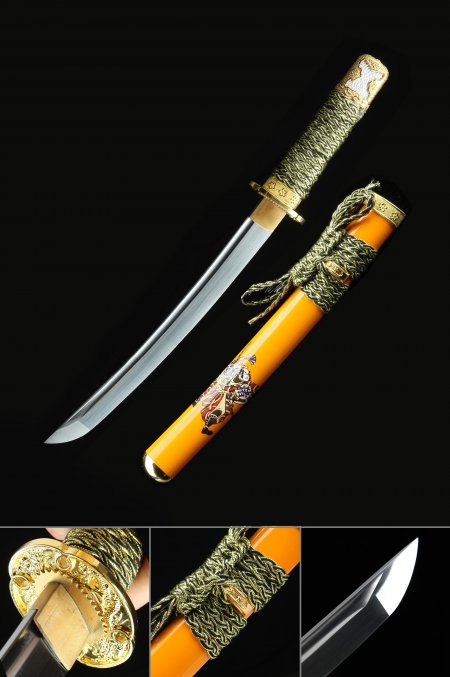
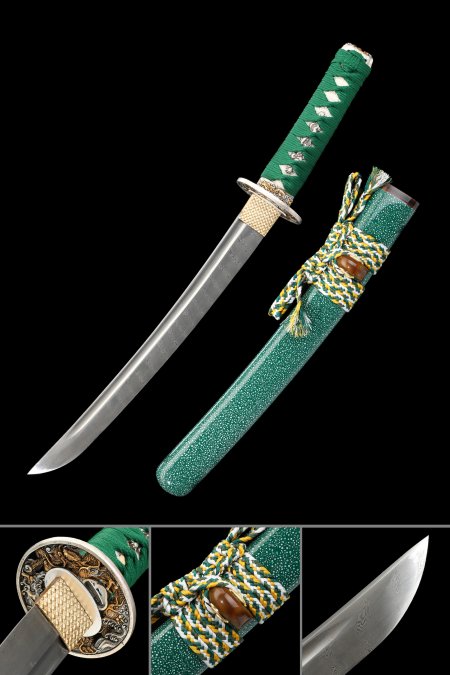
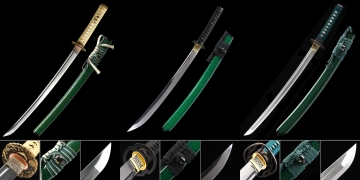
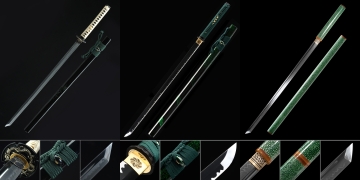
Green Handle Tanto blades bring a striking visual identity to any serious collection, pairing vibrant cord-wrapped hilts with masterfully crafted blades in manganese or Damascus steel. Each piece showcases traditional Japanese construction details - from ornate dragon tsuba to ray skin-wrapped saya - selected for display appeal and artisanal authenticity. Enjoy free standard shipping on your order, and our hassle-free return policy ensures every acquisition meets your expectations.
Free Shipping
419.00 USD
Related Collections
Frequently Asked Questions
What makes a tanto different from other Japanese blade styles?
The tanto is defined by its short blade length - typically under 12 inches - and its angular, chisel-like tip geometry known as the kissaki. Unlike the katana or wakizashi, which use a curved spine to distribute visual weight along the length of the blade, the tanto's straighter profile concentrates the smith's craftsmanship into a compact form where every detail is immediately visible. The shinogi-zukuri (ridged) or hira-zukuri (flat) grinds used on tanto blades are executed without the opportunity to hide inconsistencies that a longer, curved blade might absorb. For collectors, this means a tanto is essentially a compressed demonstration of forging and finishing skill - a quality that makes it a particularly rewarding format to collect and display.
How does Damascus steel differ from manganese steel in a tanto?
Manganese steel is an alloy prized for its toughness and its ability to take a high-polish finish. On a tanto blade, it produces a clean, uniform surface that highlights the geometry of the grind and makes hamon activity - the temper line - crisp and readable. Damascus steel is constructed by layering two or more steel types, then folding, welding, and drawing out the billet repeatedly before acid-etching reveals the contrasting grain patterns. The result is a flowing, organic visual texture that is entirely unique to each blade. From a collectibility standpoint, Damascus tanto are prized because no two display the same pattern, while manganese tanto appeal to collectors who want pure, uncluttered surface geometry with a mirror quality that catches light dramatically.
Why is the handle color significant in Japanese blade collecting?
In traditional Japanese sword mounting, the ito (handle cord) color carried social and ceremonial meaning, distinguishing rank, school affiliation, or the occasion for which the blade was dressed. Green, associated with nature, vitality, and refinement in East Asian aesthetic traditions, was reserved for mounts intended to convey composed authority rather than overt display. For modern collectors, a green-wrapped tsuka serves a dual purpose: it provides a visually cohesive mounting that photographs exceptionally well under display lighting, and it signals an appreciation for the cultural grammar of Japanese blade aesthetics beyond simply choosing a blade shape or steel type. When paired with a ray skin saya and dragon tsuba, the green handle creates a unified thematic narrative across the entire mounted piece.
How should I store and maintain a tanto for long-term display?
Proper storage begins with environment control. Keep the display area between 40 and 55 percent relative humidity to prevent the wooden saya core and tsuka components from swelling or drying out, both of which can loosen fittings over time. Apply a thin coat of camellia oil or choji oil to the polished steel surface every three to four months using a soft, lint-free cloth, working from the habaki toward the tip and wiping off any excess. Store the tanto horizontally on a proper blade stand, edge facing upward following Japanese convention, and out of direct sunlight - UV exposure will fade the green ito wrapping and degrade any lacquer finish on the saya gradually. Never store the blade inside the saya for extended periods without occasional airing, as trapped moisture accelerates surface oxidation even on well-treated steel.
Is a green handle tanto a good choice as a display gift?
A green handle tanto makes an especially considered gift for collectors who already own one or two longer Japanese blades and want to add a complementary shorter form to their display. The distinctive color makes it immediately identifiable as a deliberate aesthetic choice rather than a generic addition, and the dragon tsuba motif carries enough cultural depth to prompt conversation. For gift-giving, look for pieces with full-tang construction and fitted hardwood saya, as these details signal quality that an experienced collector will recognize on close inspection. Pairing a tanto with a matching display stand elevates the presentation further, framing the piece as a finished exhibit-ready object rather than simply a blade in a box.