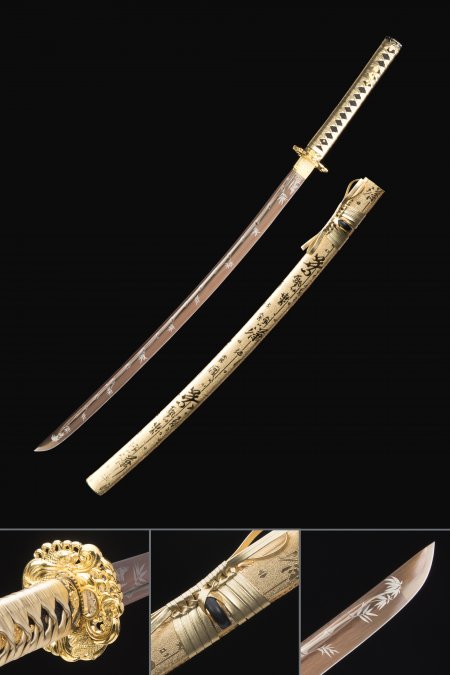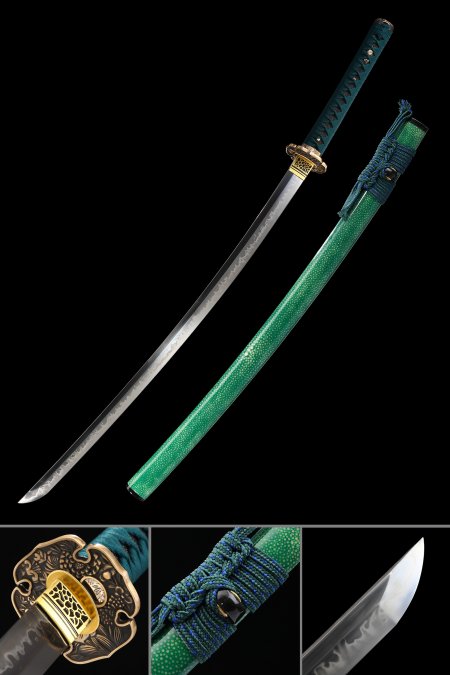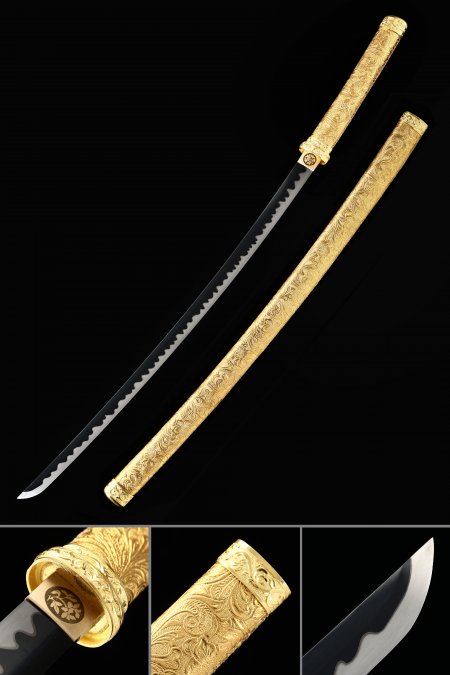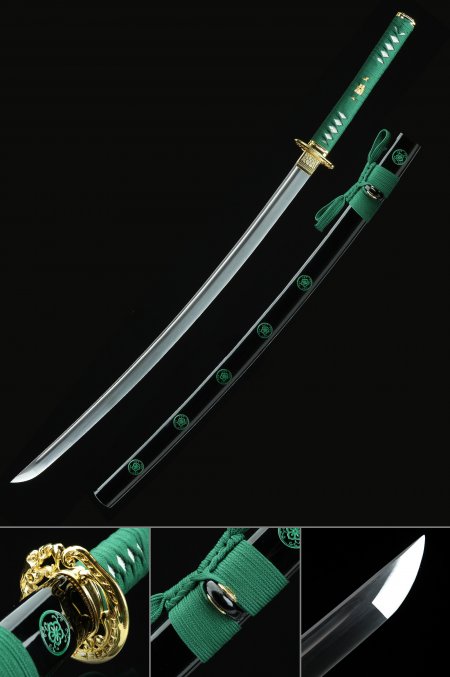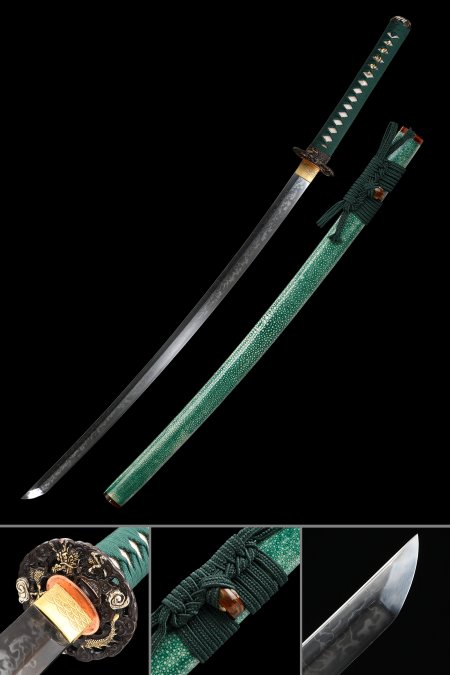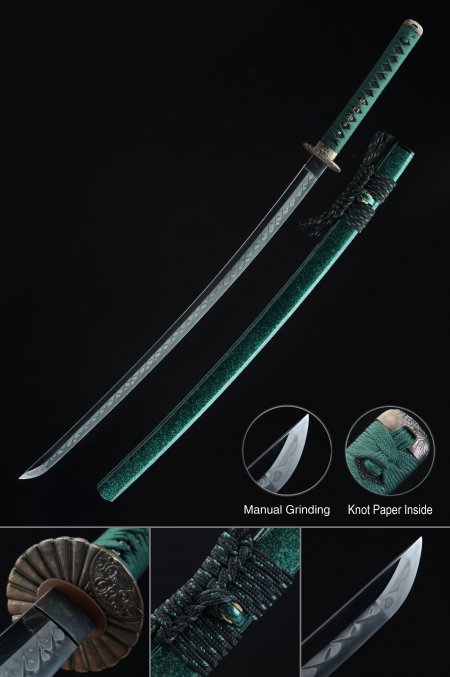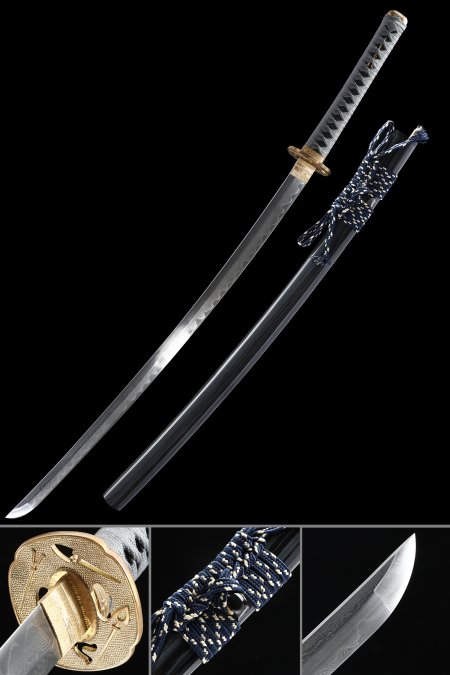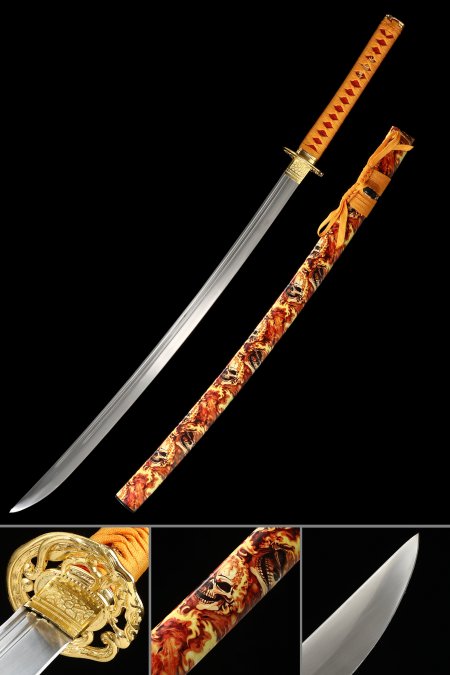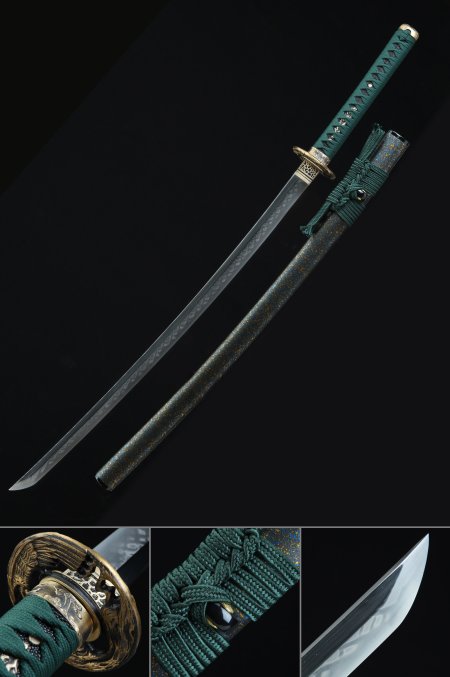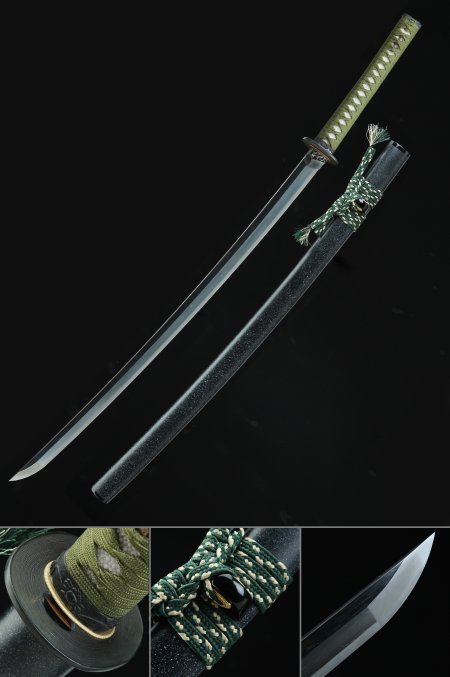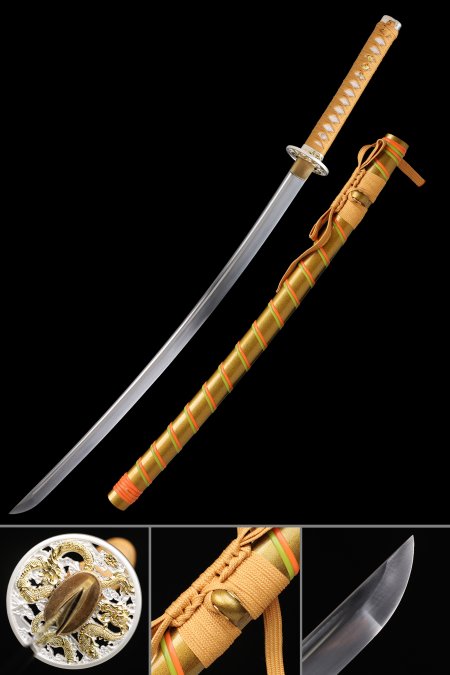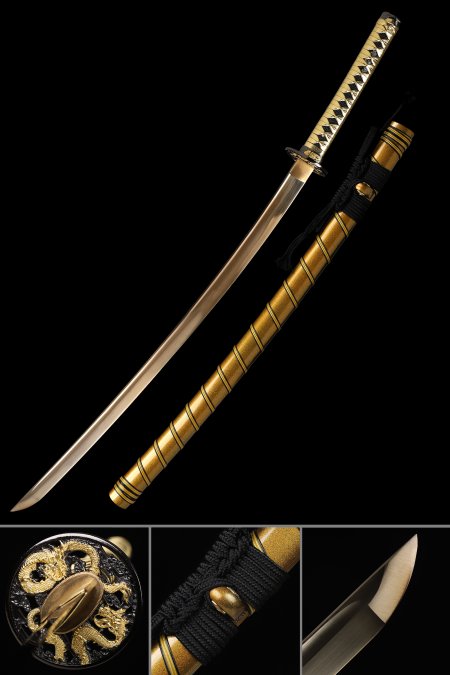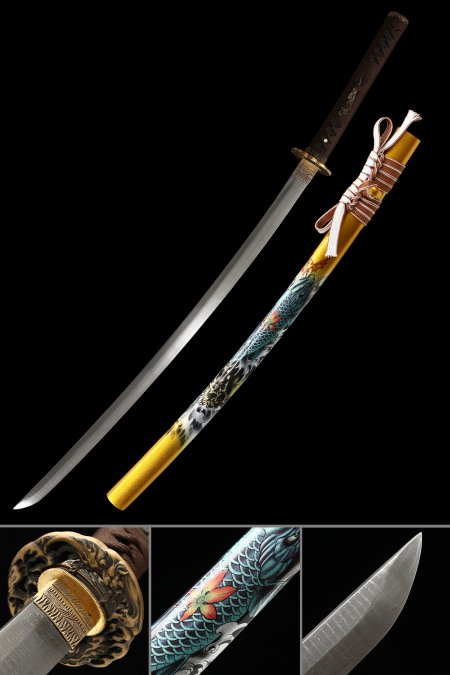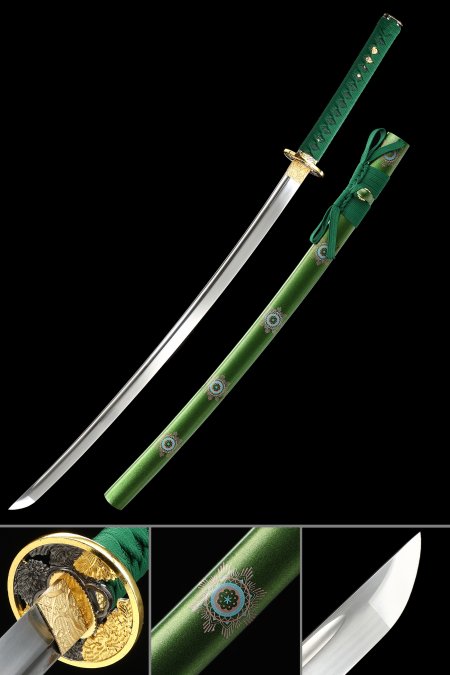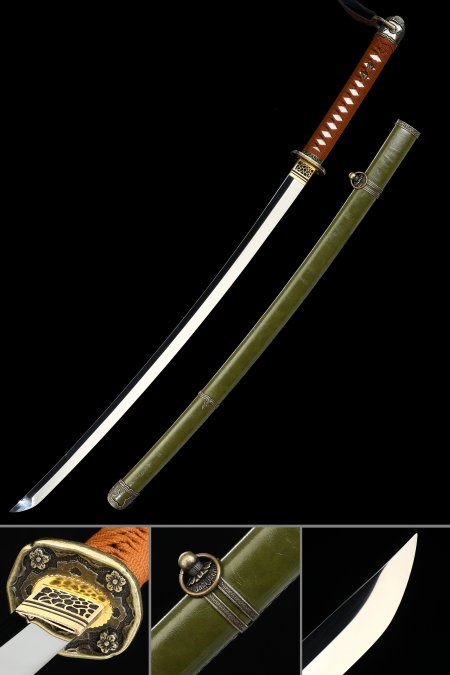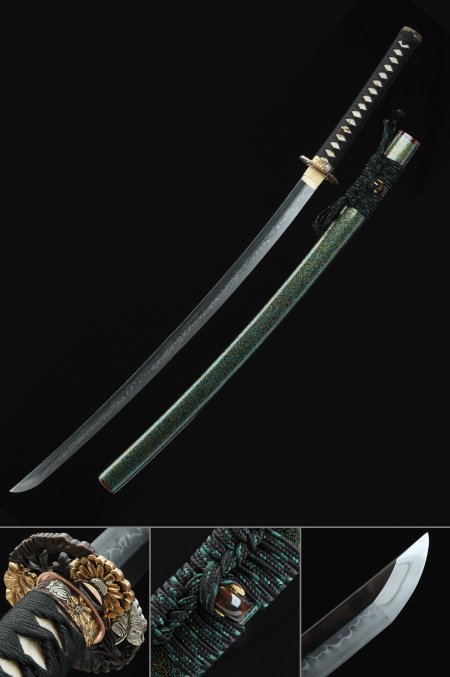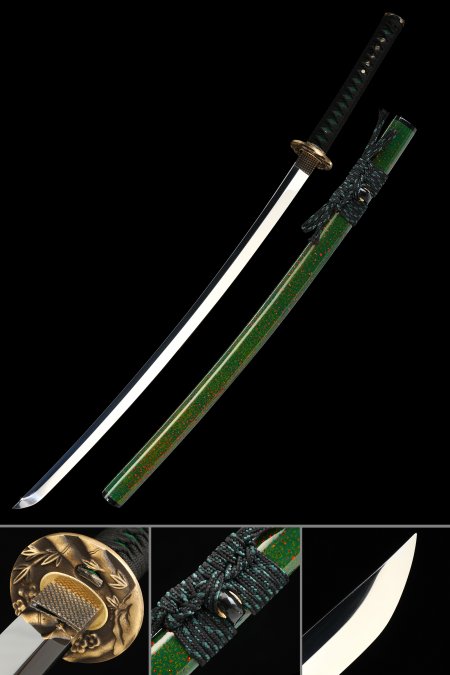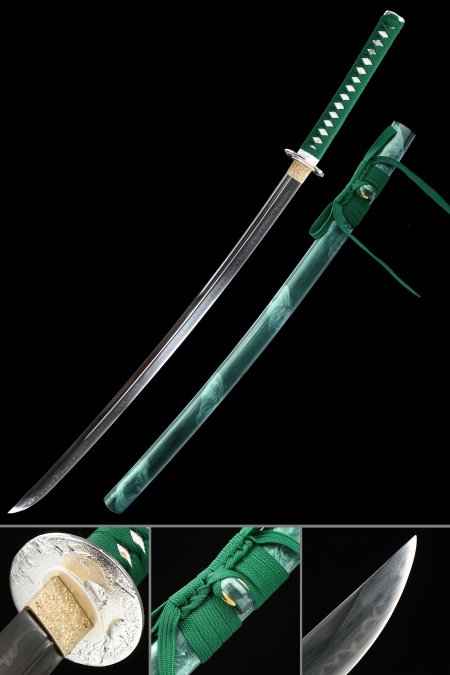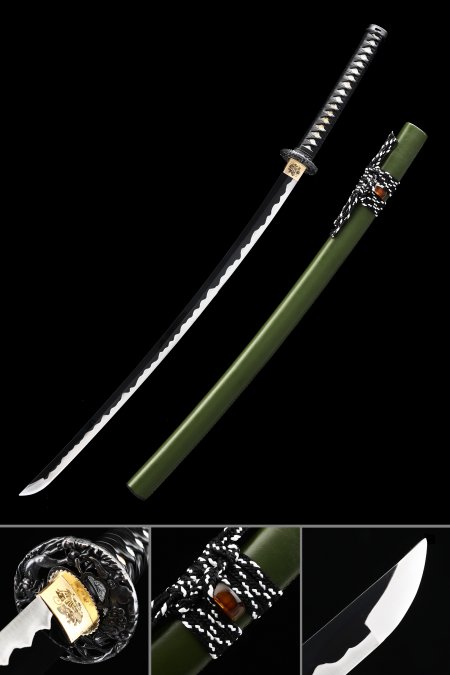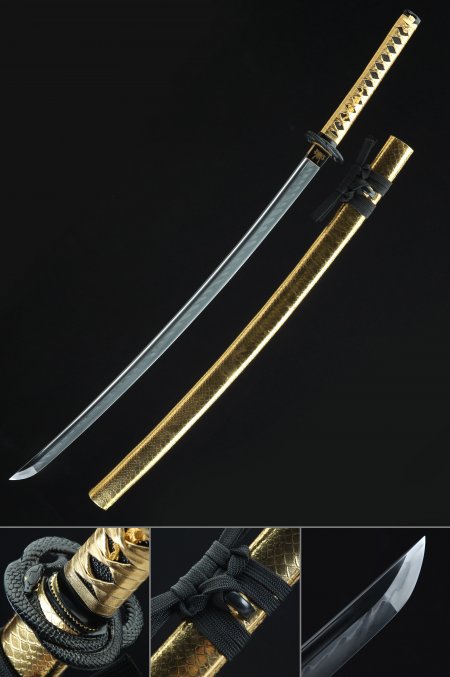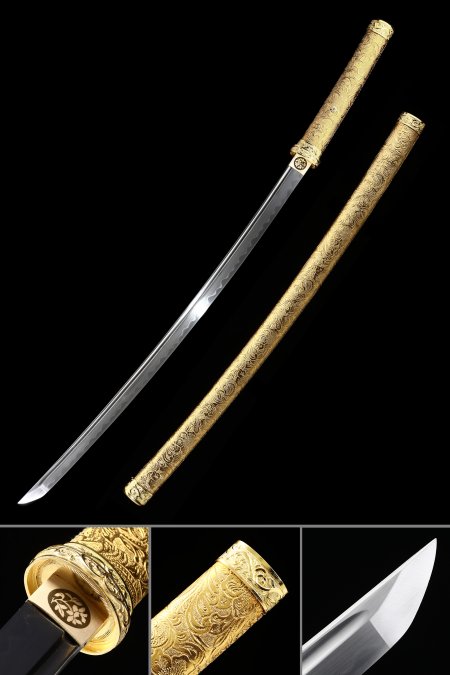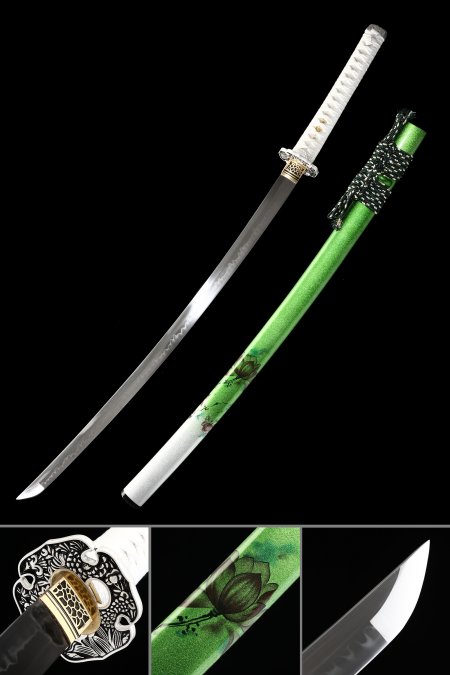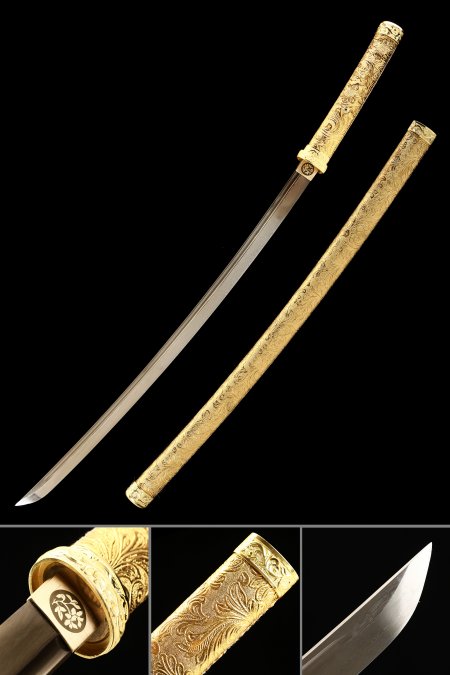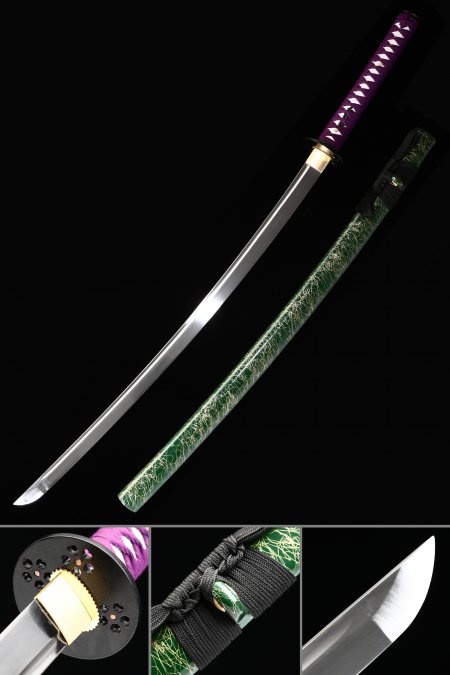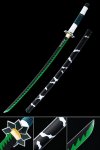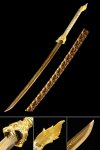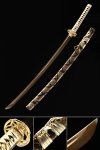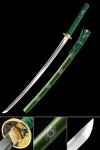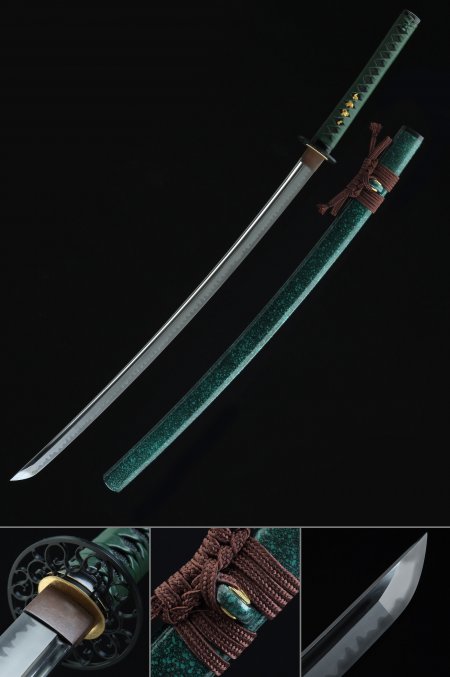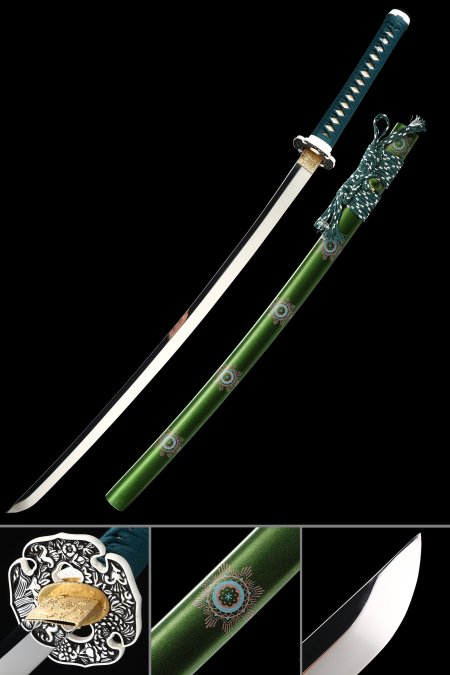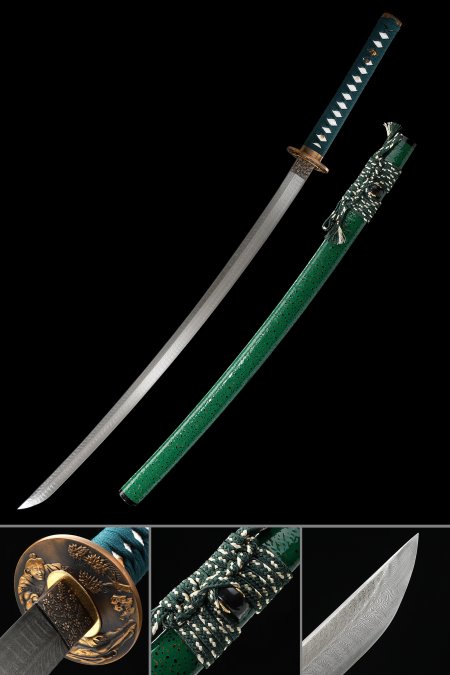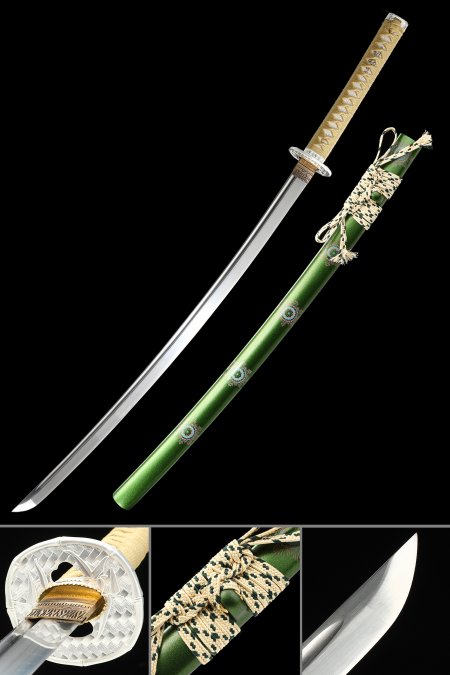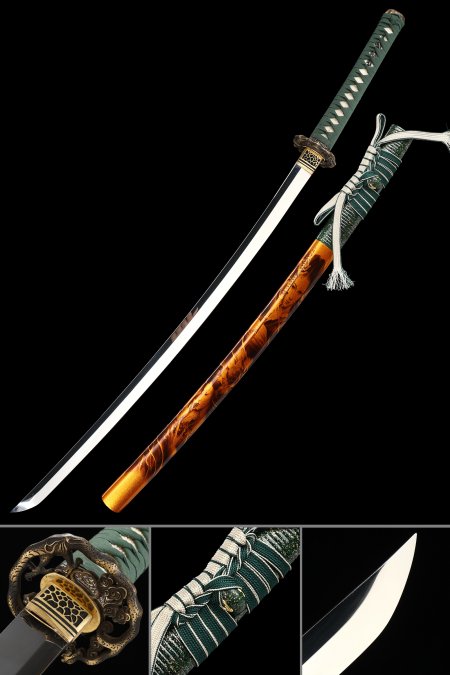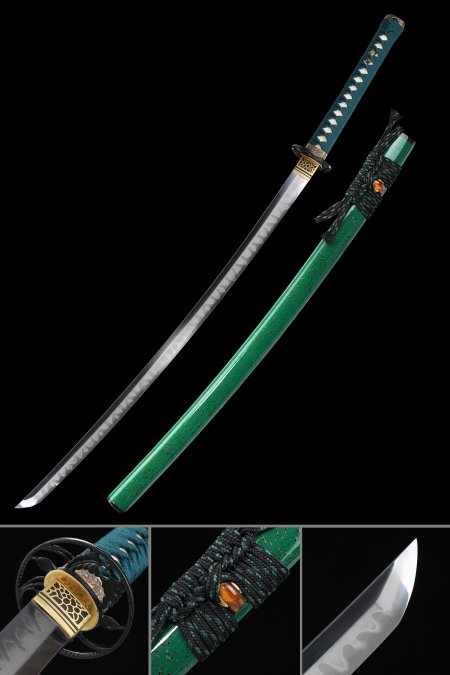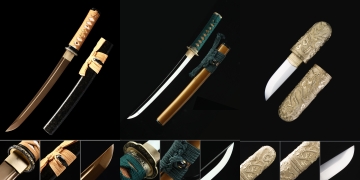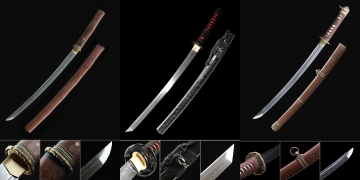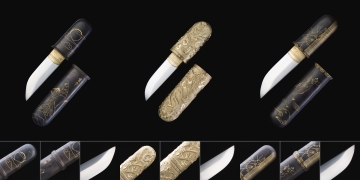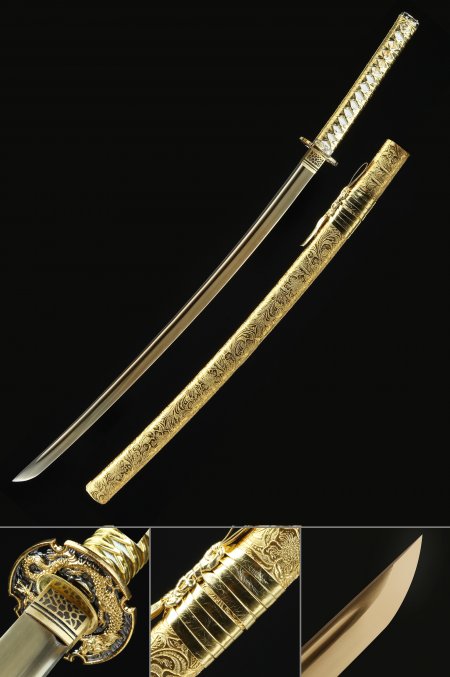
Green And Gold Katana

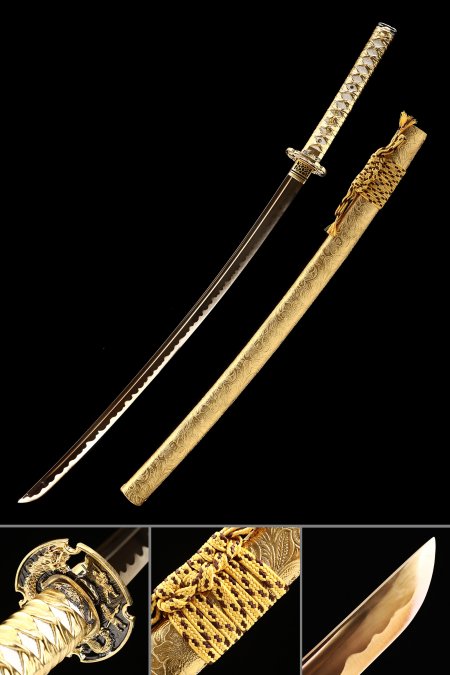
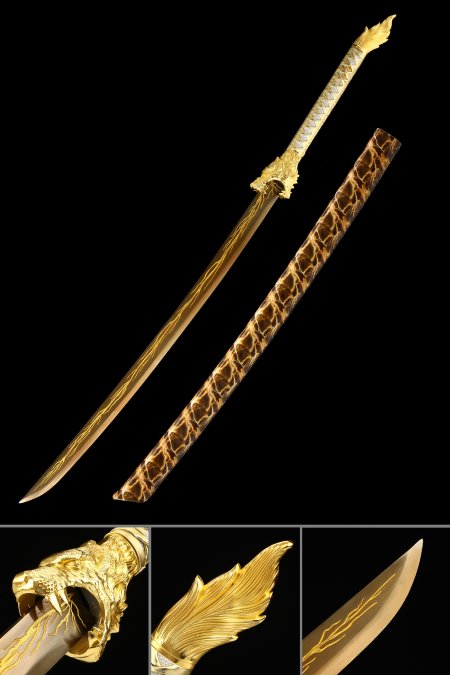
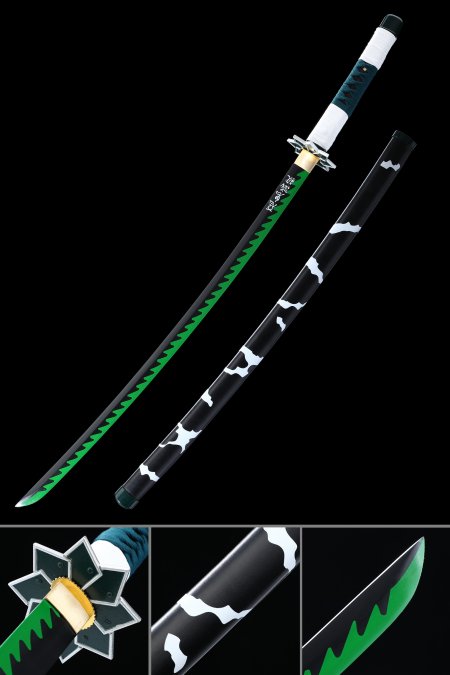
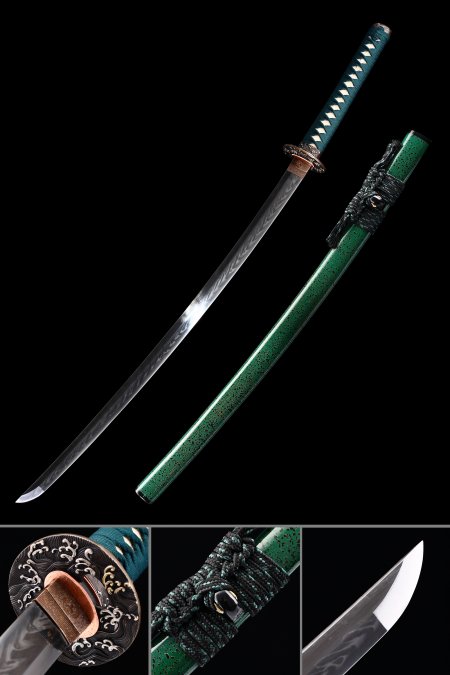
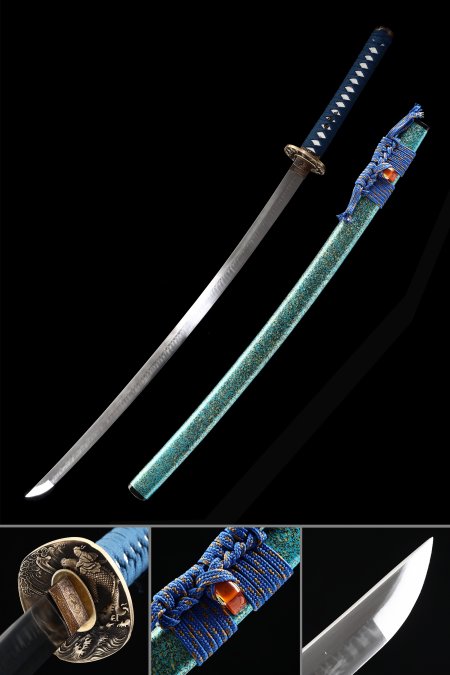
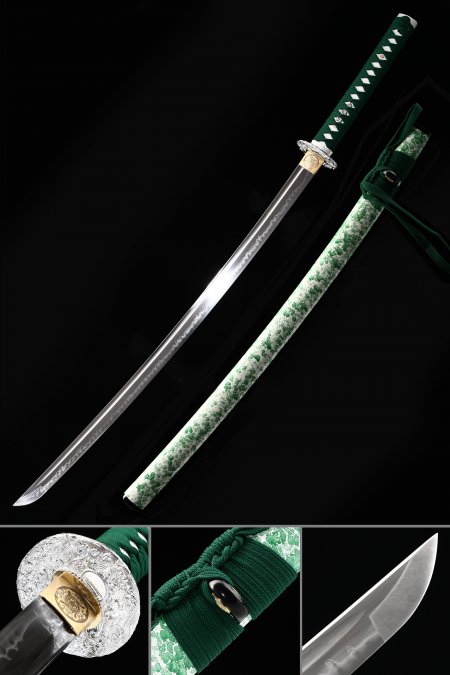
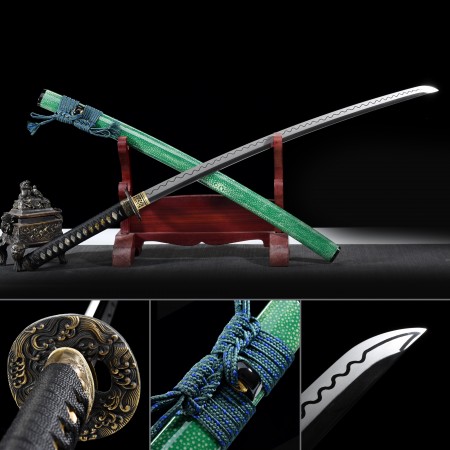
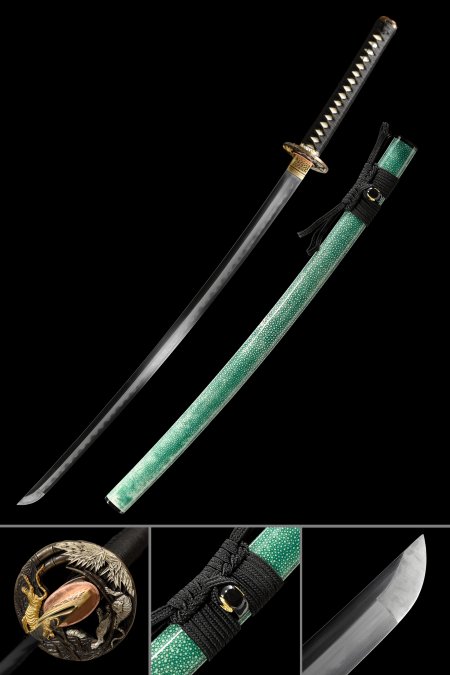
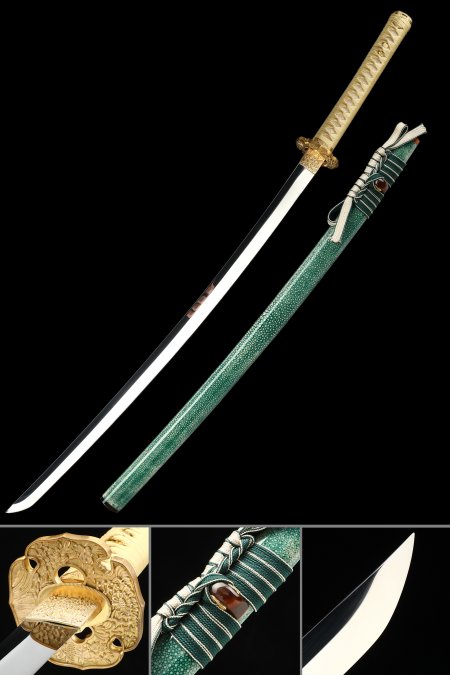
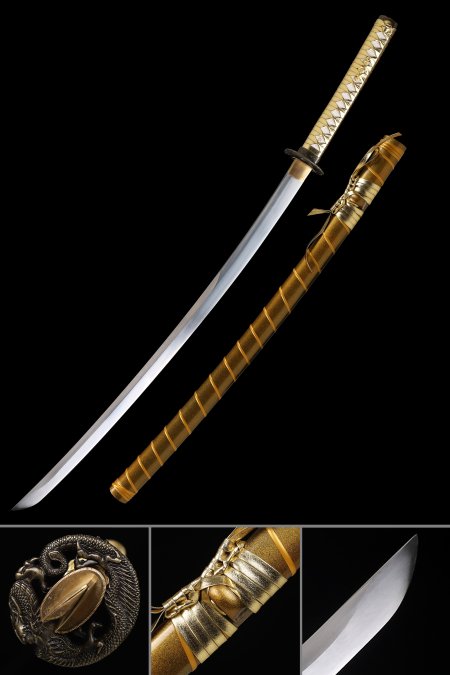
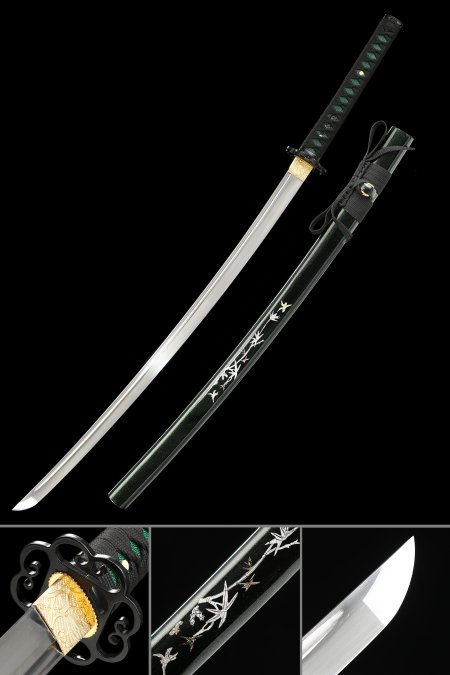
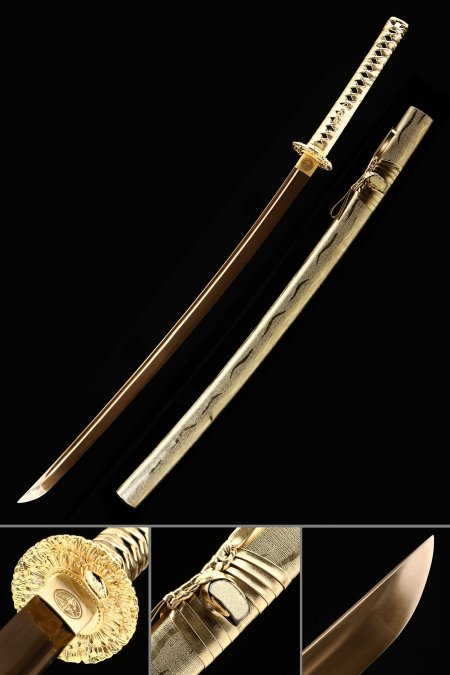
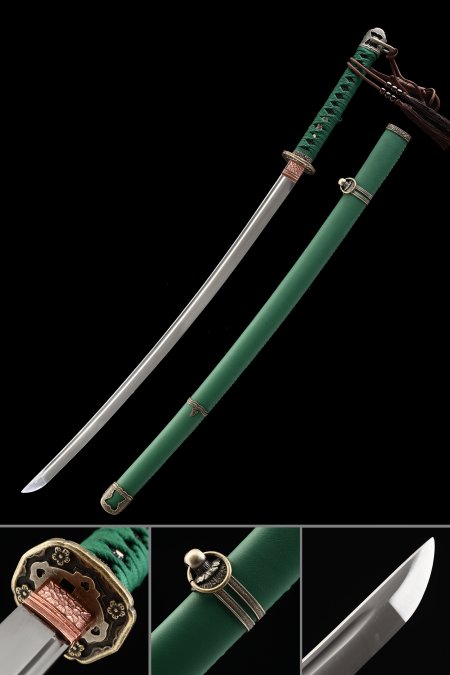
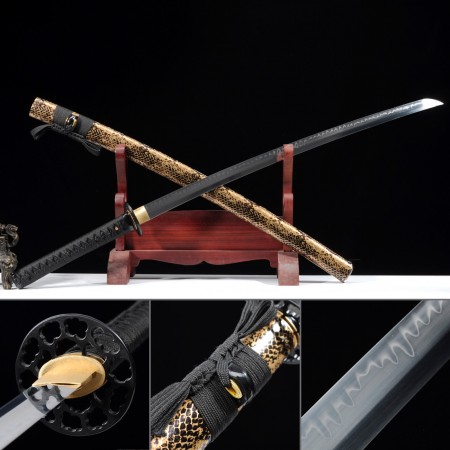
Green and gold katana bring together two of the most visually commanding tones in Japanese sword aesthetics - the deep vitality of forest green and the ceremonial richness of gold. Each piece in this collection pairs hand-forged carbon or damascus steel blades with lacquered saya, ray-skin wraps, and ornate tsuba to create display-worthy centerpieces for serious collectors. Free standard shipping is included on every order, along with hassle-free returns, so you can shop with complete confidence.
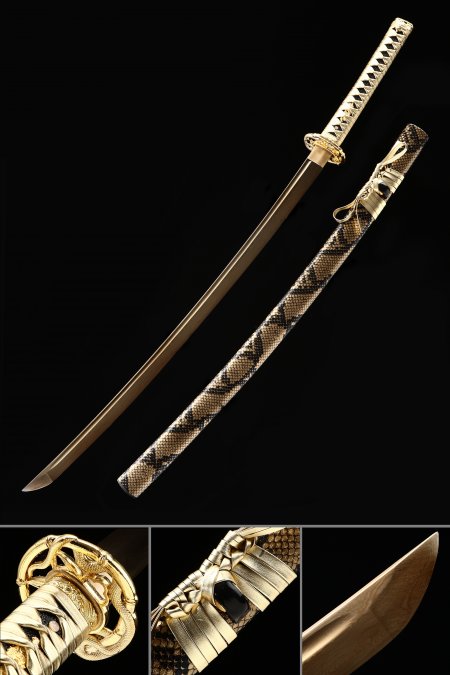
Showing 47 Products

Related Collections

Green Wakizashi5 items


17 Reviews

Golden Tanto3 items


13 Reviews

Gold Wakizashi6 items


73 Reviews

Gold Aikuchi4 items


7 Reviews

Frequently Asked Questions

What steel types are used in green and gold katana?
This collection spans several steel grades suited to different collector priorities. 1045 carbon steel offers a reliable, uniform grain and takes gold-tone polish fittings exceptionally well, making it a strong entry point. 1065 carbon steel is slightly higher in carbon content, producing a blade with more visible character along the edge. Damascus steel - either classic twist-pattern or manganese-folded - introduces flowing surface layering that creates natural visual contrast against green lacquered or python-pattern saya. At the top tier, T10 folded clay-tempered steel is differential-hardened to produce an authentic hamon, the undulating temper line that is one of the most respected markers of traditional forging craft. Each steel type brings its own surface qualities and display appeal, so the right choice depends on how prominently the blade itself features in your intended presentation.
How does a clay-tempered hamon differ from a polished blade?
A hamon is the visible boundary line created during differential hardening, a process where the blade is coated in clay before quenching. Thicker clay along the spine cools slowly, keeping that area tough and flexible, while the thinly coated edge cools rapidly, producing a harder, more crystalline steel structure at the cutting zone. The transition between these two zones appears as a misty, undulating line - the hamon - which can take forms described as gunome (rounded waves), notare (gentle curves), or suguha (straight). On a polished T10 or high-carbon blade, the hamon is a direct record of the forging process, not an etched or acid-washed imitation. For collectors, a genuine hamon adds significant provenance value because it demonstrates that the blade was individually heat-treated rather than batch-processed.
How should I care for a lacquered green saya long-term?
Lacquered saya - including piano green, speckled, and matte variants - are durable but benefit from a few consistent habits. Keep the piece away from prolonged direct sunlight; UV exposure over several months can cause surface yellowing or hairline cracking in the lacquer topcoat. Avoid storing in spaces with sharp humidity swings, such as uninsulated garages or basements, as the wood core beneath the lacquer can expand and contract, stressing the finish. Wipe the exterior only with a soft, dry cloth - no solvents or furniture polish. When drawing or sheathing the blade for display adjustment, do so slowly and vertically to avoid lateral pressure that can chip the lacquer at the koiguchi (mouth of the saya). A properly maintained lacquered saya should retain its finish for many years without refinishing.
Can green and gold katana be displayed as a matched set?
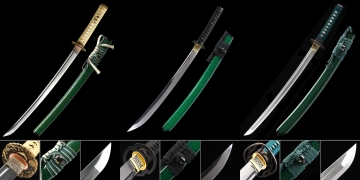
Yes, and thematic coordination is one of the more satisfying aspects of building a display around a specific color palette. Within this collection, pieces featuring shared elements - such as copper or bronze-gold tsuba across multiple swords, or coordinating green ray-skin and green ito wraps - can be arranged on a tiered horizontal stand for visual coherence. For collectors looking to extend the theme beyond the katana form, the Green Ninjato and Green T10 Carbon Steel Wakizashi collections offer shorter companion pieces in overlapping aesthetics. A katana, wakizashi, and ninjato displayed together on a three-tier stand creates a visually complete arrangement that references the classical daishō pairing while adding a distinctly modern and personal curatorial touch.
What makes green and gold a historically meaningful color pairing?
In Japanese visual culture, green has long been associated with nature, renewal, and the meditative calm of Zen garden aesthetics - bamboo, pine, and the lacquered armor trim of certain regional lords all draw on this symbolism. Gold, by contrast, signals authority and ceremony: the gilded fixtures of Noh theater costumes, the gold-leaf screens of Momoyama-period interiors, and the ornate menuki of high-ranking samurai tachi all use gold to indicate status and refinement. When applied to a collectible katana, this pairing creates a piece that reads as both organic and elevated - grounded in nature while gesturing toward the ceremonial. It is a combination that works particularly well in East Asian art interiors, nature-themed display rooms, or alongside lacquerware and ceramic collections where the palette already exists in other objects.

Customer Reviews

Cart 0 Items

Your cart is empty