Gold Silver Tsuba Tanto
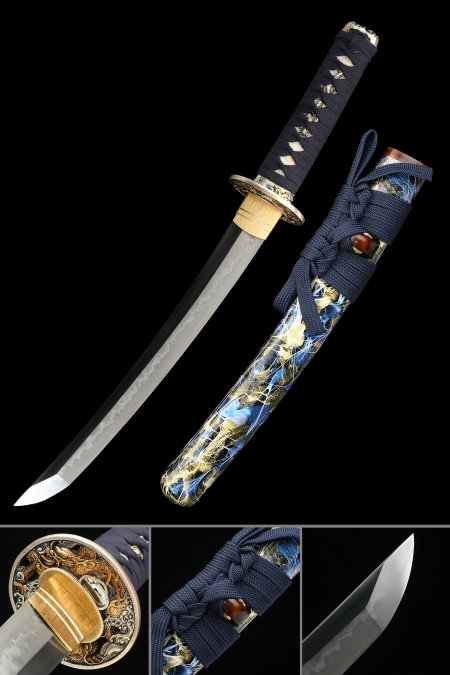
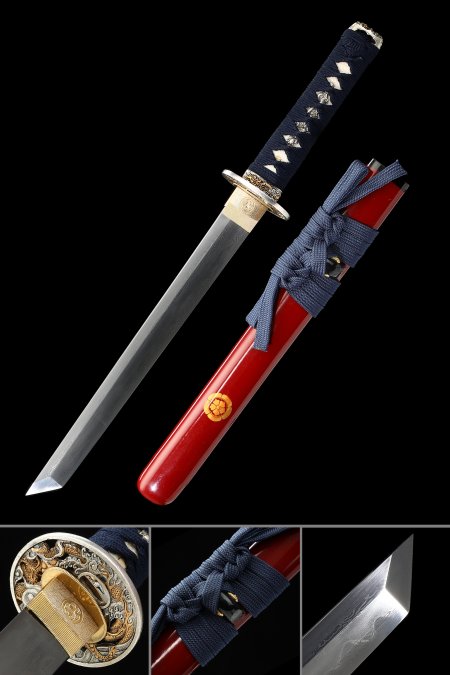
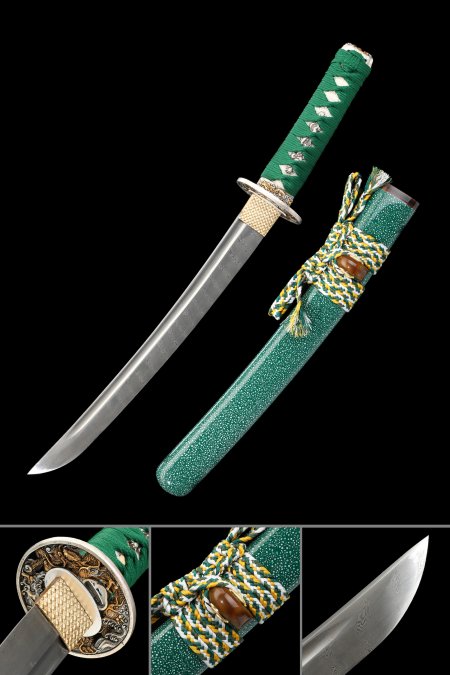
The Gold Silver Tsuba Tanto collection brings together hand-forged tanto blades paired with ornately cast tsuba finished in rich gold and silver tones. Each piece showcases traditional Japanese metalwork — from intricate dragon motifs to layered Damascus patterns — mounted on high-carbon or folded steel blades with authentic hamon activity. Crafted for serious collectors and display enthusiasts, these tanto arrive ready to exhibit. Enjoy free shipping on every order, backed by our hassle-free return policy.
Free Shipping
369.00 USD
Free Shipping
419.00 USD
Related Collections
Frequently Asked Questions
What makes gold and silver tsuba historically significant?
In feudal Japan, gold and silver finishes on sword fittings were not purely decorative choices — they carried social and ceremonial weight. Iron and shakudo (a copper-gold alloy darkened to near-black) were standard materials for everyday samurai mounts, while gilded or silvered tsuba were associated with formal presentation swords, gifts between lords, and court ceremonial pieces. This hierarchy of materials is why gold and silver tsuba remain visually distinctive in a collection: they reference a specific register of Japanese blade culture that sat above functional field use. Modern reproductions that apply gold or silver tones to cast zinc alloy or brass guards draw on this tradition, giving collectors a visually accurate reference to high-status historical koshirae without the rarity cost of antique originals.
How does Damascus steel differ from T10 in a tanto blade?
Both Damascus and T10 are high-carbon steel options that can produce exceptional surface character, but they achieve it through completely different metallurgical processes. T10 is a mono-steel with a tungsten additive that refines carbide grain, allowing the clay-tempering process to generate a clean, well-defined hamon along the temper line. The blade surface itself remains relatively uniform in texture, letting the hamon be the primary visual feature. Damascus steel is a folded or pattern-welded billet made from multiple steel alloys forge-welded together — acid etching after polishing reveals the layered grain as a flowing, organic pattern across the entire flat of the blade. For collectors, the choice often comes down to preferring a classic single focal point (the hamon on T10) versus an all-over surface texture (the grain pattern on Damascus).
What saya materials are used in this tanto collection?
The saya (scabbard) materials in this collection include genuine ray skin wrap in forest green and lacquered wood finishes in blue-gold marble tones. Ray skin, known in Japanese as samegawa, is a traditional covering material valued for its granular texture and durability — the raised nodes create a natural grip surface and add visual depth that lacquered wood alone cannot replicate. Lacquered saya offer a smoother, more formal presentation and allow decorative color gradients that complement the gold and silver tsuba tones. Both saya types are fitted with matching kojiri (end cap) and koiguchi (mouth fitting) hardware to complete the koshirae assembly. For long-term display, keeping the saya away from direct sunlight prevents lacquer fading and ray skin discoloration.
How should I store and maintain a display tanto properly?
For long-term display, the blade should be lightly coated with a thin application of blade oil — choji oil or a modern mineral-based equivalent — every few months depending on your local humidity. A light wipe with a clean, lint-free cloth before applying oil removes any surface oxidation before it can develop into pitting. Store the tanto horizontally or at a slight upward angle with the edge facing up, which is the traditional Japanese orientation and prevents oil from pooling unevenly along the hamon. Keep the assembly away from direct sunlight and high-humidity environments; both lacquer saya and ray skin coverings can swell, crack, or fade with prolonged exposure. Never store the blade in its saya for extended periods without periodic removal to check for trapped moisture, which is the most common cause of hidden corrosion on display blades.
Is a gold silver tsuba tanto a good gift for a collector?
A tanto with ornate gold or silver tsuba works particularly well as a gift for collectors who already have full-length katana or wakizashi in their display and are looking to add a shorter blade format with strong visual contrast. The compact size makes tanto easier to display in a smaller dedicated space — a single-tier stand on a desk or shelf — without requiring the wall-mounted horizontal rack that a katana demands. The gold and silver metalwork on the tsuba photographs exceptionally well, which matters to collectors who document their pieces. If the recipient has a preference for specific steel types (Damascus grain patterns versus a clean hamon line), that distinction is worth noting when selecting. Tanto in this category also make a more refined impression than decorative wall pieces because the assembly references actual Japanese sword-fitting traditions rather than purely ornamental design.
Customer Reviews
Frank Fuss
Florida, United States
This piece is beautiful. The only reason I took off a star was for minor quality control issue. A few scuffs. Other than that it really nice.
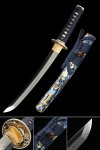 |
T10 Carbon Steel Tanto with Real Hamon in Dragon Tsuba - Blue-Gold Marble Saya, Dark Blue Ito |