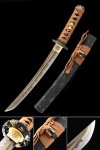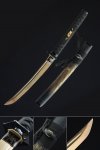
Gold Blade Tanto

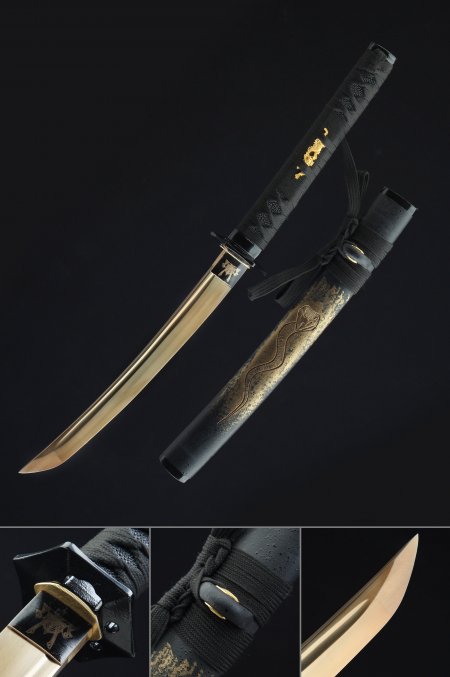
The Gold Blade Tanto brings together the refined aesthetics of traditional Japanese short-sword design and the unmistakable brilliance of a gilded finish — a pairing that transforms each piece into a showcase-worthy collectible. Crafted from quality carbon steel with specialized surface treatment, the golden blade commands attention while honoring centuries of tantō craftsmanship. Every piece ships free and is backed by our hassle-free return policy, so adding this luminous treasure to your display is completely risk-free.
Showing 2 Products

Related Collections

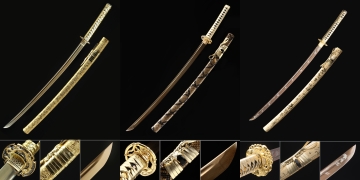
Gold Katana17 items


172 Reviews

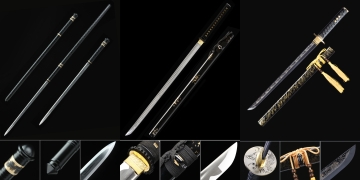
Gold Ninjato2 items


3 Reviews

Gold Wakizashi6 items


73 Reviews

Gold Aikuchi4 items


7 Reviews

Frequently Asked Questions

What steel is used in Gold Blade Tanto pieces?
The collection features two distinct steel choices. The first is T10 tool steel, a high-carbon alloy prized for its tight grain structure and ability to hold precise geometry along the edge — qualities that make it a respected choice among collectors who value authentic forging standards. The second option uses 1045 carbon steel subjected to a clay-tempering process, where a clay coating is applied before the quench to produce differential hardness across the blade. Both steels are then treated with a specialized gilded surface finish that bonds to the steel without compromising its structural integrity, resulting in a blade that is as honest in its construction as it is striking in appearance.
How is the gold color on the blade achieved?
The golden appearance is produced through a controlled surface treatment applied after the forging and tempering stages are complete. Unlike painted or foil-wrapped blades, the process used here bonds a metallic gold-toned layer directly to the polished steel surface, producing a finish that resists flaking and maintains its luster under display conditions. This approach is distinct from historical gold-lacquer work found on sword furniture, but it draws from the same aesthetic tradition of gilding significant surfaces to signal quality and craftsmanship. The underlying steel retains its tempered properties, so the blade maintains proper geometry and the visual finish remains stable as long as the piece is stored away from prolonged humidity.
How should I store and maintain a Gold Blade Tanto?
Because the gilded finish is sensitive to prolonged moisture and acidic skin contact, a few straightforward habits will keep the piece looking its best. Apply a thin coat of food-grade mineral oil or traditional choji oil to the blade every two to three months, or more frequently in humid climates. Always handle the blade with clean cotton gloves — fingerprints leave behind oils and salts that can dull or spot the gold-toned finish over time. Store the tanto horizontally in its saya inside a wood or paulownia display case, which naturally absorbs excess ambient moisture. Avoid airtight plastic cases, as trapped humidity accelerates oxidation. The engraved black saya lacquer benefits from an occasional light wipe with a dry microfiber cloth to preserve its sheen.
How does the Gold Blade Tanto differ from a Gold Tsuba Tanto?
The core distinction is where the gilded aesthetic is concentrated. In the Gold Blade Tanto, the gold treatment covers the blade itself — the dominant visual element — making the piece read as luminous from across a room. The Gold Tsuba Tanto, by contrast, reserves the gold accent for the tsuba (hand guard), keeping the blade in a more traditional polished-steel presentation. Collectors assembling a curated display often find the two approaches complementary: the Gold Blade Tanto commands visual priority, while the Gold Tsuba Tanto offers a more understated piece where the gilded guard becomes a focal point for close inspection. Both share the same tantō silhouette, so they pair naturally on a multi-tier display stand.
Is a Gold Blade Tanto a good gift for a Japanese culture enthusiast?
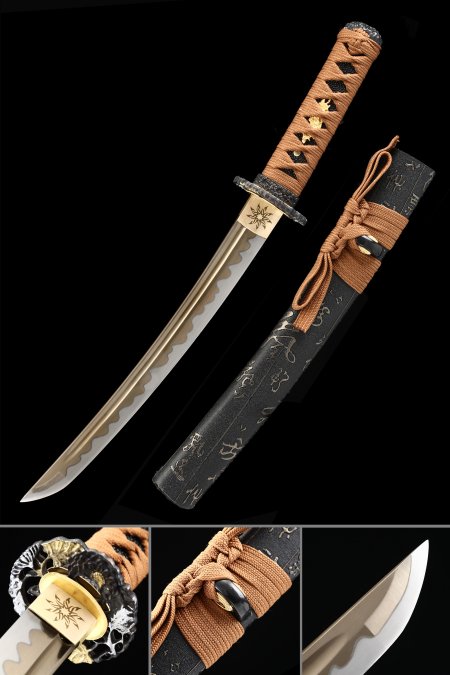
It works particularly well as a gift precisely because it communicates multiple layers of thoughtfulness. The tantō form carries genuine historical context — it was an essential component of formal samurai dress and appeared in ceremonial contexts throughout Japanese history. The gold finish elevates the piece beyond a standard reproduction, giving it a distinctive presence that even recipients unfamiliar with sword collecting will immediately recognize as special. The engraved saya options — kanji script on one variant, snake motif on another — add symbolic depth that Japanese culture enthusiasts will appreciate. For gifting, consider pairing it with a dedicated display stand and a brief card explaining the historical significance of the tantō, which transforms a beautiful object into an educational keepsake.

Customer Reviews

Cart 0 Items

Your cart is empty