FAST SHIP
Free Shipping
149.00 USD
ON SALE! 20% OFF
Was: 189.00 USD

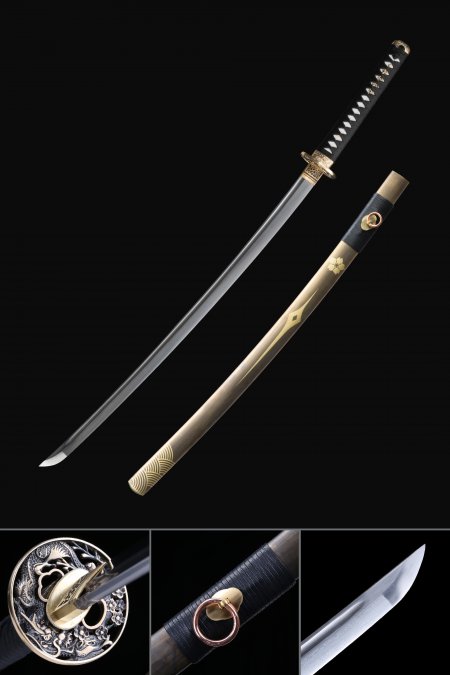
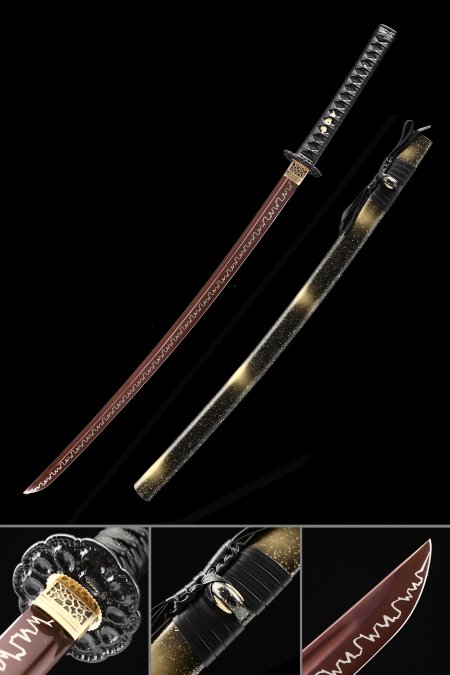
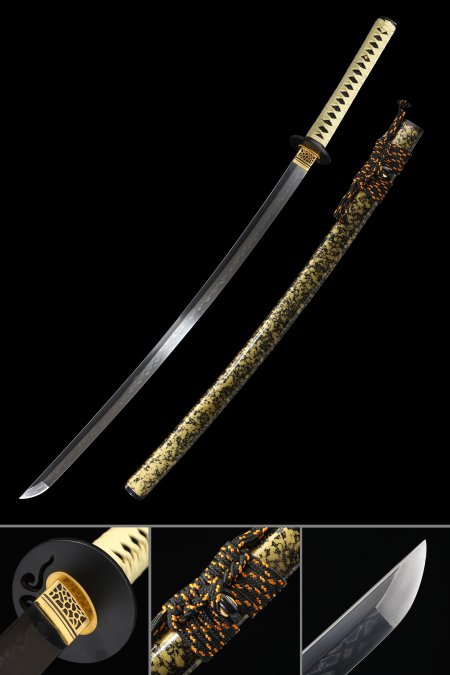
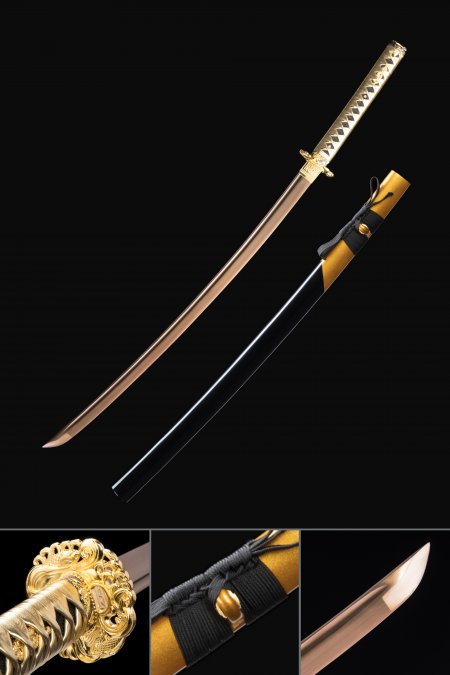
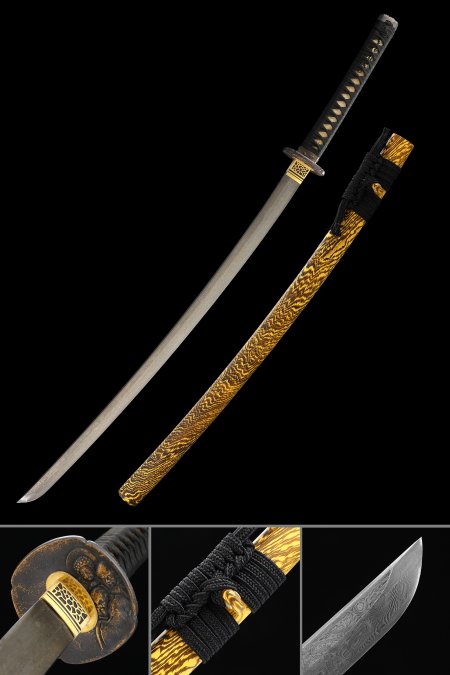
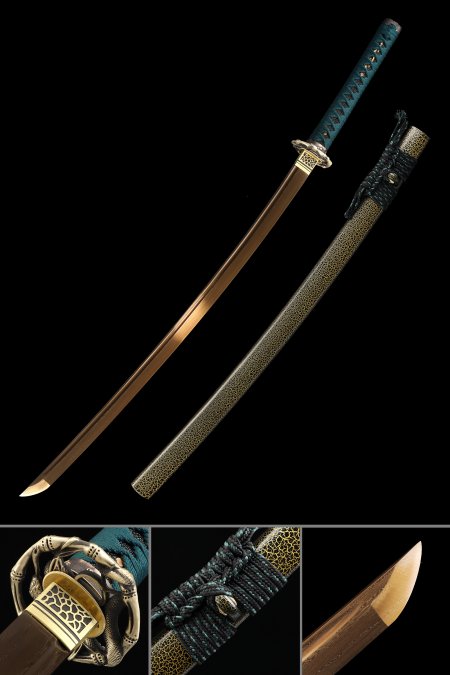
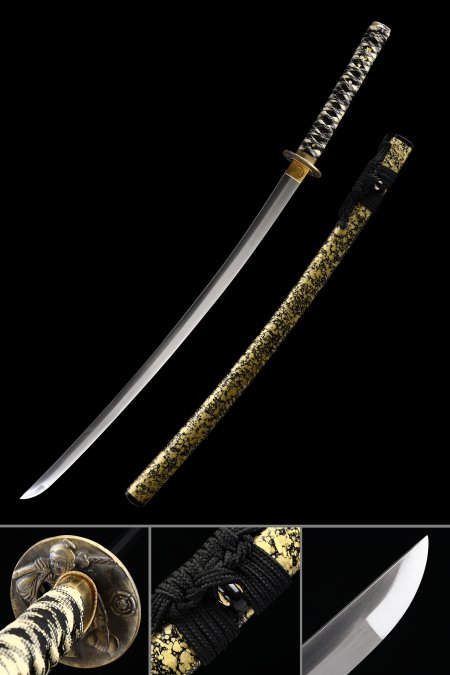
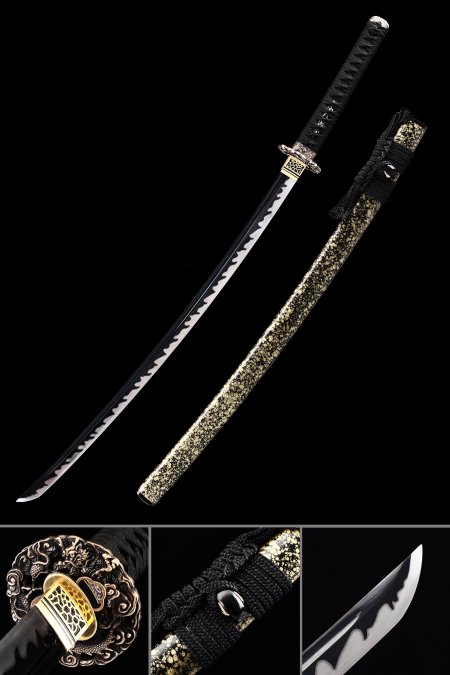
Gold and black lacquer saya katana combine the visual drama of high-contrast finishes with the craft tradition of hand-applied Japanese scabbard work. Each piece in this collection pairs a full-tang blade — forged from Damascus, T10, or high-carbon manganese steel — with a richly lacquered hardwood saya featuring gold detailing, ornate tsuba, and coordinated ito wrap. Designed for display and collection, not use. Enjoy free shipping on every order, plus hassle-free returns.
This katana is awesome! It is very heavy, and comes slightly sharpened. It is a great decorative piece in my living space. I would definitely buy another one in the future.
 |
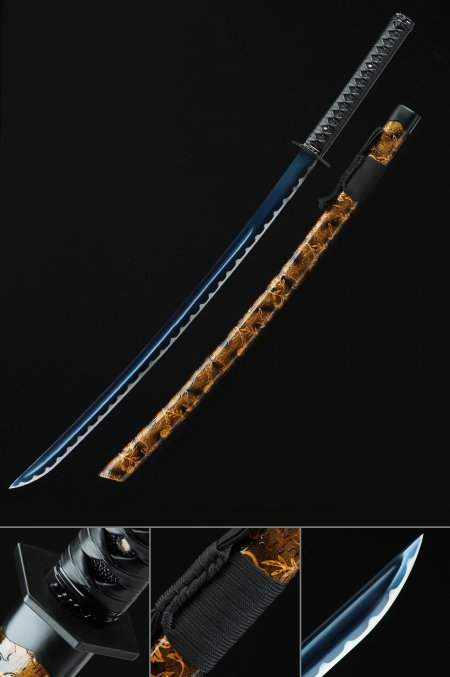
Clay Tempered Manganese Steel Blue Blade Katana with Golden Floral Saya and Black Ito Handle |
2nd Model and it is just as quality and arrived earlier than anticipated as well.r
r
Loyal customer here for our new Katana Collection!
 |
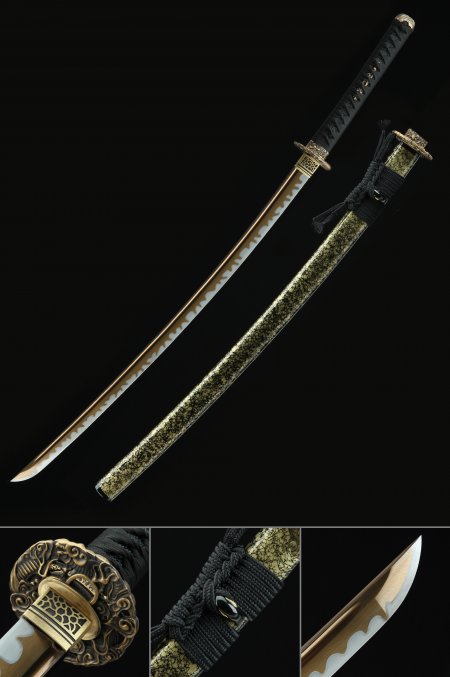
1060 Carbon Steel Katana with Golden Blade and Ornate Gold Alloy Tsuba in Black Saya |
Purchased this sword for a friend that has gone above
|
1060 Carbon Steel Katana with Golden Blade and Ornate Gold Alloy Tsuba in Black Saya |
Super fast forging and shipping, made it from China to Canada in about a week and a half. Tested these out on some tatami mats and jeez do they feel nice for the price. Very solid full tang with pins to take apart the handle. I’ve never found another company that sells quality swords at this price.
|
1060 Carbon Steel Katana with Golden Blade and Ornate Gold Alloy Tsuba in Black Saya |
We are very pleased with both the sword we purchased from Truekatana as well as the excellent customer service when we needed to return our original purchase. The communication was prompt and informative with the information we needed to make the return as well as receive our refund. Thank you!
|
Clay Tempered Manganese Steel Blue Blade Katana with Golden Floral Saya and Black Ito Handle |
I also paid for a stand but never received the confirmation number. But my PayPal account was charged.
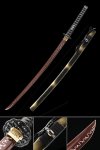 |
Red Blade Manganese Steel Katana with Lightning Hamon in Gold-Speckled Black Saya - Full Tang Collectible |
The scabbard has this weird apple print texture on it, but other than that it’s great!
|
Clay Tempered Manganese Steel Blue Blade Katana with Golden Floral Saya and Black Ito Handle |
I'm enjoying my katana, everything was pretty fine, the description is very accurate which is important to know what you are buying. Same with the tracking system with pretty updated info. Anxious to buy my next katana.
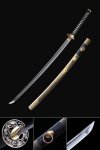 |
Damascus Steel Katana with Gold-Black Lacquer Saya - Dragon Tsuba, Black Cord Handle, Folded Blade |