FAST SHIP
Free Shipping
169.00 USD
ON SALE! 15% OFF
Was: 199.00 USD

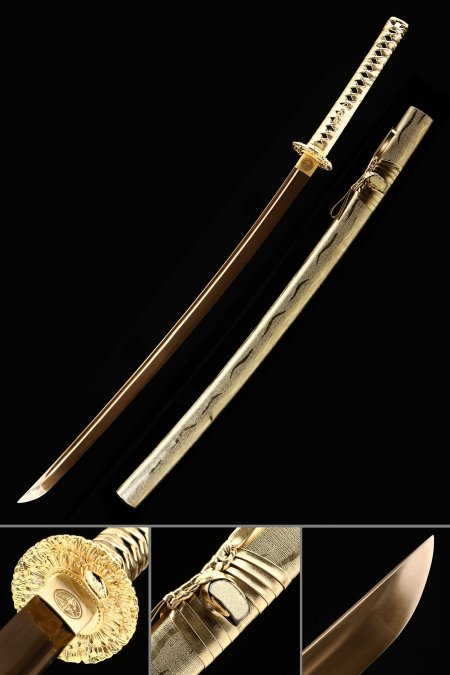
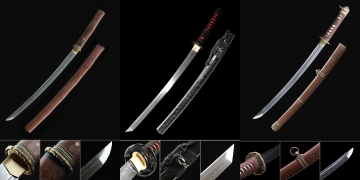
Explore our Gold and White Katana collection — a curated selection of hand-forged Japanese swords featuring luminous white saya, gilded fittings, and meticulously wrapped handles that embody refinement and prestige. From clay-tempered T10 blades with real hamon lines to golden Damascus steel with intricate tsuba designs, each piece is crafted for the discerning collector. Every order ships with free shipping and a hassle-free return policy.
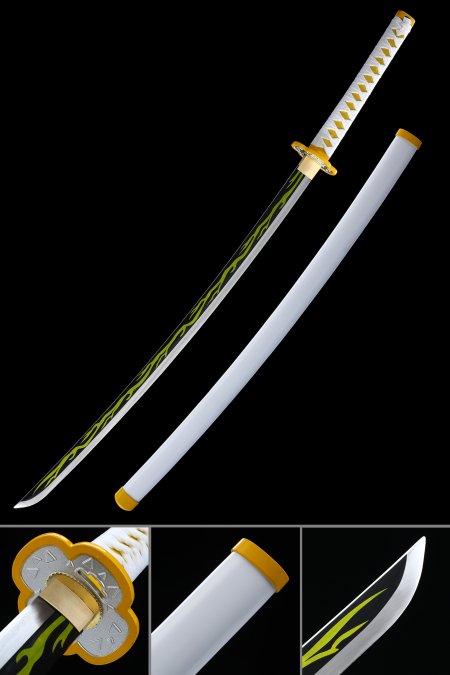
The blade was well made with good detail from the show it's inspired by and came at a timely manner it was a lovely gift to give to a family member.
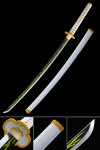 |
Zenitsu Agatsuma Sword - Kimetsu No Yaiba Thunder Breathing Nichirin, 1045 Carbon Steel, Yellow Blade |
It's a very nice sword. Good quality, little minor scratches on the blade very sharp and it looks good with my collection. I will buy from your company again
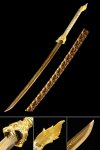 |
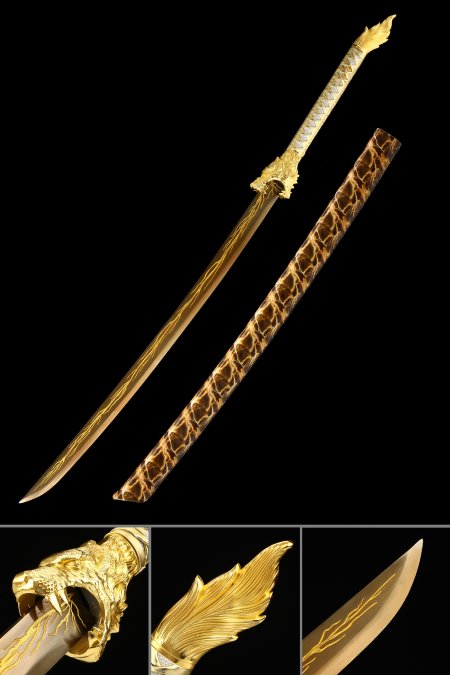
Golden Katana Sword with Manganese Steel Lightning Blade and Dragon Tsuba in Brown Scaled Saya |
The sword came fast, its nice and sharp and I love how detailed it is
|
Zenitsu Agatsuma Sword - Kimetsu No Yaiba Thunder Breathing Nichirin, 1045 Carbon Steel, Yellow Blade |
Great swords, bought one for both of my sisters as a Christmas gift. Very good quality and they loved them
|
Zenitsu Agatsuma Sword - Kimetsu No Yaiba Thunder Breathing Nichirin, 1045 Carbon Steel, Yellow Blade |
Came in perfectly and was securely wrapped. The only thing I would be aware of is that the packaging it comes in is Styrofoam wrapped in tape, as it does hold up well it was a pain to open without making a mess. Other than the packaging they were really nice and there was no damage to them.
|
Zenitsu Agatsuma Sword - Kimetsu No Yaiba Thunder Breathing Nichirin, 1045 Carbon Steel, Yellow Blade |
Really beautiful sword and was made perfectly to order, Its just what I needed.
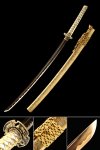 |
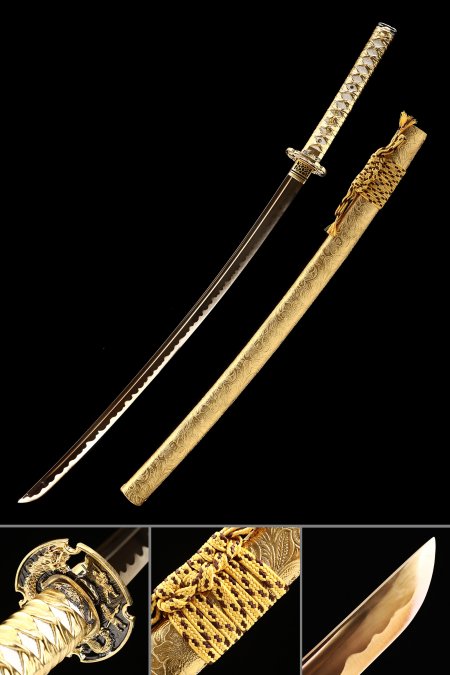
Golden Katana - Clay-Tempered T10 Steel Sword with Dragon Tsuba and Engraved Gold Saya |
It is a piece of art for sure! I was a little disappointed that that tsuba looked kind of cheap and there's visible glue in places. The etching on the blade is gorgeous though and the whole thing is nice and weighty. Even the sheath is pretty. Thank you!
|
Golden Katana Sword with Manganese Steel Lightning Blade and Dragon Tsuba in Brown Scaled Saya |
I have purchased three katanas from this website, and the service, along with the prompt delivery, has been outstanding. The quality of the swords and the craftsmanship is truly exceptional.
|
Golden Katana Sword with Manganese Steel Lightning Blade and Dragon Tsuba in Brown Scaled Saya |