What does "melaleuca steel" mean in katana collecting?
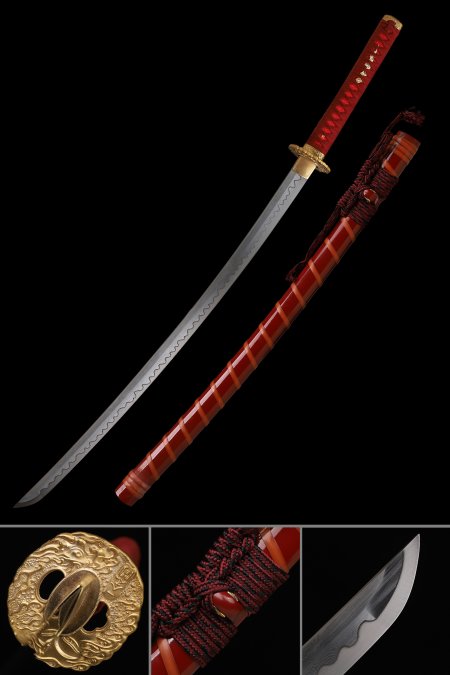
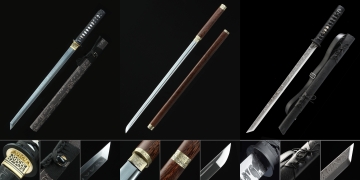
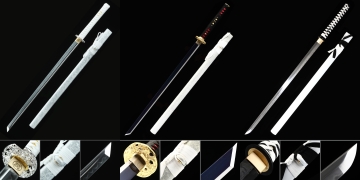
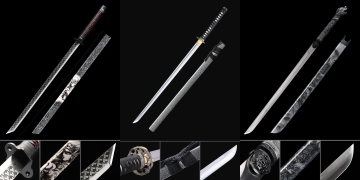
Melaleuca steel refers to folded high-carbon steel whose surface reveals a layered, wood-grain-like pattern after forging and polishing. The name draws an analogy to the peeling, multi-layered bark of the melaleuca (tea tree). During forging, the smith repeatedly folds and welds the steel billet — sometimes 13 or more times, producing over 1,000 layers — and each fold redistributes carbon content while creating the flowing grain visible on the finished blade. Because the pattern emerges organically from the metalworking process, no two melaleuca blades are ever identical. For collectors, this makes each piece genuinely one-of-a-kind rather than a mass-produced duplicate.
How does T10 clay tempering differ from standard folded steel?
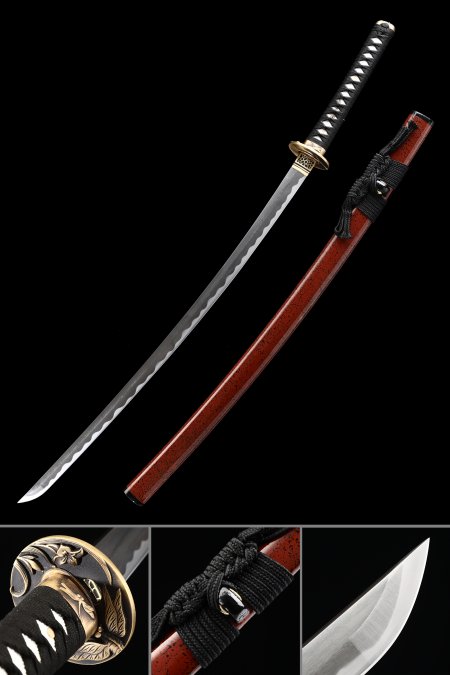
T10 tool steel is a high-carbon steel known for fine carbide distribution and good wear resistance. When clay tempering is applied, the smith coats the blade's spine with an insulating clay mixture before the final quench. This causes the edge to cool rapidly and harden to a higher degree, while the spine remains relatively softer and more resilient. The boundary between these two zones produces the hamon — the visible temper line prized by collectors as proof of authentic differential hardening. Standard folded steel constructions may not undergo clay tempering, so they display the melaleuca grain pattern without the additional hamon detail. Both approaches are distinct art forms, and many collectors pursue examples of each.
Is the red lacquer on the saya durable for long-term display?
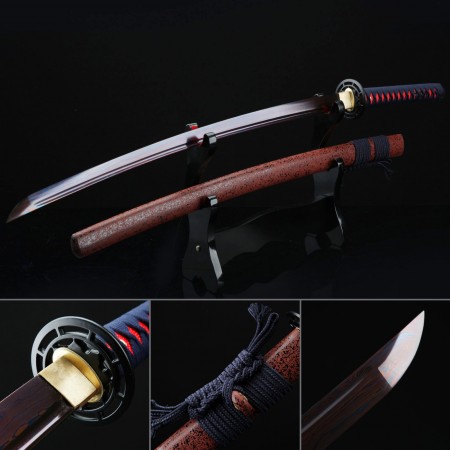
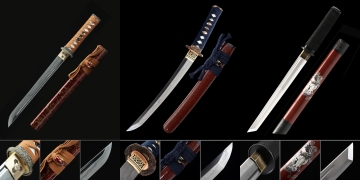
Traditional Japanese red lacquer — urushi or its modern equivalents — is remarkably durable when maintained correctly. The finish is built up in multiple hand-applied coats, each cured before the next is added, resulting in a hard, glass-like surface with genuine depth of color. For long-term display, the primary risks are prolonged direct UV exposure, which can fade the pigment over time, and sharp impacts, which can chip the finish. Storing or displaying the piece away from south-facing windows and handling the saya with clean, dry hands will preserve the lacquer's luster for many years. A very light application of paste wax (non-silicone) once or twice a year can add an additional layer of protection to the surface.
What maintenance does a folded steel collectible blade need?
Folded high-carbon steel requires more attentive care than stainless steel because its higher carbon content makes it more reactive to moisture. After handling, even brief contact from bare hands can leave acidic oils that promote surface rust if left unaddressed. The standard collector routine is to wipe the blade with a soft, lint-free cloth after any handling, then apply a thin coat of choji oil (a traditional Japanese blend of clove oil and mineral oil) or a neutral mineral oil using a clean patch. Distribute the oil evenly from the habaki (blade collar) to the tip, and remove any excess. Store the blade horizontally on a sword stand, and check the oil coat every one to two months in humid climates.
Are these katanas suitable as display gifts for sword enthusiasts?
This collection is well-suited as a gift for collectors who value visible craftsmanship over generic decorative pieces. The combination of a hand-forged melaleuca grain blade, red lacquer saya, and coordinated fittings — gold wave or floral tsuba, cord-wrapped handle — creates an immediately striking display item that signals genuine artisanal knowledge rather than a shelf decoration. When selecting a specific piece as a gift, consider whether the recipient favors the hamon detail of clay-tempered T10 or the surface grain of a multi-layer folded construction. Each appeals to a slightly different collector sensibility. A sword stand is an excellent complementary gift, as it allows the piece to be displayed horizontally, which is both the traditional presentation style and the most structurally stable option.