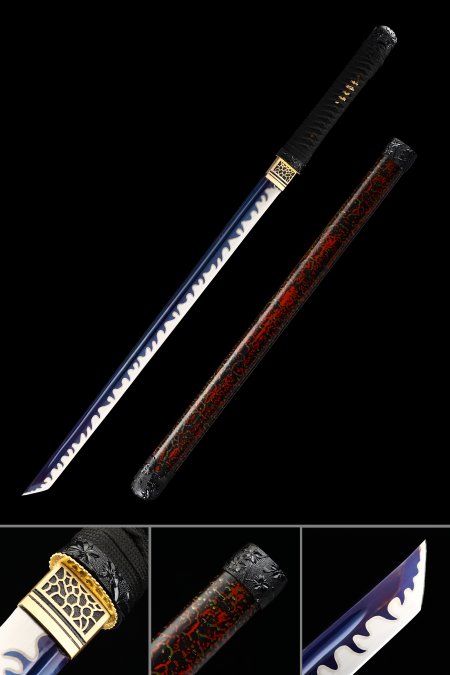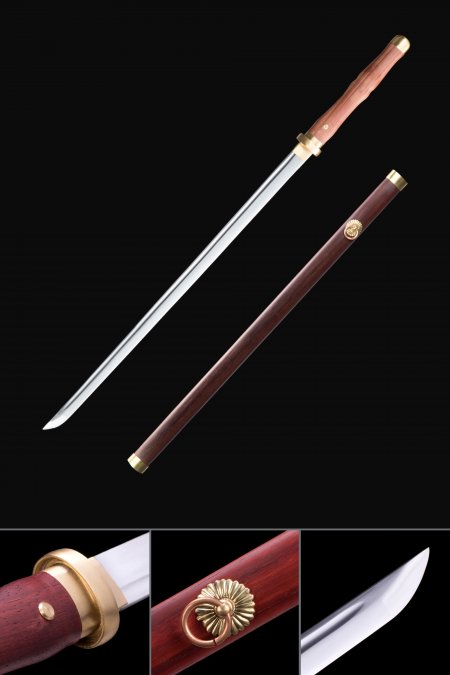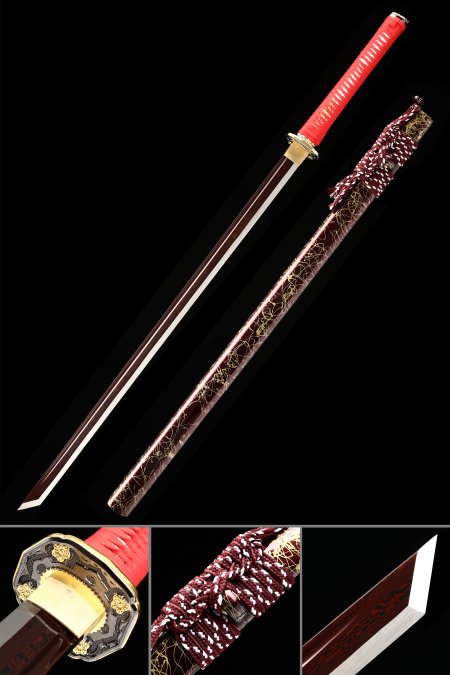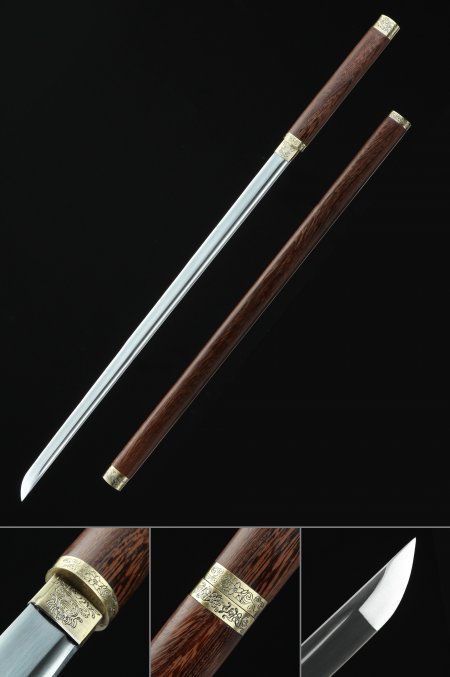
Dark Red Saya Ninjato

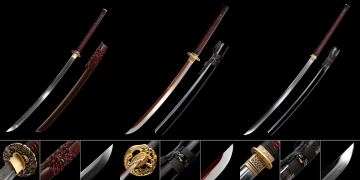
Dark Red Saya Ninjato swords bring together the straight-bladed silhouette of classical shinobi design and the rich visual depth of lacquered or polished hardwood scabbards in deep crimson tones. Each piece in this collection showcases hand-fitted components — from gold alloy tsuba to cord-wrapped tsuka — making them compelling centerpieces for any serious display. Enjoy free standard shipping on every order, backed by our hassle-free return policy.
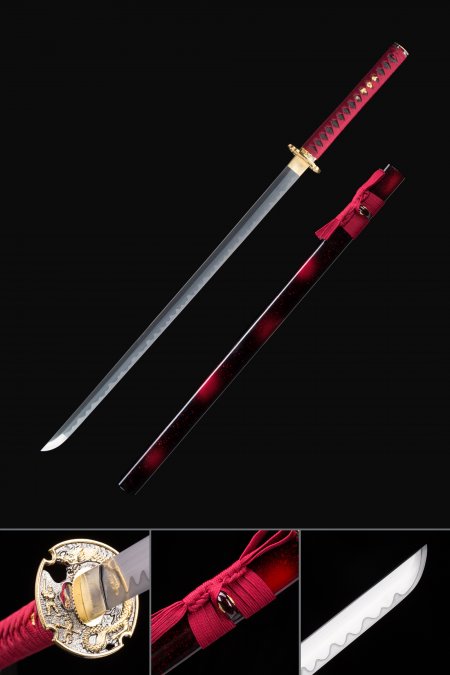
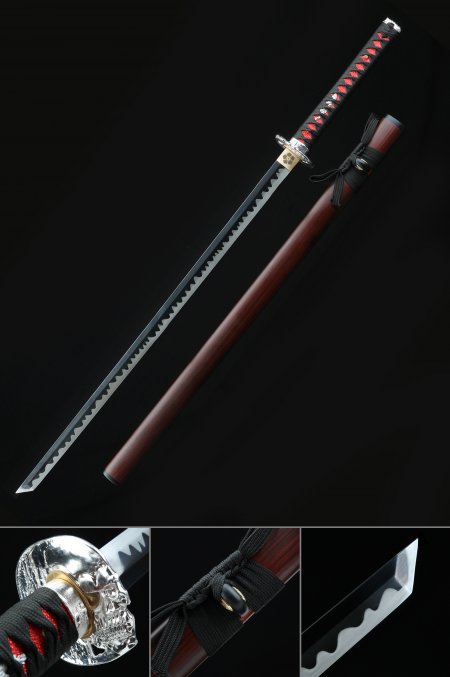
Showing 6 Products

Related Collections

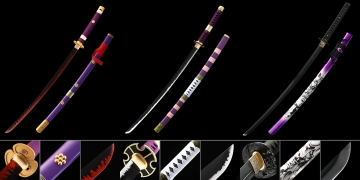
Purple Katana22 items


99 Reviews

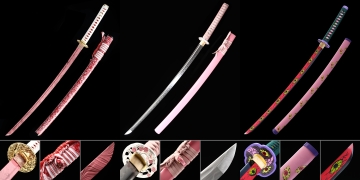
Pink Katana5 items


78 Reviews

Red Naginata1 items


Reviews

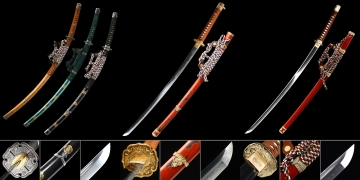
Red Odachi4 items


9 Reviews

Frequently Asked Questions

What makes a ninjato different from a katana?
The most immediate difference is blade geometry. A katana features a pronounced curve along its length, a design that evolved for mounted use and drawing techniques specific to Japanese swordsmanship. A ninjato has a straight or very slightly curved blade, typically shorter in overall length, with a squared tsuba and a more utilitarian profile. In collectible terms, this gives the ninjato a sharper, more angular visual presence — it displays differently on a stand and suits a different aesthetic than the flowing lines of a curved blade. The straight-bladed format also accommodates certain decorative elements, like full-length engravings or color treatments, more cleanly across the blade surface.
What does dark red lacquer saya mean for long-term display?
A dark red lacquered saya is typically a hardwood core — rosewood or a comparable dense timber — coated with multiple layers of pigmented lacquer that are cured and polished to a deep, even finish. For display purposes, this surface is more durable than painted finishes and less prone to chipping under stable indoor conditions. Over time, lacquer can be sensitive to prolonged direct sunlight, which may cause fading or micro-cracking. Keeping the piece away from UV exposure and maintaining moderate humidity levels indoors will preserve the depth of the crimson tone. Occasional light polishing with a soft dry cloth is usually sufficient for routine upkeep.
How does manganese steel differ from carbon steel in collectibles?
Manganese steel contains a higher proportion of manganese in its alloy composition compared to standard carbon steel grades like 1045 or 1060. In collectible swords, manganese steel is valued primarily for its surface hardness and its responsiveness to decorative heat treatments — the vivid blue and red blade colorations popular in display-grade ninjato are often achieved more consistently on manganese steel than on plain carbon steel. For pure display use, the distinction matters mainly in terms of finish durability and visual character. Carbon steel grades like 1045 offer a more traditional appearance with a natural grey-silver surface, while manganese variants tend toward a brighter, more dramatic look suited to styled collectibles.
Is full-tang construction important for a display ninjato?
Yes, even for purely decorative pieces, full-tang construction is a meaningful quality indicator. A full-tang blade extends as a single continuous piece of steel from the tip all the way through the handle, secured by the handle scales or wrap rather than relying on a threaded rod or adhesive joint. This eliminates the most common structural weak point found in lower-quality display swords — the junction between blade and handle. For collectors who handle their pieces regularly, rotate them between displays, or simply want confidence in the build quality of what they own, full-tang construction signals that the maker applied the same standards used in traditionally assembled swords.
What display setup works best for a ninjato collection?
Horizontal wall mounts and multi-tier sword stands both suit the ninjato's straight profile well. Because the blade does not curve, horizontal mounting requires less clearance than a katana of comparable length, making it easier to fit into tighter wall arrangements. When grouping multiple pieces, alternating the direction of the tsuka — handle left on one, handle right on the next — creates visual rhythm without needing additional props. For the dark red saya pieces specifically, neutral or dark backgrounds, such as black velvet panels or stained wood shelving, allow the crimson lacquer to read clearly against the display surface. Lighting from above or at a slight angle will highlight both the saya finish and any engraving details.

Customer Reviews

Mark Bell California, United States

Arrived right on time.r
Blade, saya, hilt. All up to True Katana's standards.r
Of course I've already dinged the saya, because I can't have nice things. r
r
I believe this is my seventh purchase....r
r
No, I'm not addicted at all!r
Of course I am sane and rational. r
r
Seriously though. r
This blades name is Ryuketsu.
High Manganese Steel Katana with Dragon Tsuba - Red Cord Handle & Dark Red Lacquer Saya High Manganese Steel Katana with Dragon Tsuba - Red Cord Handle & Dark Red Lacquer Saya
Cart 0 Items

Your cart is empty