Dark Red Handle Ninjato

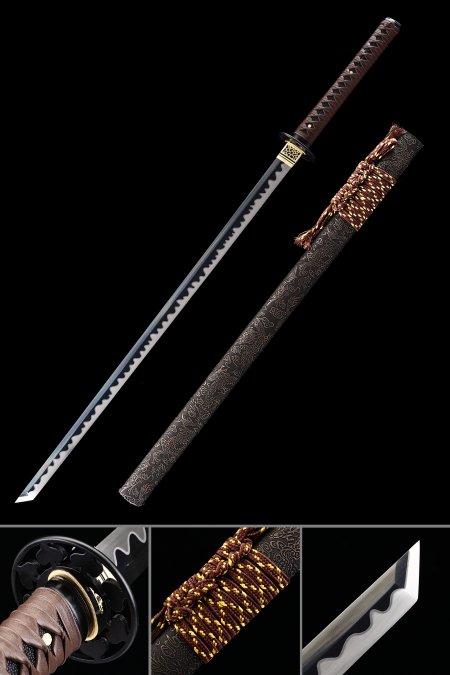
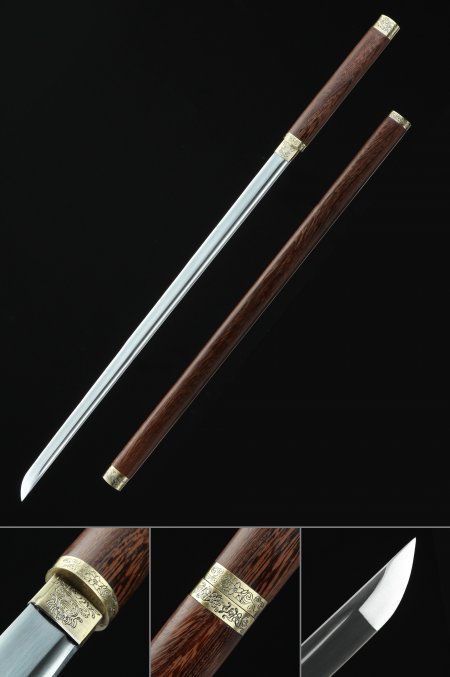
Dark red handle ninjato swords bring a bold visual contrast to any serious collection — pairing deep crimson tsuka wrapping with full-tang construction and hand-fitted saya in rosewood or lacquered finishes. These collectible pieces highlight the ninjato's distinctively straight silhouette and compact geometry, rendered here in materials ranging from 1045 carbon steel to Damascus and manganese steel. Each sword arrives ready for display, and every order ships free with hassle-free returns.
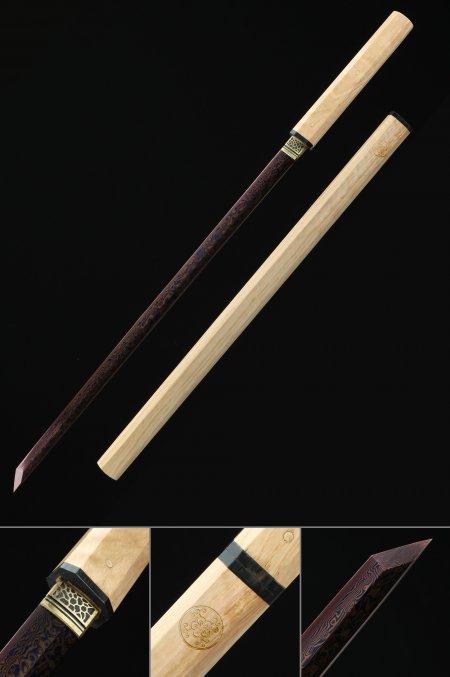
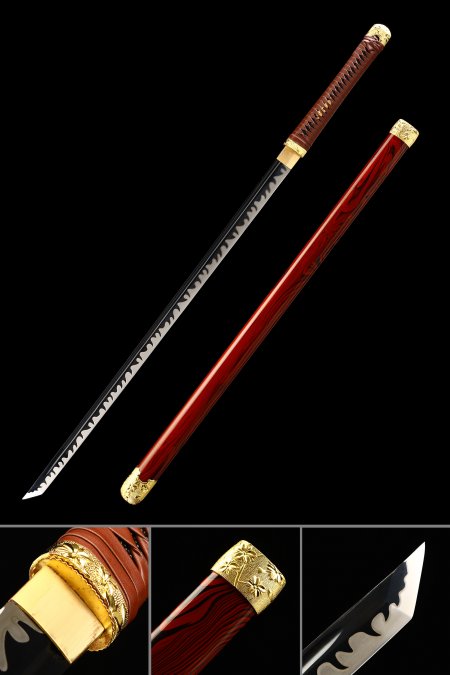
Showing 4 Products

Related Collections

Purple Katana22 items


99 Reviews

Pink Katana5 items


78 Reviews

Red Naginata1 items


Reviews

Red Odachi4 items


9 Reviews

Frequently Asked Questions

What steel types are used in these dark red handle ninjato?
This collection features three distinct steel compositions. 1045 carbon steel is a medium-to-high carbon alloy with roughly 0.45% carbon content, offering a classic hand-polish finish that highlights the flat geometry of a straight ninjato blade. Manganese steel introduces added toughness through alloying elements that distribute stress more evenly — a practical advantage in a blade without the natural flex-absorbing curvature of katana geometry. Damascus steel in this collection refers to folded, layered construction where multiple steel billets are forge-welded and manipulated to create a visible grain pattern known as hada. On a straight ninjato blade, that hada runs cleanly from tip to habaki without the visual interruption of a curve, making Damascus variants particularly striking as display pieces.
How does a ninjato differ from a katana as a collectible?
The most immediate difference is blade geometry. Katana feature a pronounced curve (sori) developed over centuries to optimize drawing efficiency, while the ninjato's blade is straight or near-straight with a squared kissaki tip rather than the katana's tapered point. This creates a noticeably different silhouette on a wall mount or display stand. From a collector's perspective, ninjato also tend to have shorter blade lengths and more compact proportions overall, which can suit smaller display spaces. The tsuba on ninjato pieces is often square or rectangular rather than the circular or floral forms common on katana, adding another layer of visual distinctiveness. Historically, the ninjato's origins are debated among sword scholars, which itself makes them interesting conversation pieces in a serious collection.
Does the dark red handle color affect long-term display care?
Yes, in a few practical ways. If the tsuka is wrapped in dyed ito (cord wrapping), prolonged direct sunlight exposure can cause the red pigment to fade unevenly, particularly along the raised diamond-pattern intersections where the dye is thinnest. UV-filtering display cases or positioning away from south-facing windows will preserve the color longest. For dark red lacquered or rosewood handles, low humidity is the main concern — wood and lacquer both respond to moisture fluctuations that can cause minor surface checking over years. A climate-controlled interior environment (40–60% relative humidity) is ideal. The red tones in rosewood saya and handles are natural, not dyed, so they are generally more stable under normal indoor conditions.
What fittings styles appear in this collection and why do they matter?
Fittings — collectively called kodogu — include the tsuba (guard), fuchi and kashira (collar and pommel cap), and menuki (handle ornaments). In this dark red handle ninjato collection, you'll find gold alloy fittings, gold chrysanthemum motif tsuba, and dragon-themed saya carvings. These choices are significant because the fittings establish the visual register of the entire piece. Gold alloy against a dark red tsuka creates a high-contrast ceremonial aesthetic, while dragon motifs connect the piece to a broader East Asian artistic vocabulary shared across Japanese, Chinese, and Korean decorative sword traditions. For display collectors, matching or intentionally contrasting fitting styles across multiple pieces creates visual rhythm on a multi-sword wall installation.
Are these ninjato appropriate as gifts for Japanese sword enthusiasts?
Dark red handle ninjato make distinctive gifts precisely because they occupy a specific aesthetic niche — they are immediately recognizable to anyone familiar with Japanese sword traditions while offering a visual boldness that standard black or natural wood finish pieces don't. For someone who already owns katana or wakizashi in more conventional presentations, a crimson-handled ninjato with Damascus or manganese steel blade adds genuine variety. The collectible nature of these pieces means there are no licensing or import complications that can affect functional blades in some regions. Pairing a ninjato with a quality display stand or wall mount rounds out the gift significantly, giving the recipient everything needed for an immediate display installation.

Customer Reviews

Cart 0 Items

Your cart is empty