Blue Gold Saya Katana
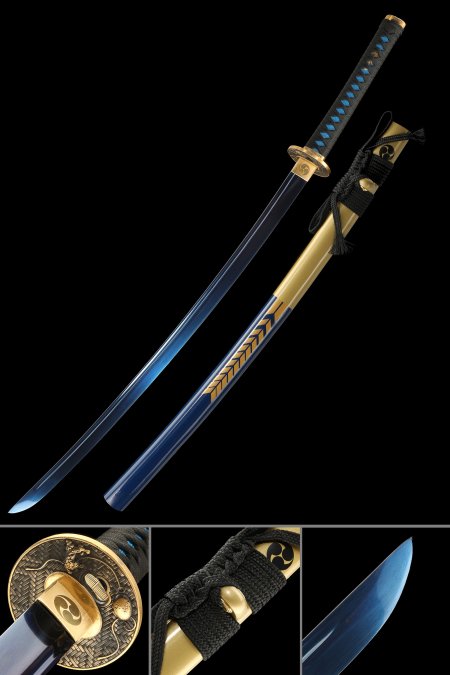
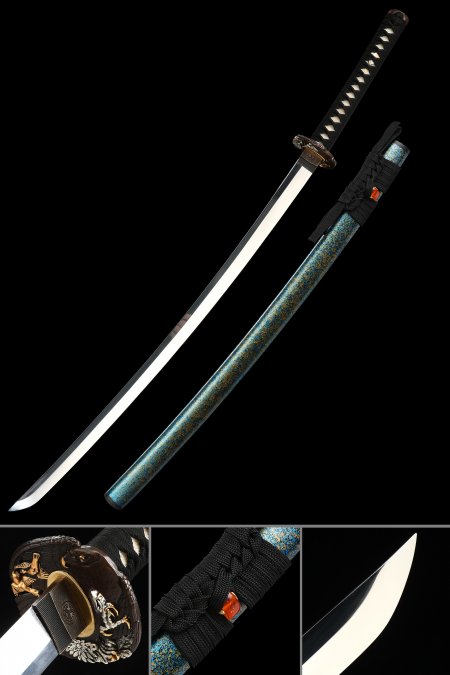
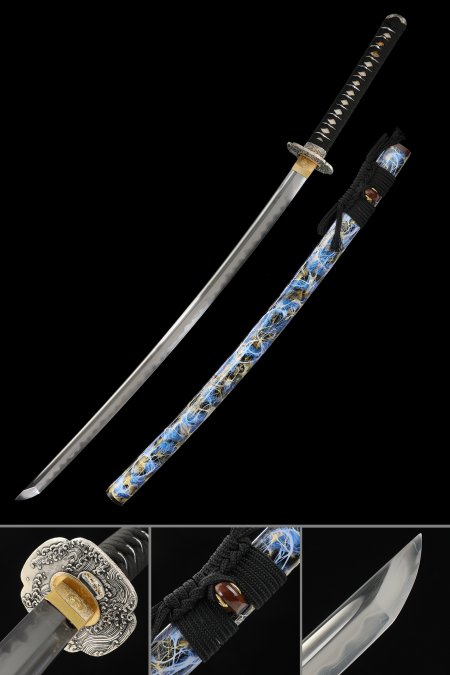
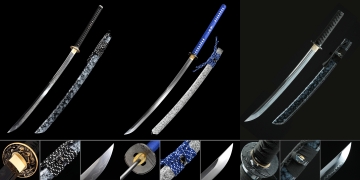
The Blue Gold Saya Katana collection brings together hand-forged blades paired with richly lacquered hardwood saya finished in striking blue and gold tones. Each piece showcases premium carbon steel construction, distinctive tsuba artistry, and meticulous koshirae assembly - making every katana a worthy centerpiece for any serious display collection. Enjoy free standard shipping on all orders, with hassle-free returns to ensure complete confidence in your purchase.
Free Shipping
1,009.00 USD
Related Collections
Frequently Asked Questions
What makes blue and gold saya lacquerwork so difficult to produce?
Achieving a deep, even blue lacquer finish on a hardwood saya requires multiple application stages - each layer must cure fully before the next is applied, and any dust or uneven surface tension shows immediately in the final color. Gold accents introduce a second challenge: traditional urushi-based and modern lacquer finishes behave differently around metallic pigments, so craftsmen must calibrate the binding medium to prevent flaking at the gold-blue boundary over time. The depth of color you see on a quality piece is typically the result of five or more individual lacquer coats, hand-rubbed between applications. Budget-tier saya often use a single pigmented coat that appears vivid initially but fades or chips within months of display. The pieces in this collection use hardwood cores - rather than composite or MDF - which provide a more stable substrate that resists warping and helps the lacquer adhere uniformly across the full length of the scabbard.
How does T10 steel differ from 1095 in a display katana?
Both are high-carbon steels well suited to katana construction, but they differ in alloy composition and the visual characteristics they produce. T10 steel contains a small percentage of tungsten, which refines grain structure and contributes to a harder, more wear-resistant edge that takes a sharper polish. Most importantly for collectors, T10 responds exceptionally well to differential clay-tempering, producing a clearly defined hamon - the wavy temper line along the blade's edge - that is among the most visually compelling features a katana can display. 1095 steel has a simpler carbon-manganese composition, making it somewhat tougher under stress and easier for smiths to work consistently. Its hamon is typically less pronounced than T10, but the blade develops a beautiful satin finish and carries excellent long-term stability. For a display piece where the hamon is a focal point, T10 is the more rewarding choice. For collectors prioritizing overall blade integrity and a clean polish, 1095 is an equally legitimate option.
How should I store a lacquered saya katana to protect the finish?
Lacquered saya are sensitive to two main environmental factors: humidity fluctuation and prolonged UV exposure. Rapid changes in humidity cause the hardwood core to expand and contract, which can eventually crack or lift the lacquer surface - particularly around the koiguchi (the saya mouth opening). Aim to store your piece in an environment between 45-55% relative humidity, away from heating vents and air conditioning outlets. Direct sunlight is the other significant risk; UV radiation bleaches pigmented lacquer over months, and blue finishes are particularly susceptible to fading. A display case with UV-filtering glass is the most effective long-term solution. The blade itself should be lightly coated with a neutral mineral oil or traditional choji oil before storage, and the saya should be fitted but not forced closed. Inspecting the koiguchi fit annually ensures the saya has not warped in a way that creates unnecessary friction against the blade's finish.
What tsuba styles pair best with blue and gold koshirae?
Tsuba selection is one of the most important compositional decisions in koshirae assembly, and blue-gold saya create a specific visual context that some designs suit better than others. Wave and water motifs - particularly those rendered in silver or pewter - create a natural chromatic dialogue with blue lacquer, referencing traditional Japanese associations between blue and ocean or river imagery. Bronze dragon tsuba introduce a warm metallic counterpoint to the cool blue tones without competing with the gold fittings. Snake designs in blackened iron or dark bronze provide a contrasting anchor that prevents the overall koshirae from reading as too ornate. What generally works less well is a gold tsuba on a gold-accented saya - the lack of contrast flattens the visual hierarchy of the piece. The examples in this collection have been curated with these compositional principles in mind, pairing each blade's tsuba to the specific blue and gold balance of its saya rather than applying a single formula across all pieces.
Is a blue gold saya katana a good choice as a collector's gift?
For a recipient who appreciates Japanese aesthetics or has an existing interest in edged collectibles, a blue gold saya katana makes a genuinely memorable gift precisely because it reads as a complete decorative object rather than a purely utilitarian one. The color combination is visually distinctive enough to stand out in a display setting, and the layered craftsmanship - lacquered hardwood saya, hand-forged carbon steel blade, individually cast tsuba - gives the recipient something to study and appreciate over time. When selecting a piece as a gift, it is worth considering whether the recipient favors a particular steel type (T10 for visible hamon, 1095 or spring steel for overall blade character) and whether the display environment suits a more restrained or more elaborate koshirae style. A wall-mount display stand completes the presentation and is a practical addition for anyone who does not already own one. These pieces are also well suited to milestone occasions - the craftsmanship level communicates considered intent rather than a generic purchase.