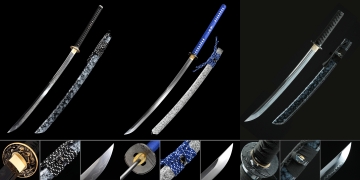
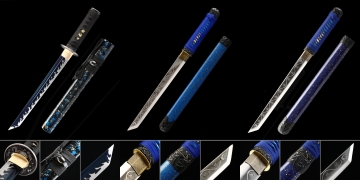
What gives a tachi blade its blue color?
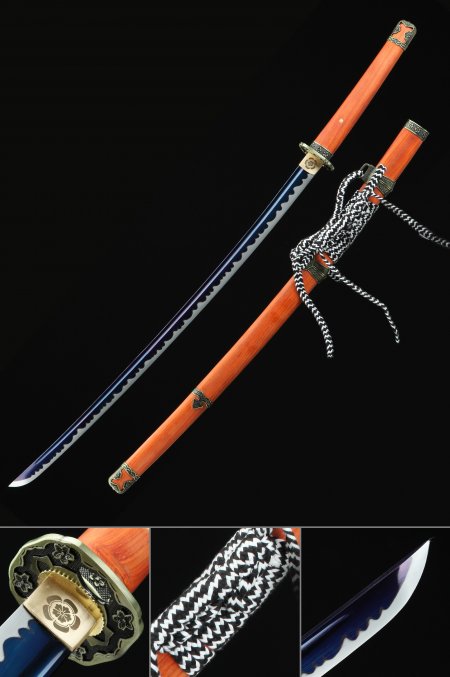
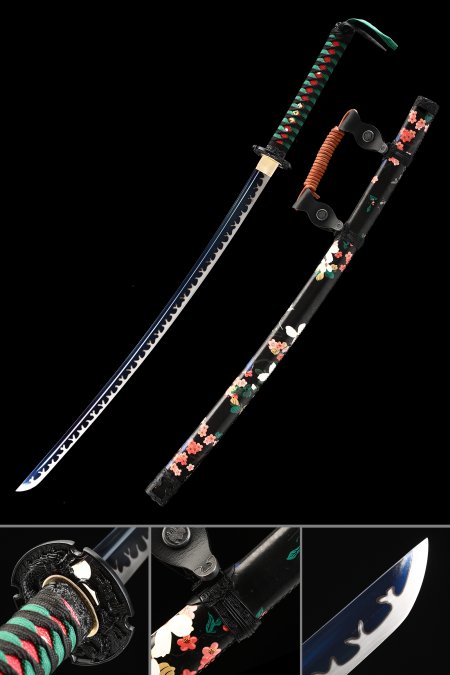
The blue coloration on these tachi blades comes from a controlled thermal oxidation process applied during or after forging. When carbon steel is heated to specific temperature ranges and then allowed to cool under carefully managed conditions, the surface develops a thin oxide layer that refracts light at the blue end of the spectrum. This is distinct from chemical bluing used on firearms — on hand-forged blades, the tone tends to be more variable and organic, which is considered part of the aesthetic value. The finish also provides a mild degree of surface protection against humidity, though regular light oiling is still recommended for long-term display. The depth and evenness of the blue tone can vary slightly between individual pieces, making each one genuinely unique as a collectible.
How does 1045 carbon steel differ from high manganese steel in these swords?
1045 carbon steel contains approximately 0.45% carbon, placing it in the medium-carbon range. It produces a blade that holds a clean geometry well and is a well-understood alloy with a long track record in hand-forged swordsmithing. High manganese steel — sometimes called spring steel or hadfield-adjacent alloys depending on composition — incorporates manganese as a secondary alloying element, which refines the grain structure and can increase toughness at equivalent hardness levels. Visually, high manganese steel tends to respond slightly differently to surface finishing and tempering treatments, which can produce a subtler, more consistent blue tone. For display collectors, the practical difference is minimal; both are full-tang, hand-forged constructions. The choice often comes down to which blade finish and fitting combination best suits your display context.
What is the correct way to store a tachi for long-term display?
Tachi swords should be stored edge-down in the saya when not on display — this is the historically correct orientation and also protects the blade's edge geometry from contact pressure over time. For display mounting, use a horizontal rack that supports both the saya and the tsuka without stress points. Apply a thin coat of high-quality camellia oil (choji oil) to the blade every two to three months, or more frequently in humid climates. Avoid display locations near heating vents, direct sunlight, or coastal air exposure, all of which accelerate surface oxidation. When handling the blade for maintenance, use clean cotton gloves or a soft cloth — skin oils are mildly acidic and can initiate surface spotting on carbon steel over extended periods.
Does the blue blade finish require any special maintenance?
The blue oxide layer on carbon steel is decorative and moderately protective, but it is not a permanent barrier. It can be dulled or removed by abrasive contact, harsh cleaning agents, or prolonged exposure to moisture. For routine maintenance, wipe the blade with a lightly oiled soft cloth — camellia or mineral oil both work well. Avoid steel wool, abrasive polishing compounds, or acidic cleaners, as these will strip the finish. If the blade develops minor surface spotting, a very light application of oil and a soft cloth can address early-stage oxidation without compromising the blue tone. The key is consistency: a brief inspection and light oil wipe every couple of months is far more effective than infrequent intensive cleaning.
How does a tachi differ from a katana as a display collectible?
The tachi is generally longer than the katana — typically 70 cm or more along the cutting edge — and features a more pronounced curvature. It was designed to be worn suspended from the belt with the edge facing downward, which influenced both its geometry and its mounting hardware. From a display perspective, the tachi's additional length and deeper curve create a more dramatic visual silhouette, particularly when presented horizontally. The fittings on tachi mountings also follow distinct conventions: the hangers (ashi) on the saya and the overall balance of the koshirae tend to reflect court and cavalry aesthetic traditions rather than the more austere samurai civilian style associated with many katana. Collectors who appreciate classical Japanese sword forms often consider the tachi to offer a richer decorative vocabulary than the katana.