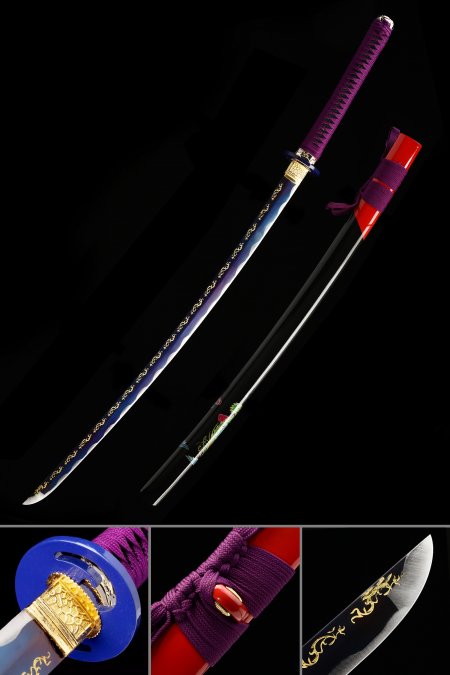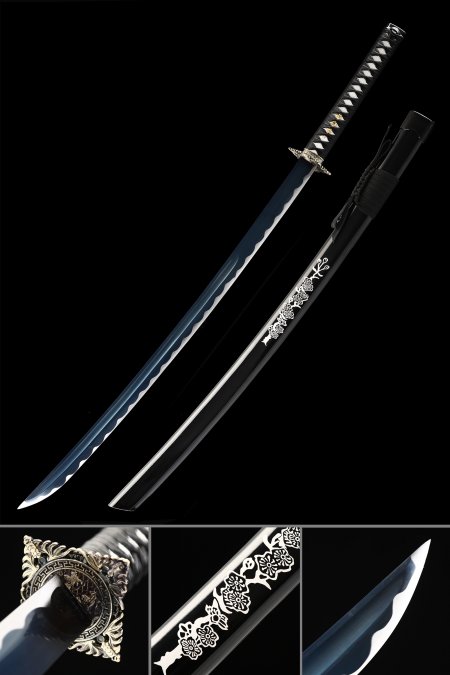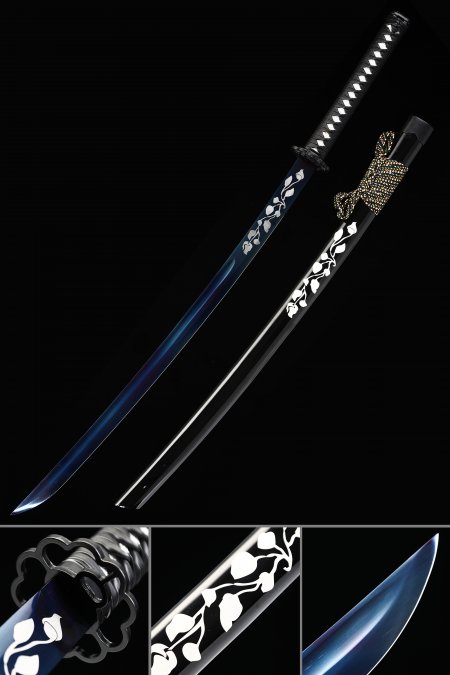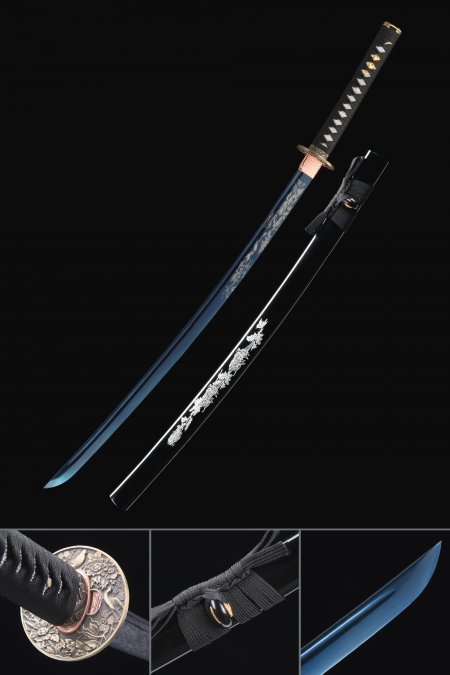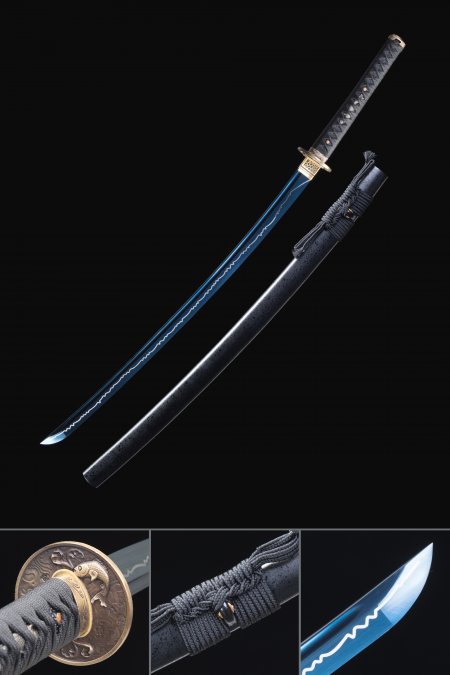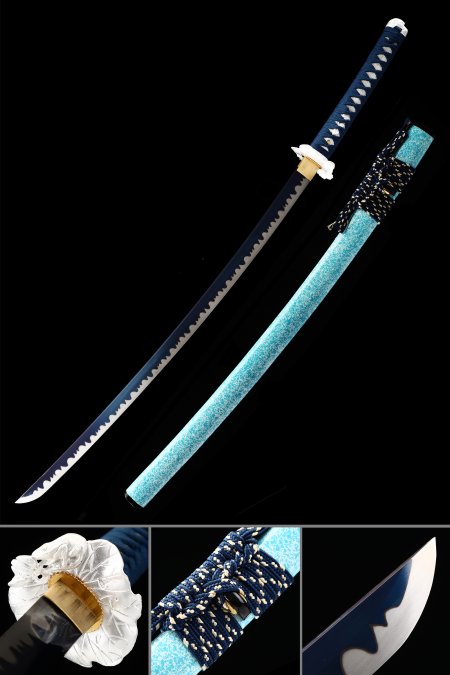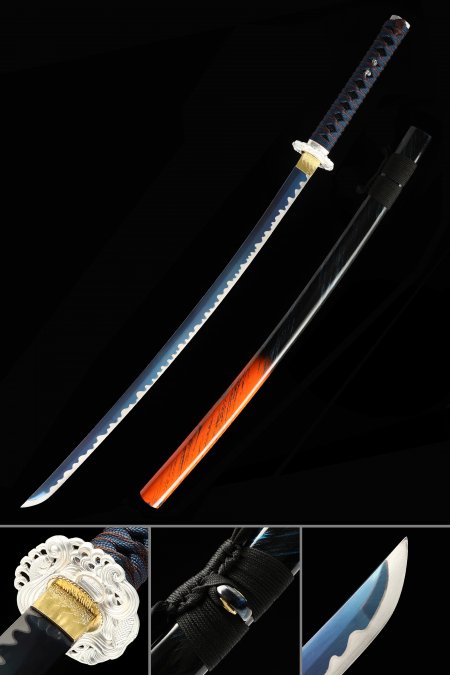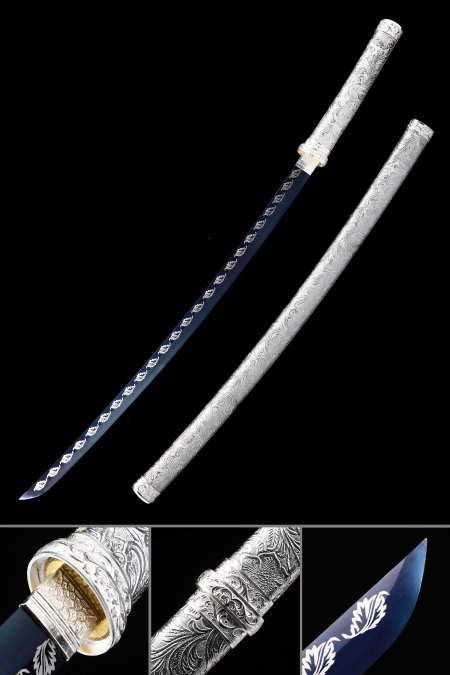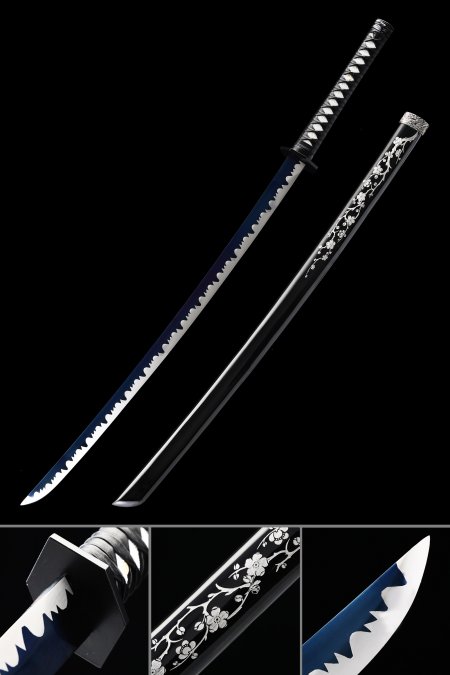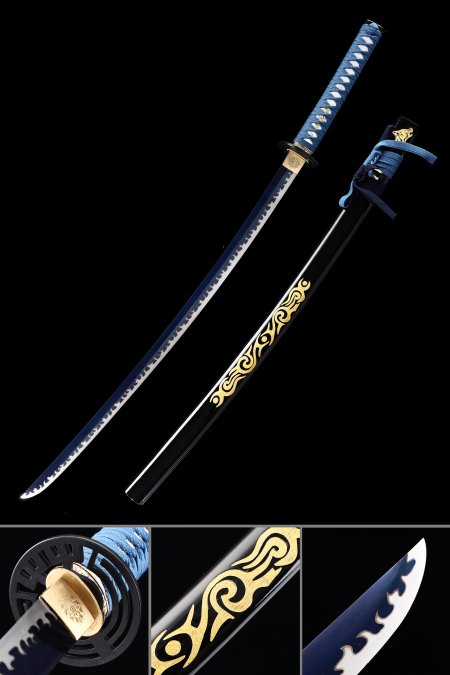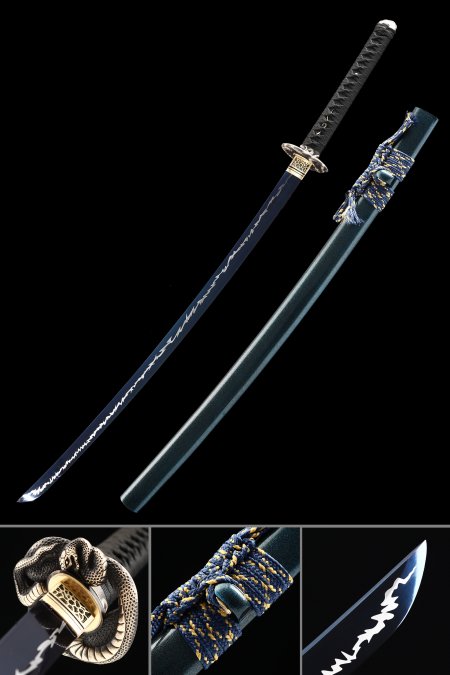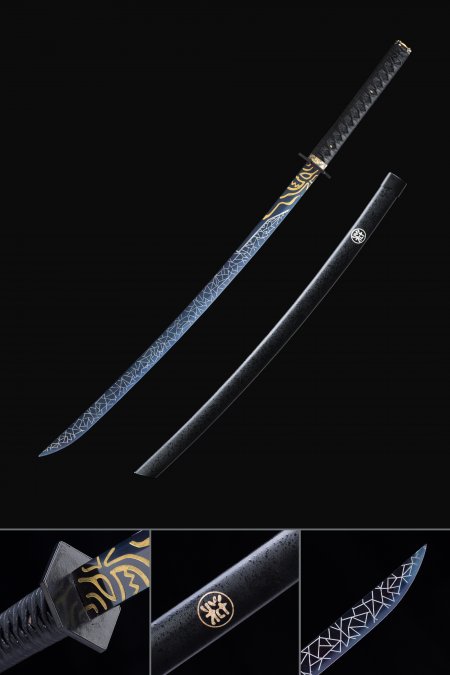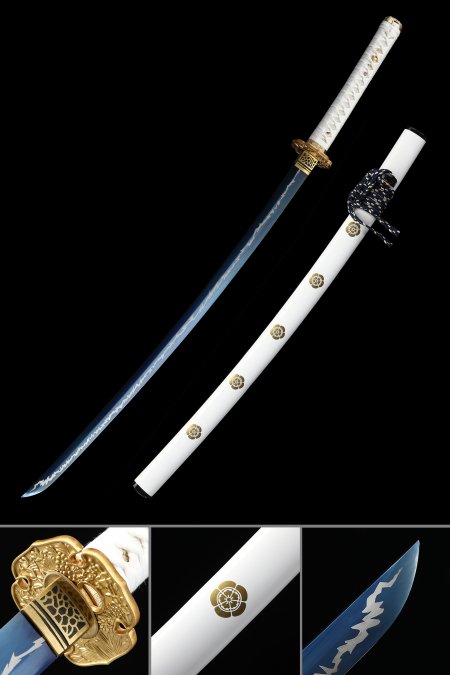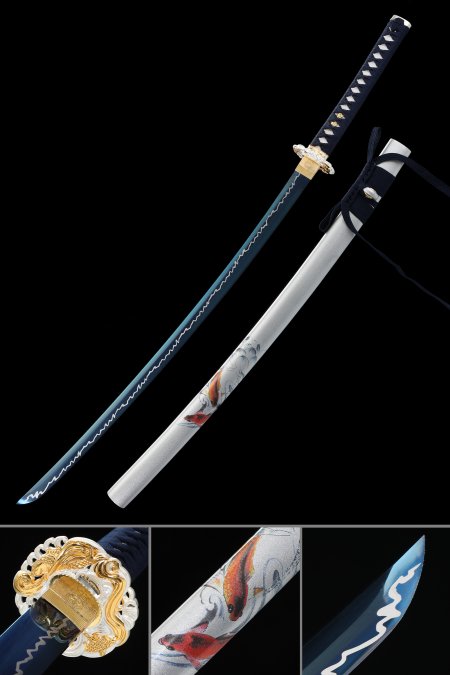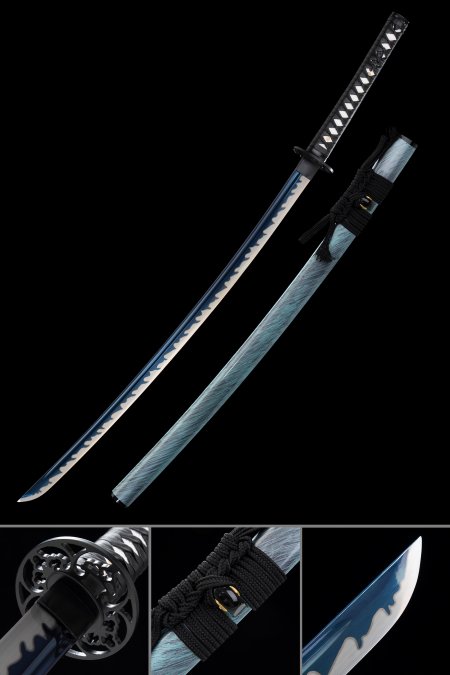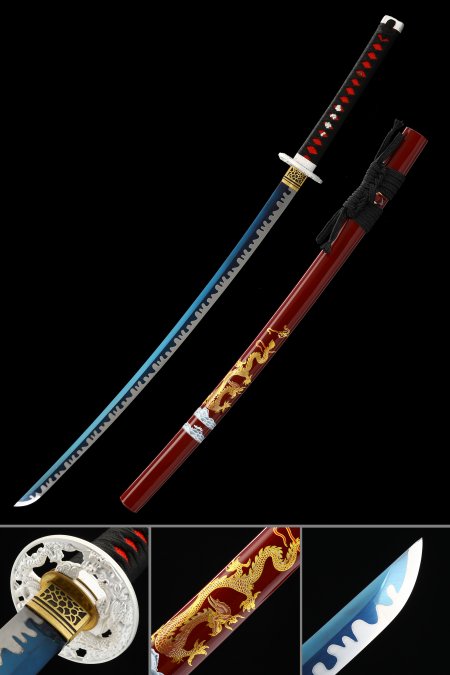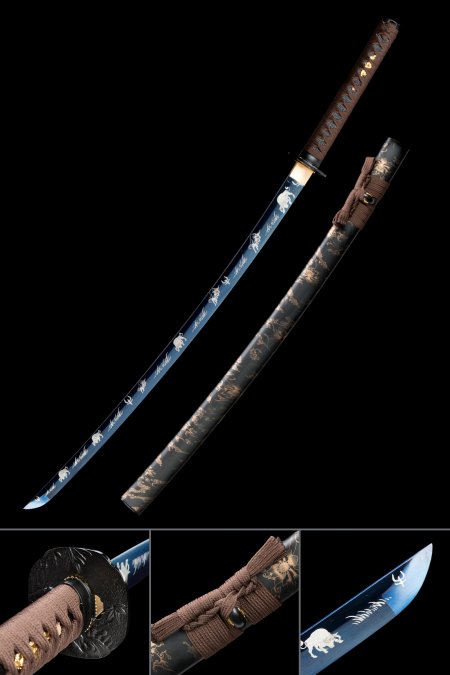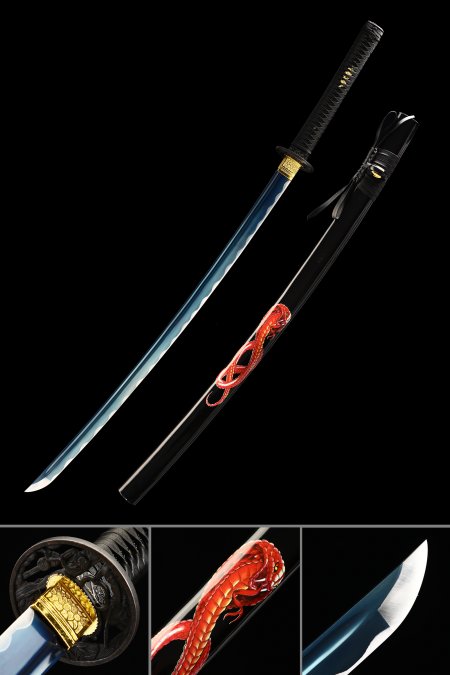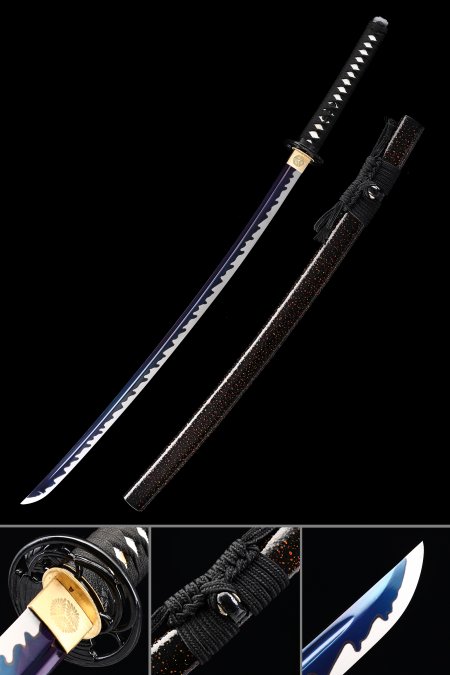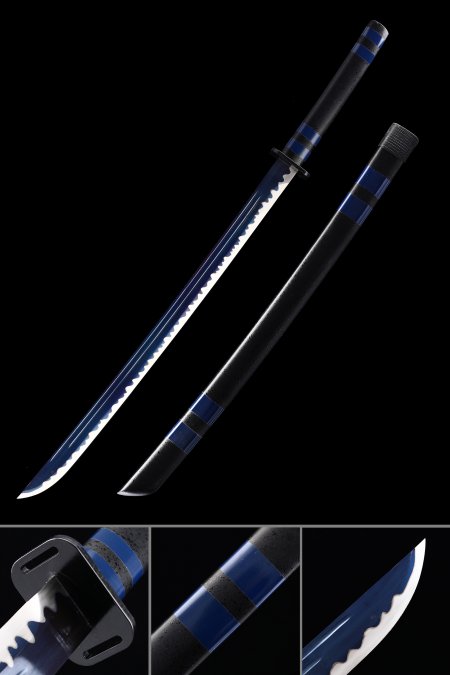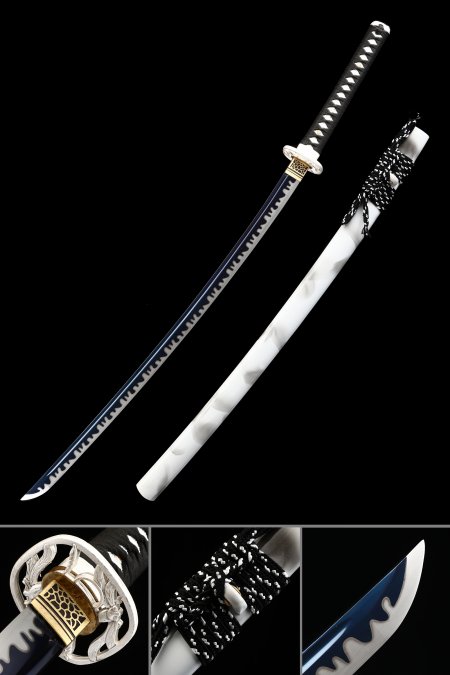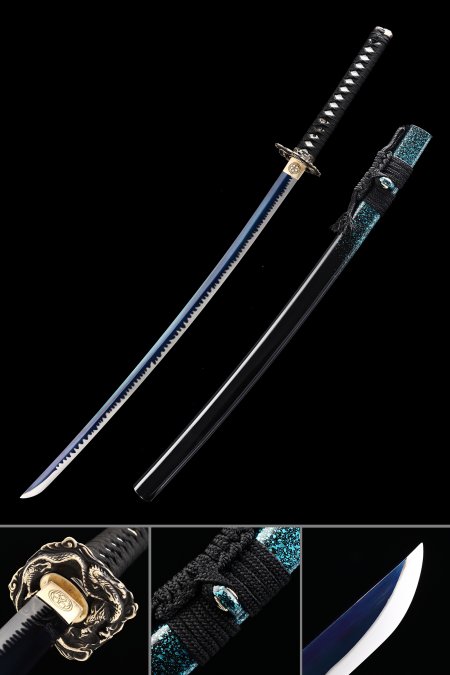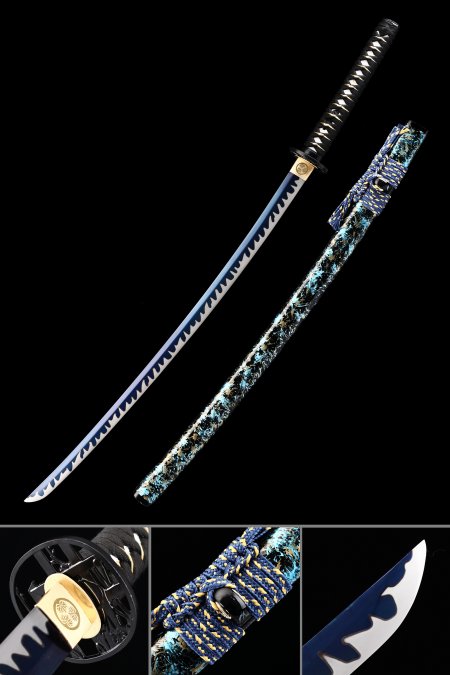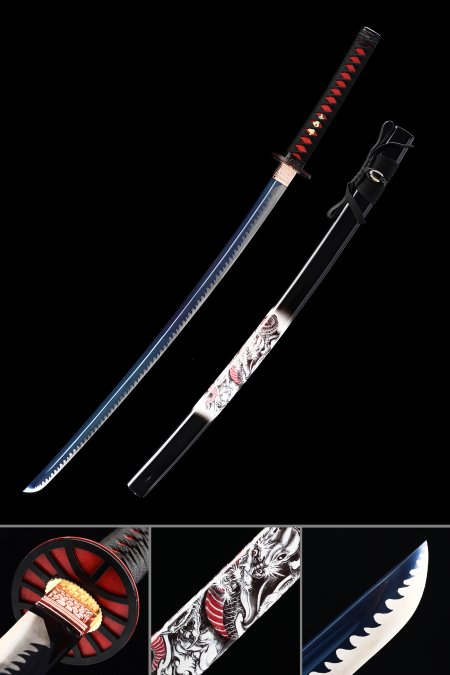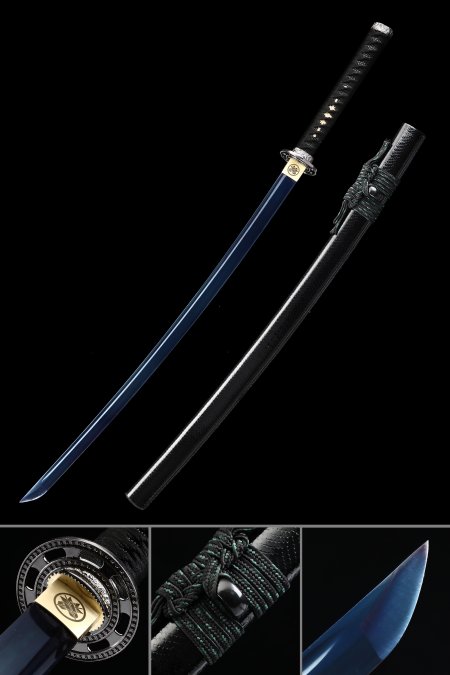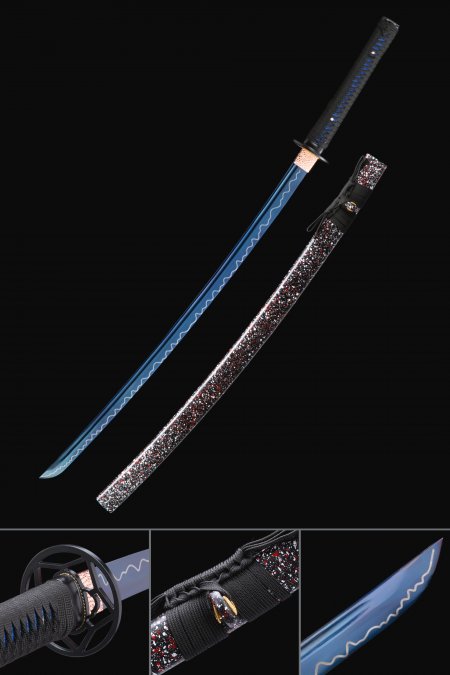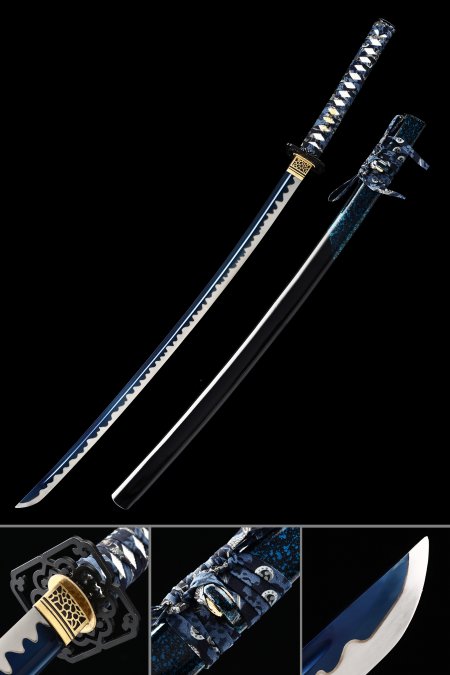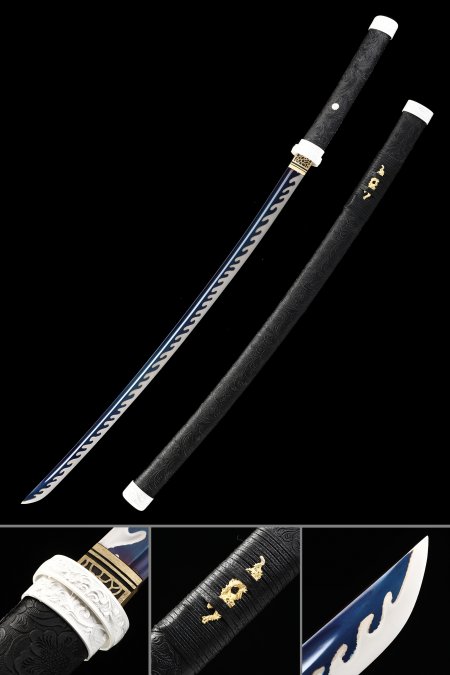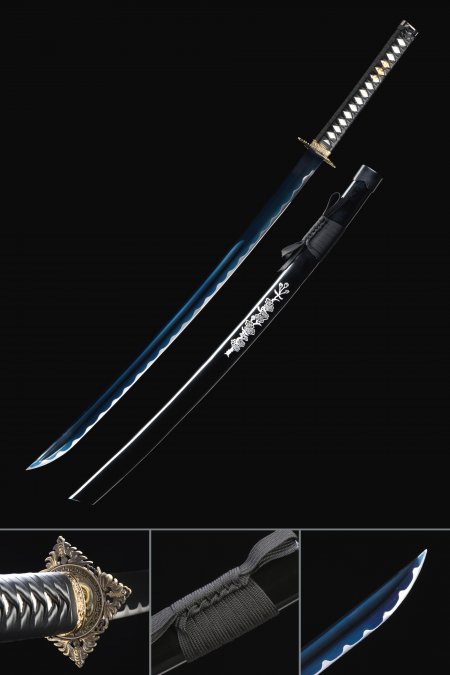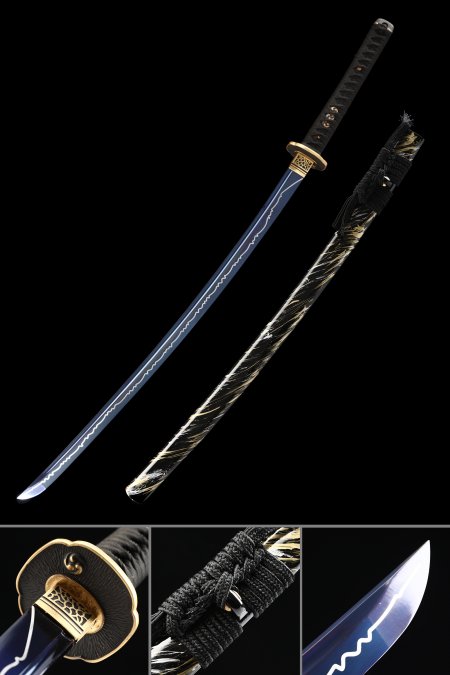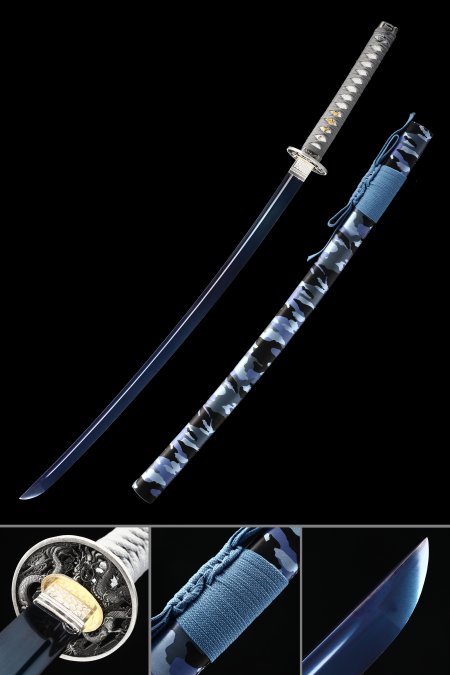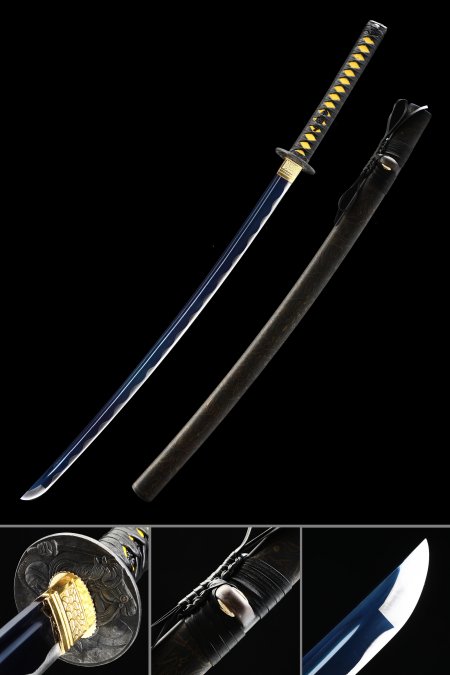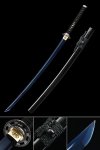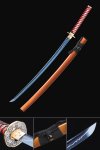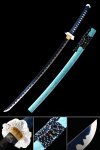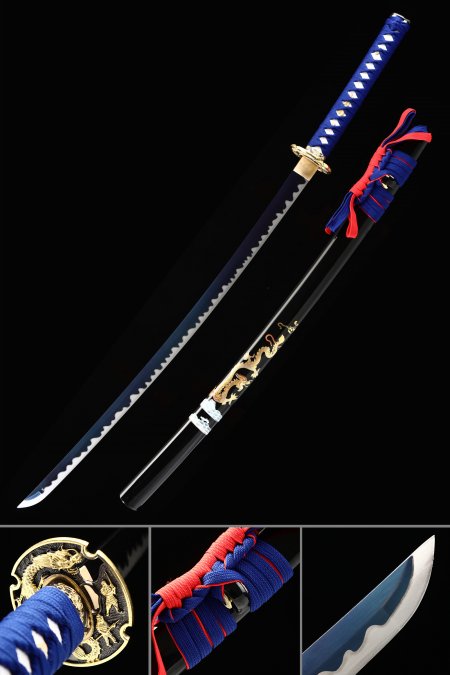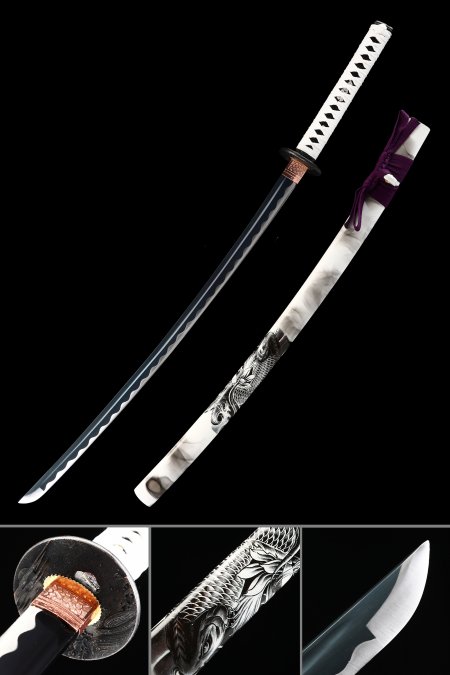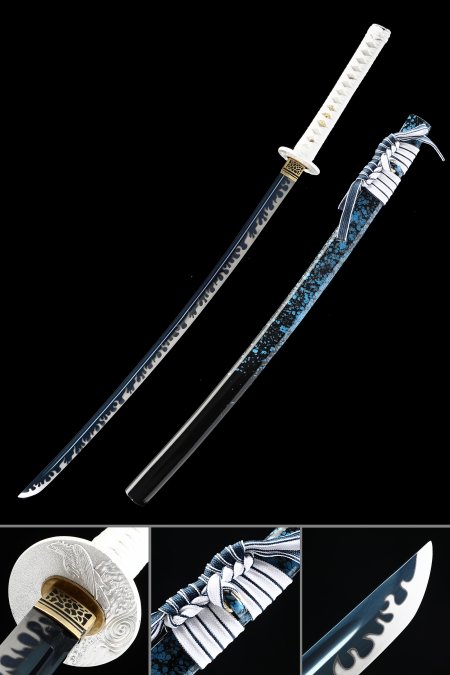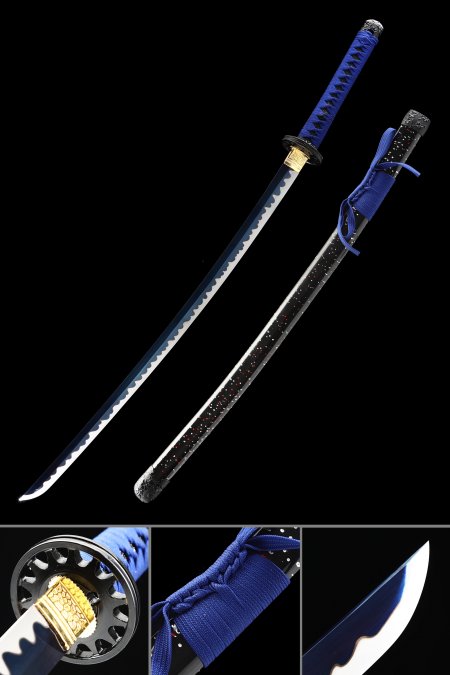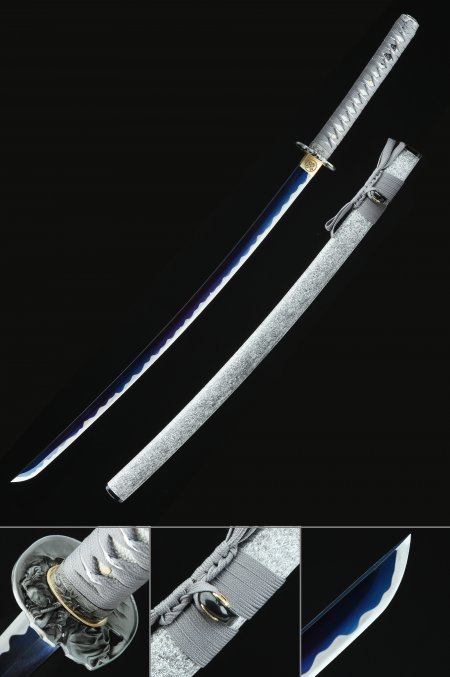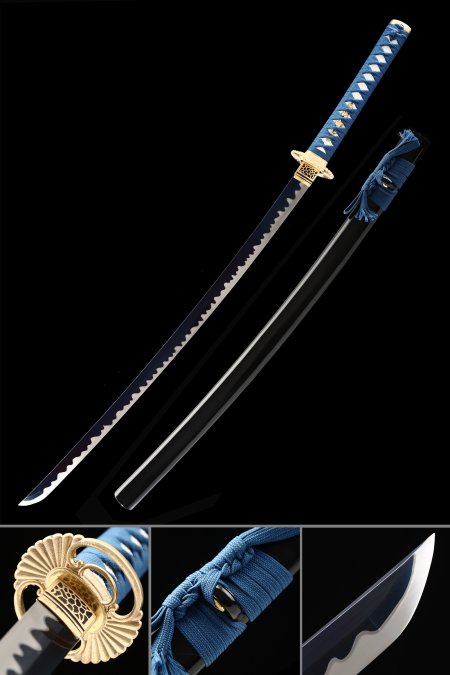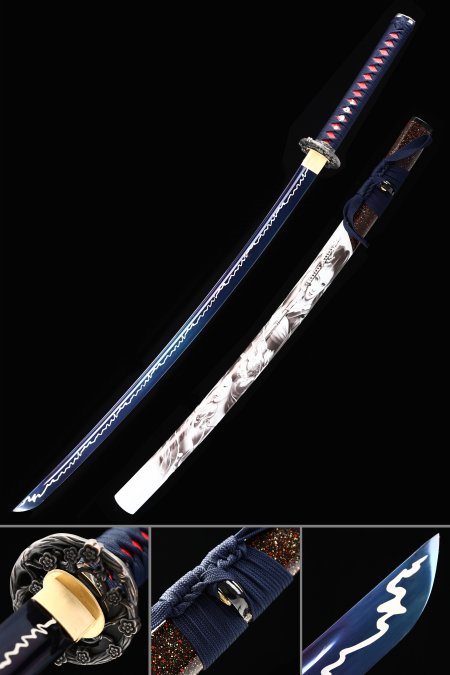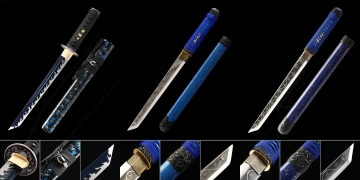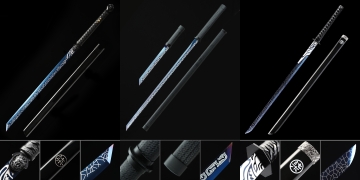
Blue Blade Manganese Steel Katana

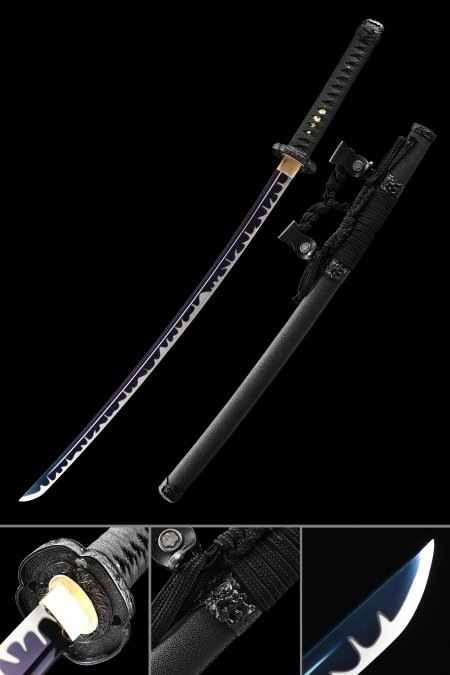
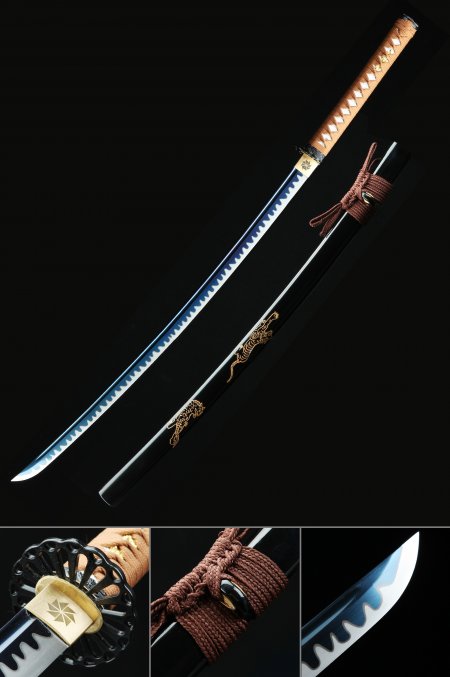
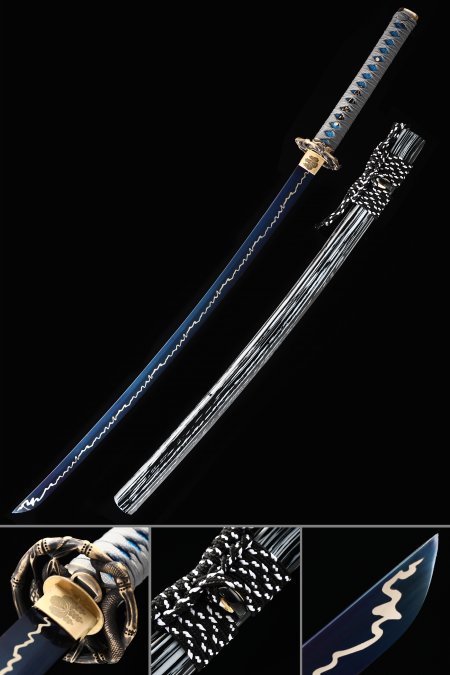
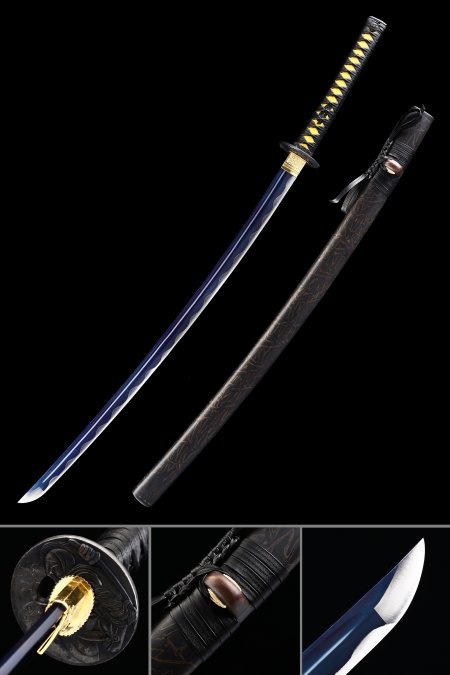
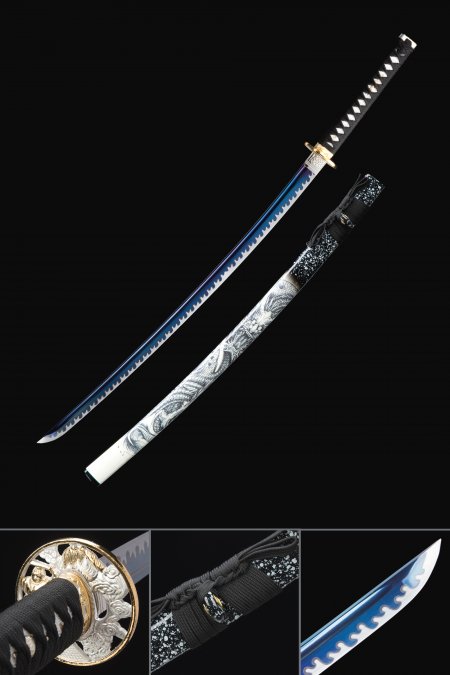
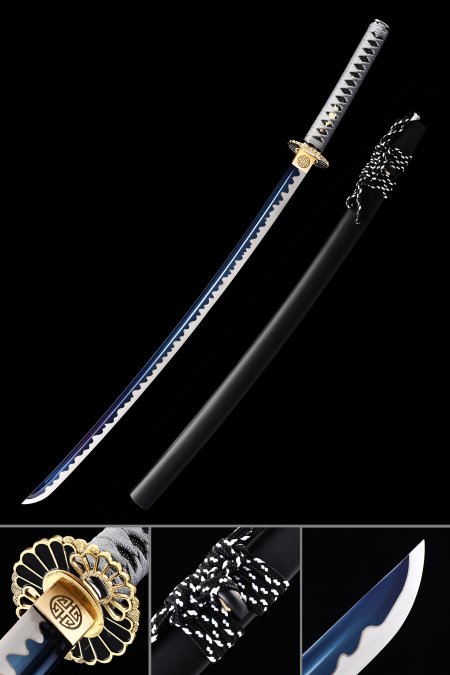
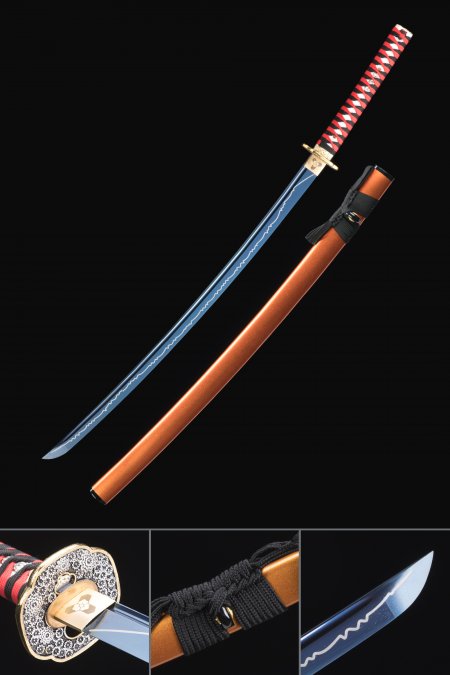
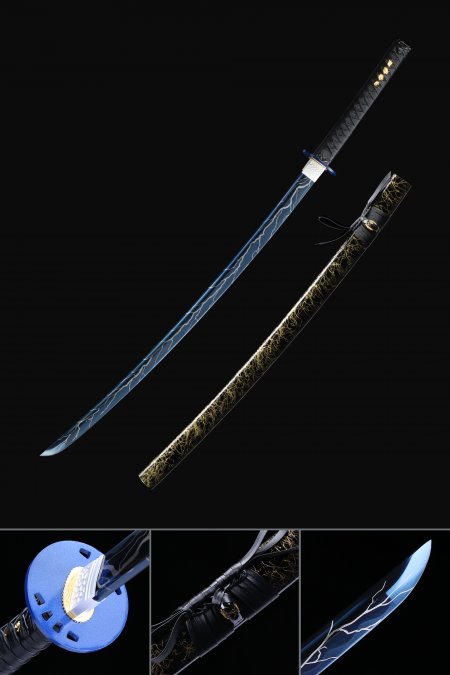
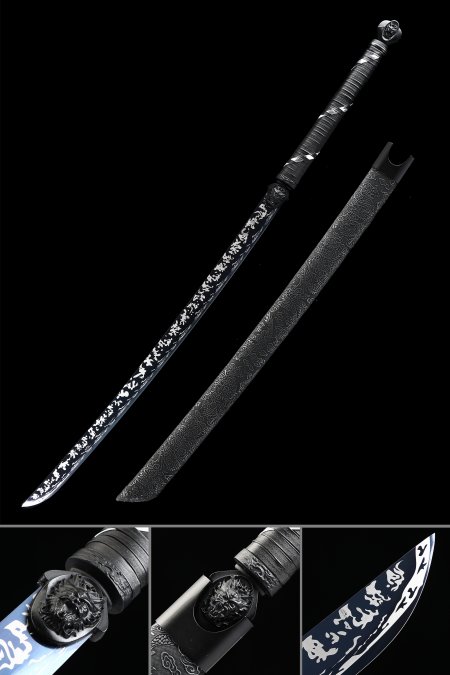
Blue Blade Manganese Steel Katana pieces in this collection are crafted for collectors who appreciate both visual drama and honest construction. Each sword features a hand-forged manganese steel blade with a distinctive blue finish, full-tang assembly, and traditionally styled koshirae - from lacquered saya to hand-wrapped ito. Free standard shipping on every order, with hassle-free returns.
Showing 49 Products

Related Collections

Frequently Asked Questions

What gives these katana blades their blue color?
The blue finish on these manganese steel blades is produced through a controlled oxidization process - sometimes called bluing - where the steel is exposed to heat and chemical compounds that convert the surface layer into a magnetite oxide. This creates the characteristic blue-to-black gradient you see on the finished blade. Unlike paint or powder coating, this treatment bonds directly with the steel at a molecular level, so it won't chip or peel under normal handling. It also provides a mild degree of corrosion resistance compared to a bare polished blade, though it doesn't eliminate the need for occasional oiling. The depth of color can vary slightly between pieces depending on steel composition and process duration, which is part of what makes each blade visually unique.
How is manganese steel different from high carbon steel for collectibles?
Manganese steel contains a higher proportion of manganese in its alloy composition, which significantly increases hardness and resistance to surface wear compared to standard high carbon steel grades like 1045 or 1060. For collectors, this means the blade holds its edge geometry and surface finish better through repeated handling and display removal. It also takes surface treatments like bluing more evenly than lower-grade carbon steels, which is part of why it's a preferred base for blue blade production. The tradeoff is that manganese steel is less forgiving during forging and requires precise heat control - which is why full-tang construction in this material is a mark of quality assembly rather than a given.
Do I need to oil a blue blade katana, or does the finish protect it?
The blued finish does provide a modest layer of protection compared to a bright-polished bare blade, but it is not a substitute for periodic maintenance. Manganese steel is still an iron-based alloy and will develop surface rust if exposed to humidity, salt, or prolonged contact with bare skin oils without follow-up care. For display pieces, applying a thin coat of choji oil or food-grade mineral oil every two to three months is a reliable maintenance schedule. Use a soft cotton cloth rather than synthetic materials to avoid micro-scratching the oxidized layer. After any handling, wipe the blade down with a clean cloth before returning it to the saya, as fingerprint acids are one of the most common causes of spot rusting on displayed blades.
Are these katana good options as collector gifts?
Blue blade katana make particularly strong collector gifts because the finish creates immediate visual impact that standard polished or blackened blades don't deliver - it reads as distinctive even to someone unfamiliar with sword metallurgy. The pieces in this collection are also well-specified for gifting: full-tang construction signals build quality, the lacquered saya protects the blade during transport and storage, and themed options like dragon-motif saya or chrysanthemum tsuba give gift-givers a way to personalize their selection. For someone being introduced to Japanese sword collecting, a blue blade manganese steel katana is a practical entry point - visually compelling, structurally honest, and low-maintenance enough to enjoy without specialized knowledge from day one.
How should I store a blue blade katana for long-term display?
For long-term display, horizontal mounting is preferable to vertical storage, as it distributes pressure evenly and keeps the saya from stressing the blade's habaki fit over time. Avoid display locations near windows with direct sunlight or near HVAC vents, as UV exposure and humidity fluctuations are the two most consistent causes of lacquer aging and blade oxidation. If the katana is not on active display, store it horizontally in its saya inside a fitted bag or wooden storage box in a climate-controlled room. Check the blade for moisture every few months and re-oil as needed. The lacquered saya itself requires no special treatment beyond occasional dusting with a soft cloth - avoid solvent-based cleaners, which can dull or crack the lacquer finish over time.

Customer Reviews

Cart 0 Items

Your cart is empty