Black Tsuba Hamidashi

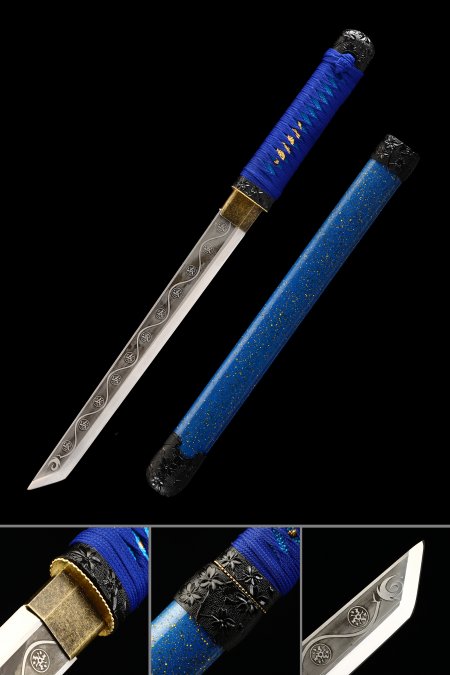
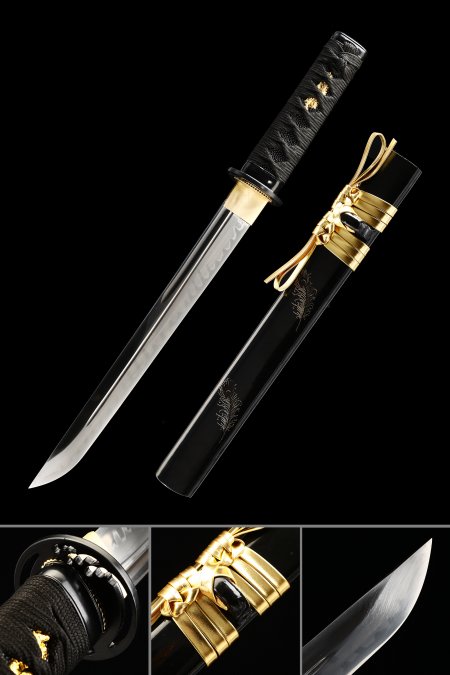
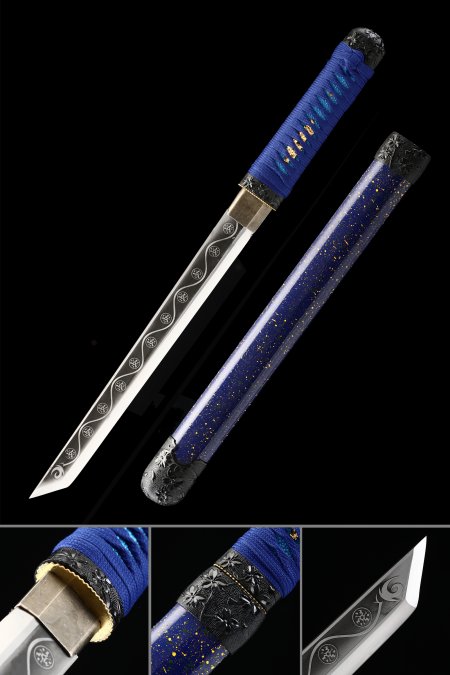
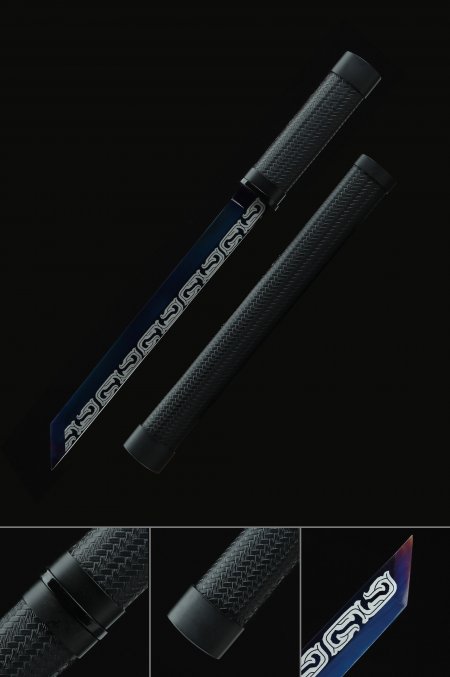
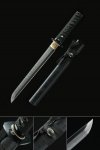
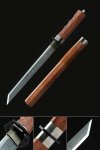
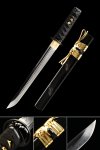
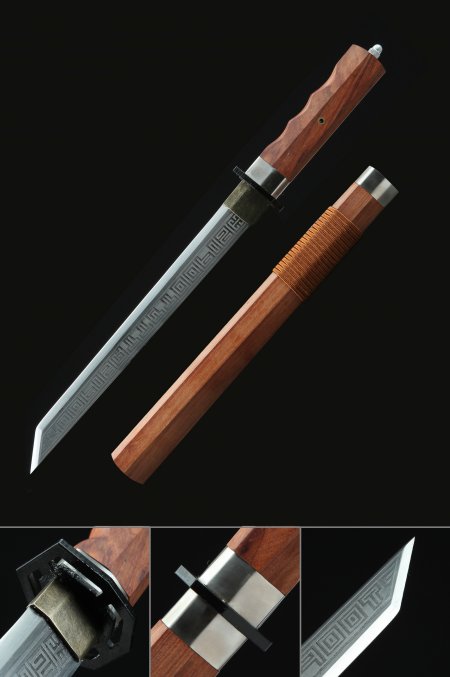
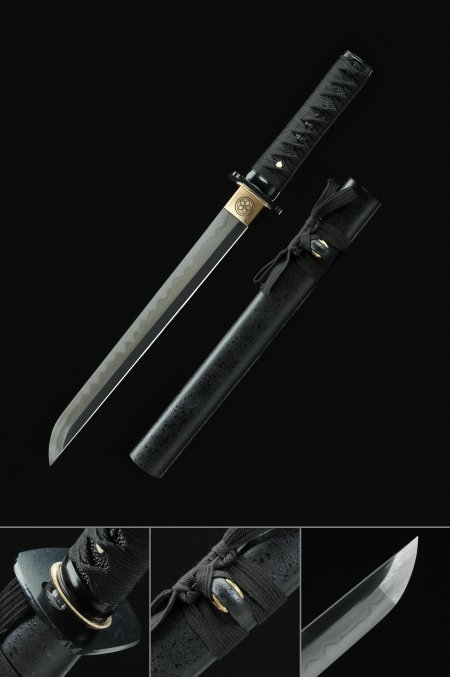
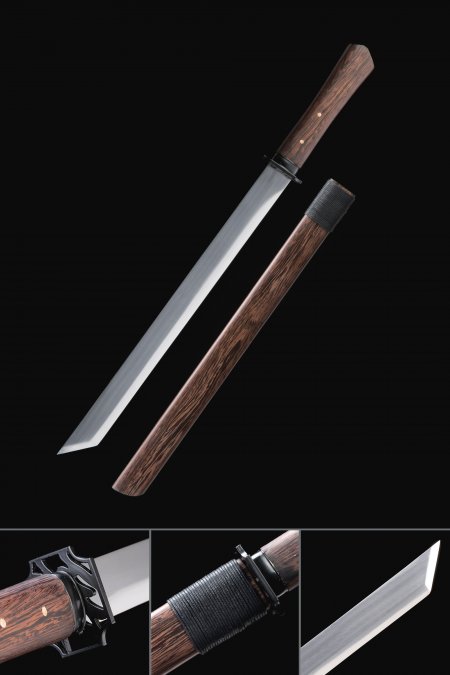
The Black Tsuba Hamidashi is a compact Japanese tanto distinguished by its subtly protruding guard — a design that bridges the elegant restraint of the aikuchi and the structured formality of a fully guarded blade. Each piece in this collection is individually hand-forged, dressed in carefully lacquered saya, and fitted with darkened iron or alloy tsuba that anchor the blade's aesthetic with quiet authority. Whether displayed on a stand or added to a growing Japanese edged-instrument collection, these tantos reward close attention to their steel, hamon, and fittings. Enjoy free standard shipping on every order, and shop with confidence knowing we stand behind every piece with a hassle-free return policy.
Showing 7 Products

Related Collections

Black Chokuto39 items


289 Reviews

Black Odachi11 items


14 Reviews

Black Naginata4 items


4 Reviews

Black Aikuchi6 items


5 Reviews

Frequently Asked Questions

What makes a hamidashi different from an aikuchi tanto?
The distinction is subtle but meaningful to collectors. An aikuchi tanto is completely guardless — the handle and saya join without any protrusion, creating a clean, unbroken silhouette. A hamidashi introduces a very small tsuba that extends just slightly beyond the handle's width, providing a minimal visual and tactile break between grip and blade. Historically, this design was associated with civilian and court carry rather than battlefield use, and its restrained formality made it a favored format among samurai who valued understated elegance. For display purposes, the hamidashi's tiny guard gives the piece a structured anchor point that draws the eye and adds compositional interest, particularly when the tsuba is finished in contrasting black iron or darkened alloy against a lighter handle wrap.
How does a real clay-tempered hamon differ from an acid-etched one?
This is one of the most important distinctions a tanto collector can learn. An acid-etched hamon is produced chemically after the blade is finished — a resist is applied, acid cuts the pattern into the surface, and the result is a consistent, often overly crisp line that looks decorative but carries no structural significance. A real clay-tempered hamon, found on the T10 steel pieces in this collection, forms during the actual heat treatment process: clay is applied to the spine before quenching, creating differential cooling rates that harden the edge more aggressively than the spine. The resulting boundary line — the hamon — shows natural activity including nie (small martensitic crystals), nioi (a misty activity band), and subtle irregularities that no acid process can replicate. Under raking light, a genuine hamon glows with depth; an etched one looks flat by comparison.
Is manganese steel or T10 steel better for a display tanto?
Neither is universally superior — they serve different collector priorities. Manganese steel is highly resistant to shock and flex, which makes it an excellent choice for tantos featuring surface engravings, since the steel's toughness holds decorative detail well and its bright polish provides a clean canvas for wave patterns and geometric artwork. T10 high-carbon steel is the preferred choice for collectors focused on authentic Japanese sword tradition, specifically for its ability to develop a genuine, differential-hardened hamon through clay tempering. T10 pieces require slightly more attentive care — a light application of choji or mineral oil every few months prevents surface oxidation — but they reward that care with a blade character that manganese steel simply cannot replicate. If the hamon line is your primary collecting interest, T10 is the clear answer.
How should I store and maintain a lacquered saya tanto?
Piano lacquer and hardwood saya are durable but do respond to humidity and temperature swings. Store the tanto horizontally on a display stand rather than vertically, which prevents the blade from resting on the saya's tip over time. Keep the display area away from direct sunlight, which can fade lacquer finishes and dry out any organic materials in the handle wrap. For the blade itself, draw it from the saya every two to three months, wipe it lightly with a clean, lint-free cloth to remove any residual moisture or fingerprint oils, and apply a very thin coat of choji oil or neutral mineral oil. Avoid storing the blade sheathed for extended periods in high-humidity environments without this occasional maintenance — moisture trapped between blade and saya is the primary cause of surface spotting on carbon steel tantos.
What display context works well for a black tsuba hamidashi tanto?
A single tanto displayed on a simple horizontal wooden stand reads as a focused, contemplative collector's piece — the compact format and dark fittings give it an intimate presence that suits desk or shelf display at eye level. For a more composed arrangement, pairing it with a longer Japanese sword format creates a natural size contrast that highlights the tanto's proportions. Collectors who appreciate cultural context often display Japanese edged collectibles alongside Japanese ceramic or lacquerware objects, which frames the blade within a broader tradition of Japanese craft rather than isolating it as a purely technical artifact. Lighting matters considerably: a small directed light source positioned to rake across the blade at a low angle will reveal hamon activity, surface geometry, and tsuba texture in a way that ambient room light entirely obscures.

Customer Reviews

Johnathan Chapman Pennsylvania, United States

Beautiful blade. I’m very happy with my purchase. My only minor inconveniences are that the very tip of the blade is ever so slightly bent, and the sheath has very small damage (most likely from shipping). Other than those two things, everything about the piece is well made and aesthetically pleasing to look at and hold.

T10 Carbon Steel Hamidashi Tanto with Real Hamon in Black Piano Lacquer Saya - Gold Habaki Accent T10 Carbon Steel Hamidashi Tanto with Real Hamon in Black Piano Lacquer Saya - Gold Habaki Accent
Russell Noyes Alabama, United States

I love almost everything thing about this tanto blade. While I could nitpick over insignificant details, my only real complaint is that the blade could be sharper, but bare in mind, I've been a professional cook for nearly 30 years and I'm comparing the sharpness to culinary standards even though I have no intention of using it for cooking.
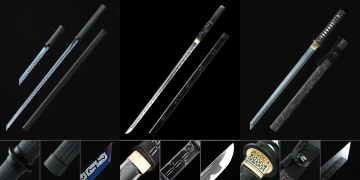
Blue Manganese Steel Hamidashi Tanto with Etched Pattern and Black Carbon Fiber Weave Saya Blue Manganese Steel Hamidashi Tanto with Etched Pattern and Black Carbon Fiber Weave Saya
Cart 0 Items

Your cart is empty