Black Teal Saya Katana
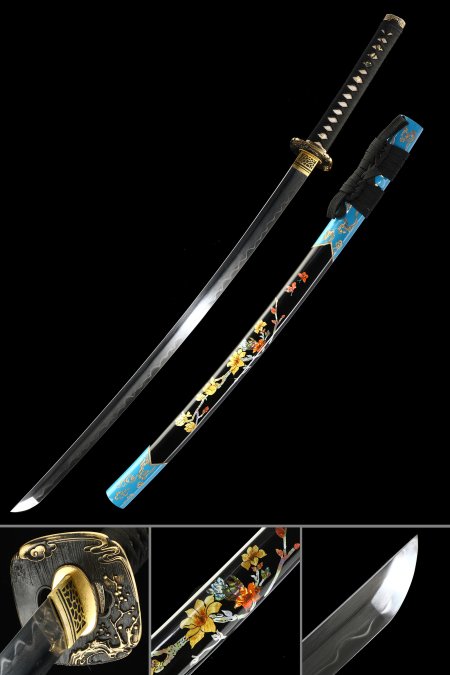
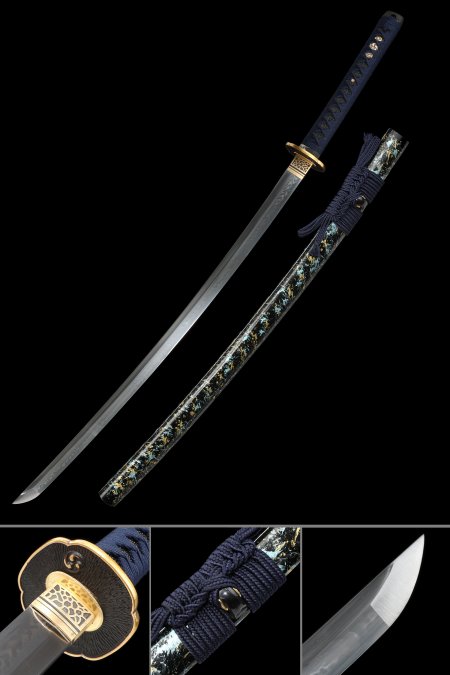
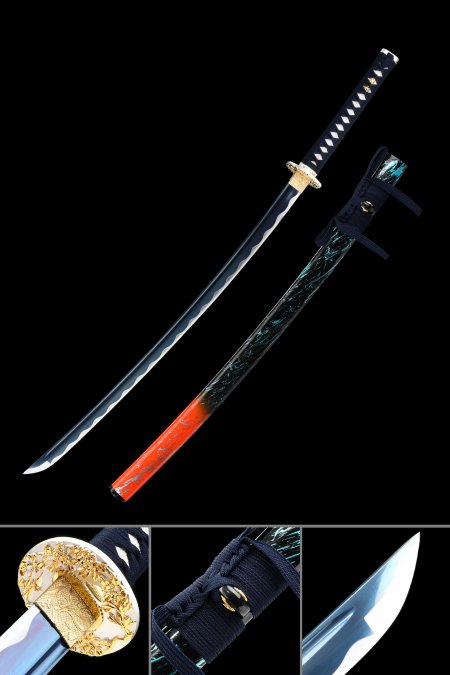
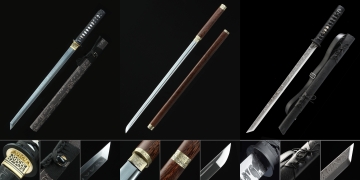
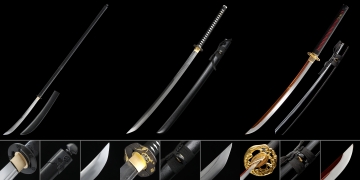
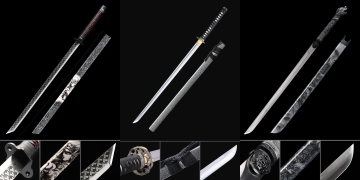
The Black Teal Saya Katana collection brings together hand-forged blades paired with lacquered scabbards finished in deep black-teal tones - a colorway rooted in classical Japanese aesthetics and prized among serious collectors. Each piece features premium carbon steel construction, ornate tsuba, and hand-wrapped or cord-bound handles that complete the visual harmony. Free standard shipping is included on every order, and returns are accepted within 30 days for a worry-free collecting experience.
Free Shipping
349.00 USD
Related Collections
Frequently Asked Questions
What makes the black-teal saya finish unique?
The black-teal lacquer finish is achieved through layered application of urushi-style lacquer, building up depth across multiple coats rather than a single surface coat. This layering causes the color to shift visually - appearing closer to matte black under dim light and revealing its teal undertones under direct or angled illumination. The effect is significantly richer than a single-tone finish and is one reason this colorway is particularly valued for display purposes. Hand-painted saya variants in this collection add a further dimension with floral motifs applied directly into the lacquer surface, making each scabbard a one-of-a-kind decorative object in its own right.
How does T10 steel differ from 1060 carbon steel?
The most meaningful distinction for collectors is the hamon. T10 tool steel contains trace amounts of tungsten, which increases its ability to hold a distinct temper line when clay differential hardening is applied during the forging process. The resulting hamon - the visible wave or mist pattern along the blade's edge - is formed organically and varies on every single blade. 1060 carbon steel, while an excellent and durable medium-carbon alloy, does not naturally produce a pronounced hamon under standard heat treatment. If visible temper line activity is a priority for your collection, T10 is the more compelling choice. If you prefer a clean, uniform blade surface with classic geometry, 1060 delivers a crisp, well-defined profile.
What is jihada, and can I see it on these blades?
Jihada refers to the surface grain pattern visible on a folded steel blade - the result of repeatedly folding and welding the steel during the forging process. Each fold doubles the layer count, and the alternating carbon distribution creates a flowing, wood-grain-like texture across the flat of the blade. On the folded melaleuca steel katana in this collection, the jihada is visible and distinguishable under good lighting, particularly along the shinogi-ji (the flat area between the ridge line and the back of the blade). In classical Japanese sword appraisal, jihada is one of the key characteristics studied when evaluating a blade's provenance and quality, which is why folded steel pieces carry particular appeal for knowledgeable collectors.
How should I store a lacquered saya long-term?
Lacquered sayas are relatively stable but sensitive to humidity extremes and prolonged direct sunlight. For long-term display or storage, keep the katana in a climate-controlled environment with relative humidity between 45-60%. Avoid placing the saya in front of windows with direct UV exposure, as sustained sunlight will gradually fade even high-quality lacquer. A horizontal katana stand is preferred over vertical storage, as vertical positioning can cause the blade to rest against one side of the saya interior over time. Lightly dust the saya with a soft, dry cloth - never use silicone-based polishes or water on lacquerwork, as these can cloud the finish or cause micro-cracking along the painted detail areas.
Are these katana suitable as display gifts for collectors?
Yes - the black-teal saya katana pieces in this collection are among the more gift-appropriate options available precisely because the visual presentation is immediately legible even to someone unfamiliar with steel specifications. The colorway is striking and cohesive, the ornate tsuba designs (chrysanthemum and gold-black cloud motifs) carry historical symbolism that adds a storytelling dimension, and each piece arrives as a complete, display-ready assembly. For collectors who already own pieces, the distinctive lacquer finish ensures this addition won't visually duplicate existing items. For first-time recipients, the combination of recognizable Japanese aesthetics and clearly high-craft construction makes the gift self-explanatory in its value.