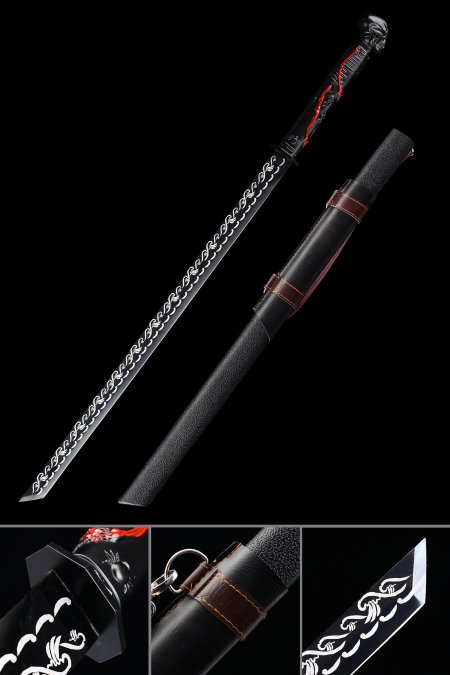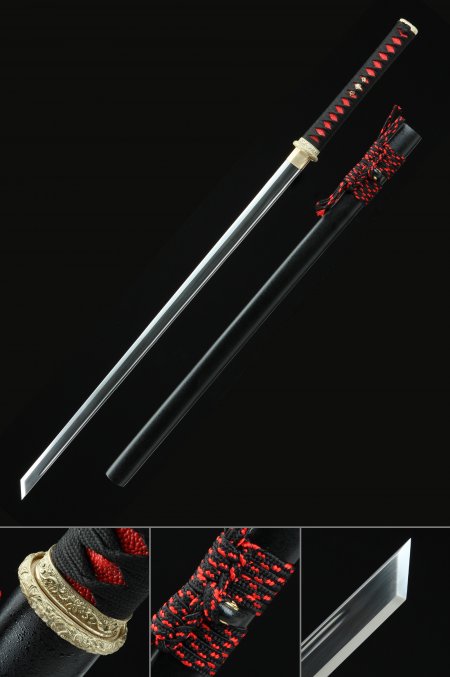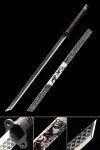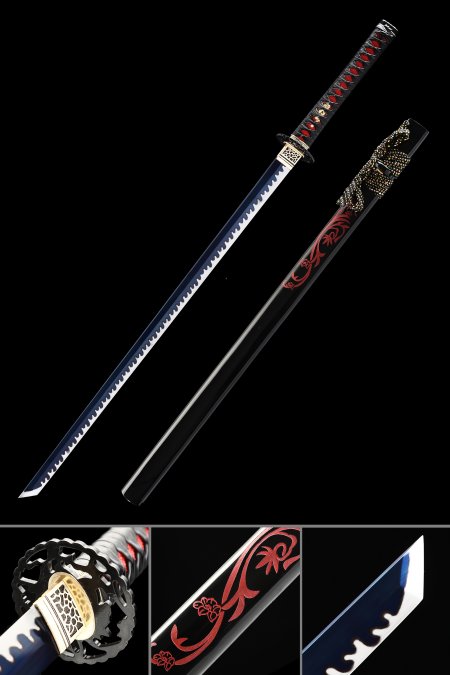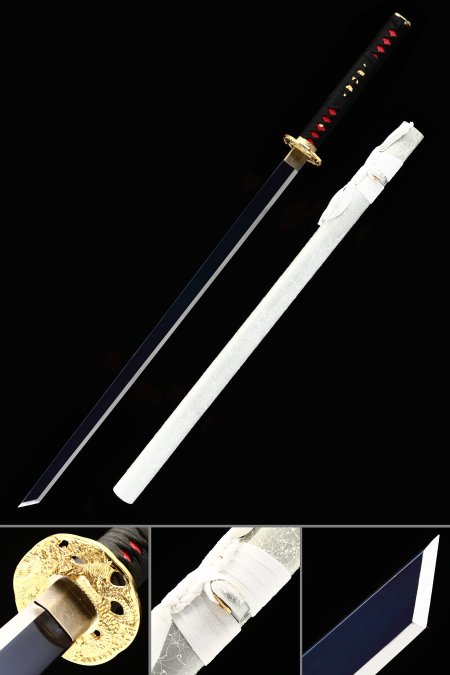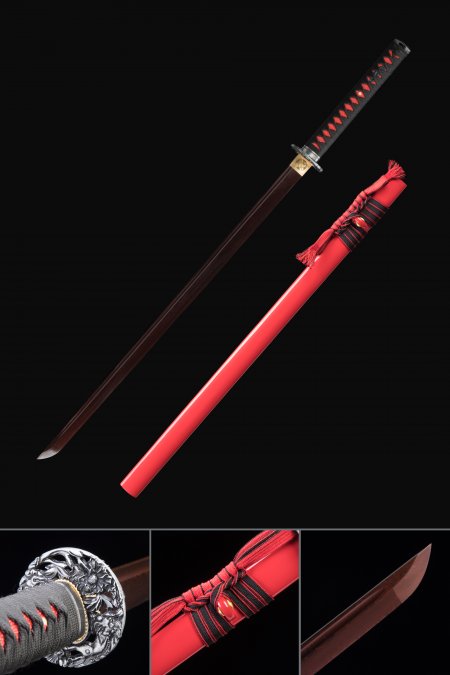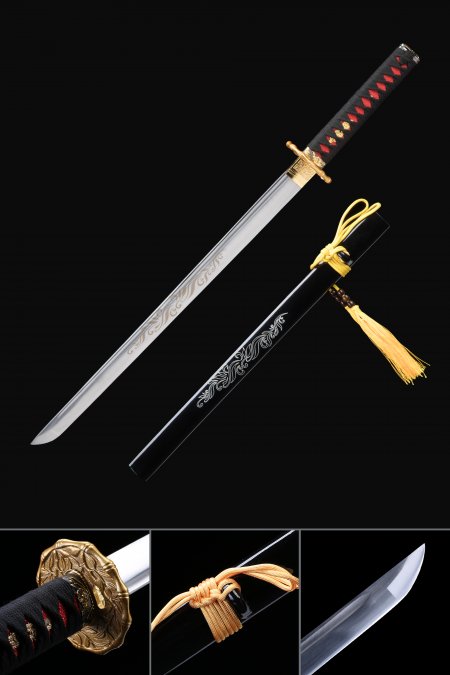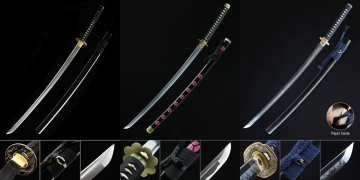
Black Red Handle Ninjato

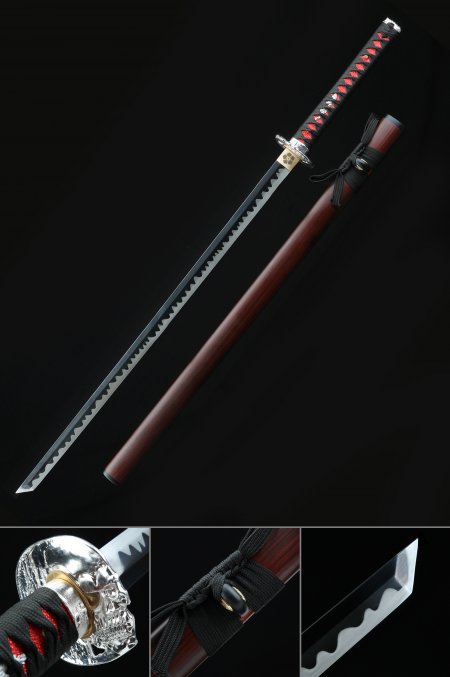
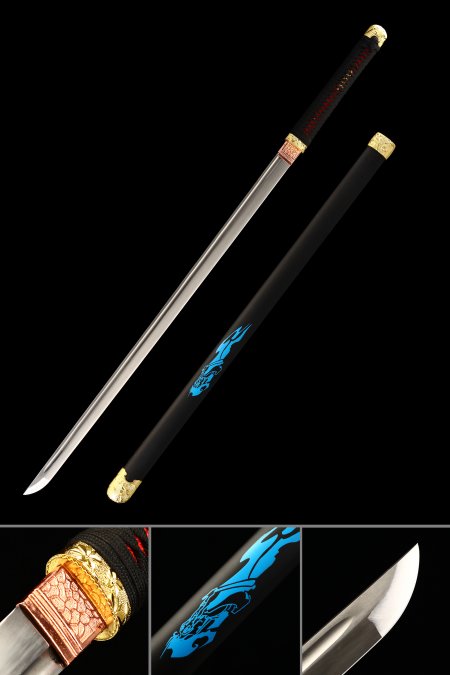
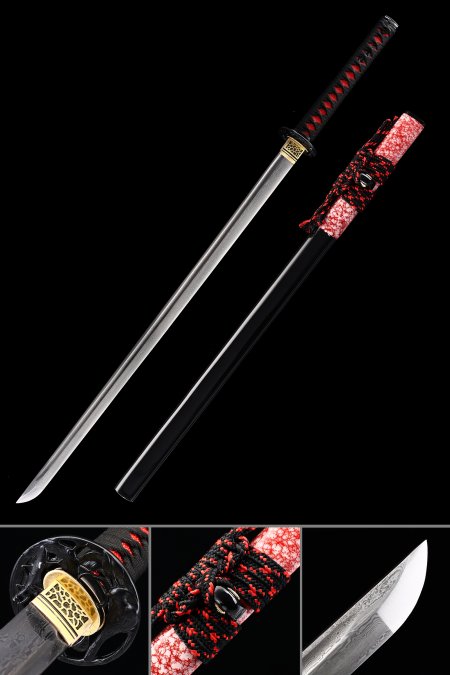
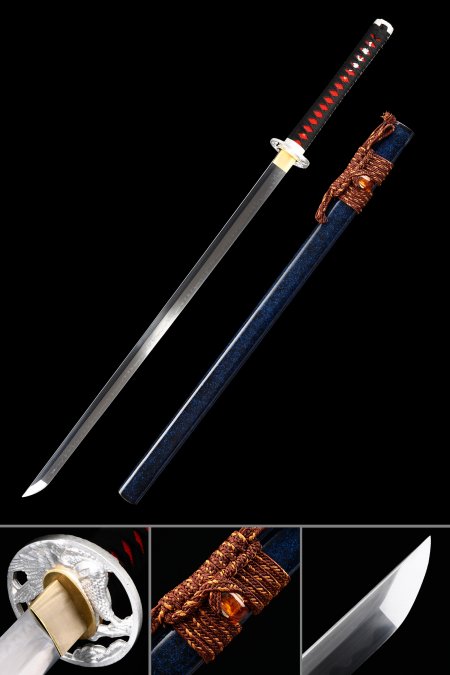
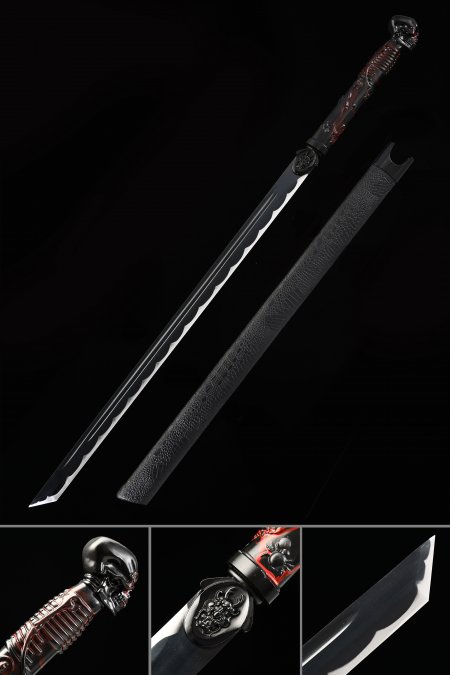
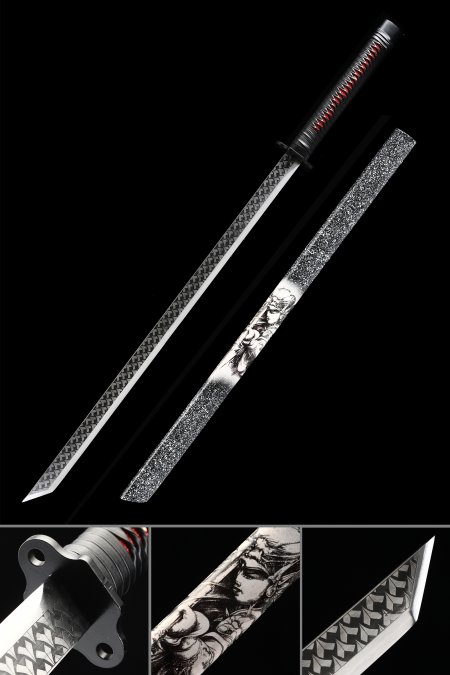
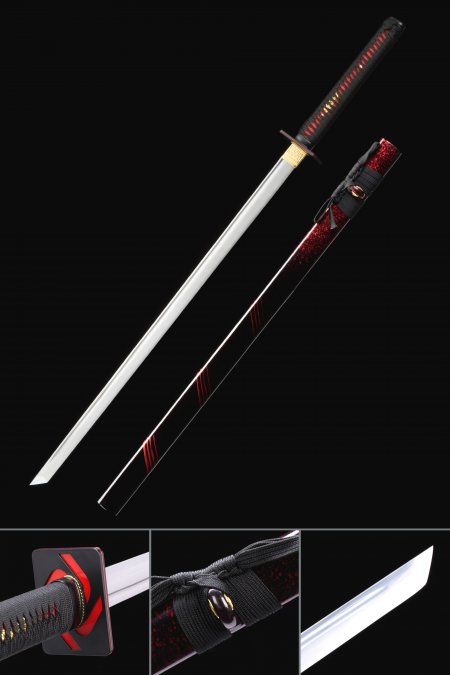
These black and red handle ninjato swords bring together striking visual contrast and meticulous craftsmanship - from manganese and T10 carbon steel blades to hand-wrapped tsuka in bold two-tone cord. Each piece is built full-tang for structural integrity and finished with lacquered saya, ornate tsuba, and engraved accents worthy of serious display. Every order ships free with easy returns, so adding to your collection is completely risk-free.
Showing 13 Products

Related Collections

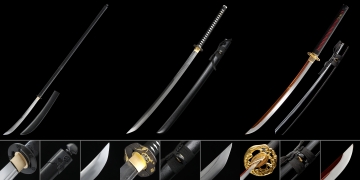
Black Naginata4 items


4 Reviews

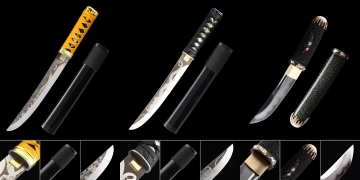
Black Aikuchi6 items


5 Reviews

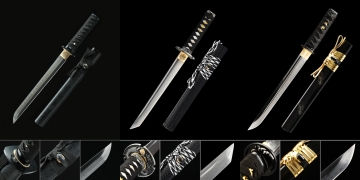
Black Hamidashi7 items


31 Reviews

Black Saya Katana590 items


3142 Reviews

Frequently Asked Questions

What steel types are used in black red handle ninjato swords?
This collection features three distinct steel types, each with different characteristics for collectors to consider. Manganese steel is the most common - it resists surface rust well, maintains a consistent polish, and is an excellent choice for display pieces that will be handled regularly. T10 carbon steel offers a higher carbon content, which allows for clay tempering: a process where the blade spine is coated in clay before quenching, producing a genuine hamon activity line. This makes each T10 blade visually unique. Damascus steel, formed by folding and forge-welding multiple steel layers, creates a flowing surface pattern that shifts under different lighting conditions, making it the most visually complex option in the lineup. Your choice between them typically comes down to whether you prioritize low-maintenance durability, authentic hamon detail, or layered surface artistry.
What does full-tang construction mean for a ninjato collectible?
Full-tang means the steel of the blade extends as a single continuous piece through the entire length of the handle, rather than terminating at the guard or being glued into a hollow hilt. For a collectible ninjato, this matters for two reasons: structural integrity and long-term display quality. A full-tang sword will not loosen at the handle joint over time the way a rat-tail tang construction might, which means the tsuka wrapping stays tight and the sword maintains its balanced feel in hand during occasional handling. It also signals a higher standard of construction overall - makers who use full-tang assembly typically apply the same care to fittings, blade geometry, and finish work. All ninjato in this collection are built full-tang, making them suitable for both wall display and periodic handling without concern about joint fatigue.
How do I maintain a lacquered saya on a display ninjato?
Lacquered saya require minimal but specific care to preserve their finish over time. Avoid storing the sword in direct sunlight, which can cause lacquer to yellow or crack along the grain of the underlying wood. Humidity is the more significant long-term concern - both excessive moisture and very dry conditions can cause the wood substrate to swell or shrink, which stresses the lacquer coat. A stable indoor environment between 40-60% relative humidity is ideal. When handling the saya, hold it by the body rather than the koiguchi (mouth opening) to avoid chipping the lacquer at that stress point. Light dusting with a dry microfiber cloth is sufficient for routine cleaning. Do not use solvent-based cleaners or silicone sprays on lacquered surfaces, as these can soften or cloud the finish. For black lacquer saya with engraved designs, a soft-bristle brush can clear dust from recessed areas without scratching.
How does a ninjato differ from a traditional katana for collectors?
The most immediate difference is blade geometry. A katana features a pronounced curvature - the sori - that is central to both its cutting mechanics and its visual elegance. A ninjato has a straight or nearly straight blade, which gives it a more angular, geometric profile on display. The blade length on a ninjato also tends to be shorter than a standard katana, and the tsuba (guard) is traditionally square rather than round or oval, though many modern collectible versions use decorative tsuba of varied shapes. From a collector's standpoint, the ninjato appeals to those drawn to the aesthetic of straight-blade Japanese sword forms and the cultural mythology surrounding shinobi traditions. It pairs well alongside curved-blade pieces in a mixed collection, providing visual contrast. For collectors specifically focused on straight-blade Japanese swords, also consider exploring the chokuto sword category, which represents an earlier straight-blade tradition predating the curved katana form.
Is a black and red ninjato a good gift for a sword collector?
It can be an excellent gift, particularly for collectors who appreciate bold, high-contrast aesthetics or who have an existing interest in Japanese sword culture and ninja mythology. The black and red color combination is visually distinctive without being garish, which means it reads well in most display environments. For gift-giving purposes, the key considerations are the recipient's existing collection - you want to add something that complements rather than duplicates - and their preferred steel type. A T10 clay-tempered piece with a real hamon makes a more personalized and technically impressive gift than a standard manganese steel replica, and is more likely to be recognized as a thoughtful selection by someone who knows the craft. Including a display stand or wall mount alongside the sword completes the gift as a ready-to-display package, which most collectors genuinely appreciate.

Customer Reviews

Cart 0 Items

Your cart is empty