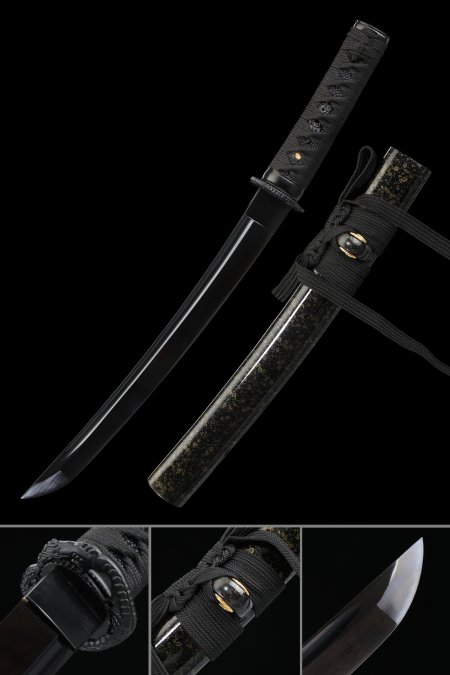
Black Gold Saya Tanto

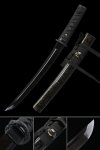
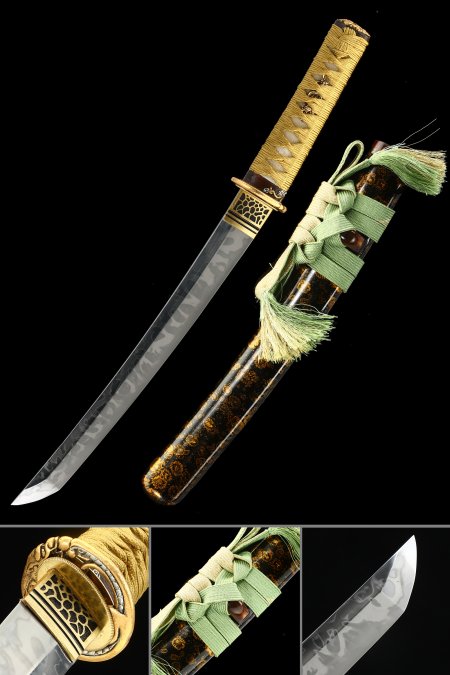
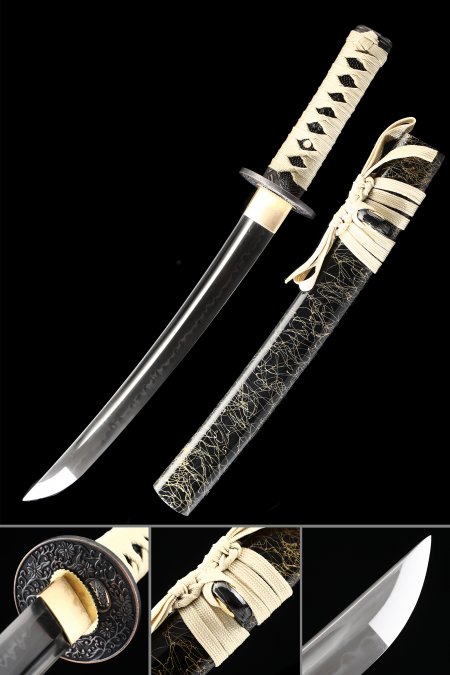
The Black Gold Saya Tanto collection brings together short-form Japanese blades dressed in striking black-and-gold lacquered scabbards — a pairing that has signaled prestige in Japanese craft tradition for centuries. Each tanto is selected for its material integrity, from clay-tempered T10 carbon steel with authentic hamon to full-tang 1045 steel builds, all finished with ornate tsuba and coordinated fittings that make these pieces exceptional display centerpieces. Free standard shipping is included on every order, along with a hassle-free return policy for peace of mind.

Showing 3 Products

Related Collections

Gold Ninjato2 items


3 Reviews

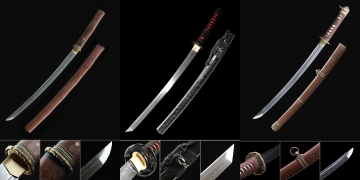
Gold Wakizashi6 items


73 Reviews

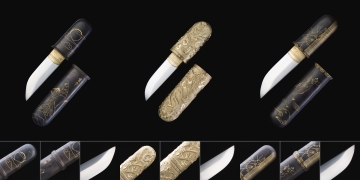
Gold Aikuchi4 items


7 Reviews

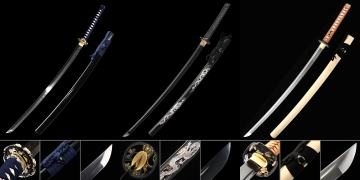
Black Gold Tsuba Katana128 items


381 Reviews

Frequently Asked Questions

What makes a black-gold lacquered saya collectible?
The value of a lacquered saya as a collectible element lies in both its craft process and its historical grounding. Traditional Japanese saya are carved or formed from a lightweight wood core — often honoki (magnolia) — then coated with multiple layers of lacquer, each cured before the next is applied. Black urushi lacquer builds to a depth that catches light differently depending on the angle, and gold embellishments applied over it create the high-contrast aesthetic that defined prestige mountings in the Momoyama and Edo periods. On the pieces in this collection, that visual tradition is interpreted through speckled gold finishes, gold-wrapped cord on the tsuka, and cast alloy tsuba with gold-tone detailing — all working as a coordinated set rather than isolated decorative choices.
How does T10 steel differ from 1045 steel in a tanto?
T10 and 1045 are both carbon steels, but they serve different collector priorities. T10 is a high-carbon tool steel (approximately 0.95–1.04% carbon) with a small amount of tungsten added for wear resistance. Its higher carbon content makes it well-suited for clay tempering, producing a genuine hamon — the undulating temper line that separates the hardened edge from the softer, more flexible spine. Collectors who value metallurgical authenticity and visual evidence of the forging process gravitate toward T10. 1045 steel sits at medium carbon content (roughly 0.45%), offering reliable hardness and a clean, uniform blade surface. In this collection, the 1045 tanto emphasizes bold decorative design — a black blade, dramatic tsuba, and ornate saya — rather than hamon visibility. Neither is superior; they represent two distinct collecting orientations.
What is a hamon, and how do I identify a real one?
A hamon is the visible temper line that appears along the edge of a blade that has been clay tempered and quenched. During clay tempering, a refractory clay mixture is applied along the spine and left off the edge before the blade is heated and plunged into water. The edge cools rapidly and becomes hard martensitic steel, while the clay-insulated spine cools slowly into softer pearlitic steel. The boundary between these two zones appears as a white, cloud-like line running the length of the blade — the hamon. On T10 tanto in this collection, the hamon is produced through this actual differential hardening process, making each one unique in its pattern. A genuine hamon has depth and variation when examined in raking light; a simulated (acid-etched) hamon, by contrast, looks flat and uniform under close inspection.
How should I care for a lacquered tanto saya at home?
Lacquer is durable but sensitive to a few specific conditions. Direct UV exposure is the primary threat — prolonged sunlight will fade and eventually crack the lacquer surface, so display placement away from windows or under UV-filtering glass is recommended. Humidity extremes can also affect the wood core beneath the lacquer; aim for storage between 40–55% relative humidity, which is achievable with a small silica gel pack inside a display case. For cleaning, a soft microfiber cloth removes fingerprints without abrading the surface. Avoid any liquid cleaners or polishing compounds, which can dissolve or dull the lacquer. The blade inside the saya should be removed periodically, lightly wiped with a clean cloth, and treated with a thin application of choji oil before reinsertion to prevent moisture from being trapped against the steel.
Are these tanto a good choice as a display gift?
Black Gold Saya Tanto make particularly strong display gifts for collectors, history enthusiasts, or anyone drawn to Japanese decorative arts — precisely because the black-and-gold aesthetic reads as visually dramatic even to someone unfamiliar with blade collecting. The coordinated fittings (matching tsuba, tsuka wrapping, and saya finish) mean no additional accessories are needed to create an impressive display. For a first-time recipient, a tanto is also a more approachable format than a full-length katana: smaller footprint, easier to display on a desk or shelf, and less intimidating to store. Pairing the tanto with a dedicated hardwood display stand creates a complete, presentation-ready gift that requires nothing further from the recipient.

Customer Reviews

Elois Deleon New York, United States

Yes I recently purchased this small katana which im Impress with from “true katana”
Now I will say the small katana is 10 high carbon steel, with a sharp edge , clay tempered and so on. It’s handmade and very well build, I love the design the iron tusba has flower design which nice and the scabbard has a beautiful design on it as well.
I love this small sword and I love looking at it and I love the way it feels when I hold it in my hand too.
Also I would like to thank karatemart for the beautiful selection of weapons they produce and the fast shipping delivery which took a few days but that the process ….. thanks again I recommend this weapon and will buy again👍
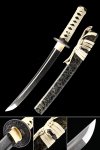
T10 Carbon Steel Japanese Tanto with Clay Tempered Hamon in Black Gold-Thread Saya with Floral Tsuba T10 Carbon Steel Japanese Tanto with Clay Tempered Hamon in Black Gold-Thread Saya with Floral Tsuba
Cart 0 Items

Your cart is empty