What makes black and blue lacquered saya special?
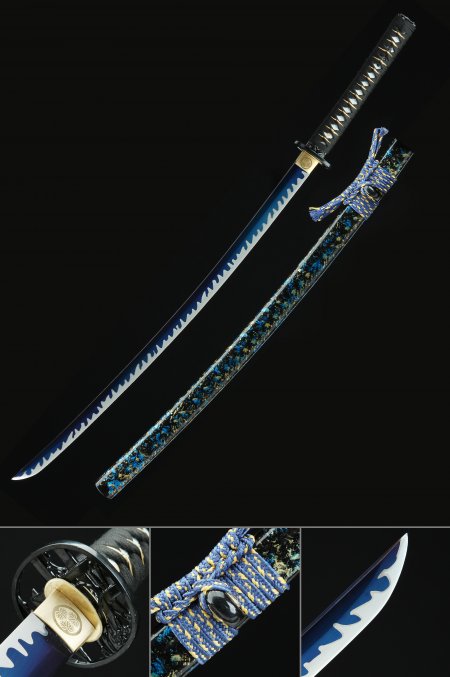
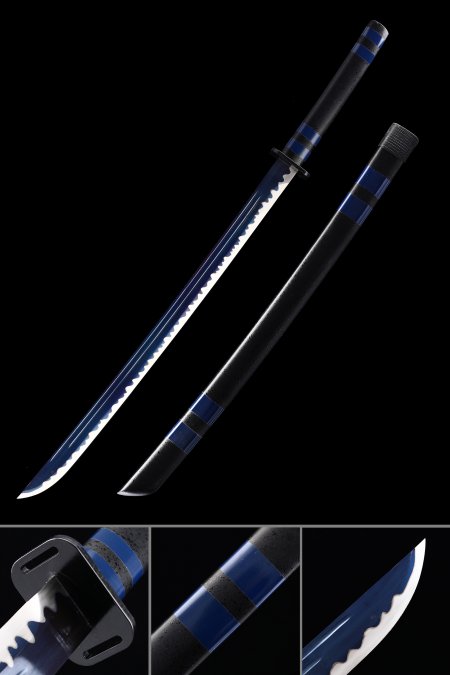
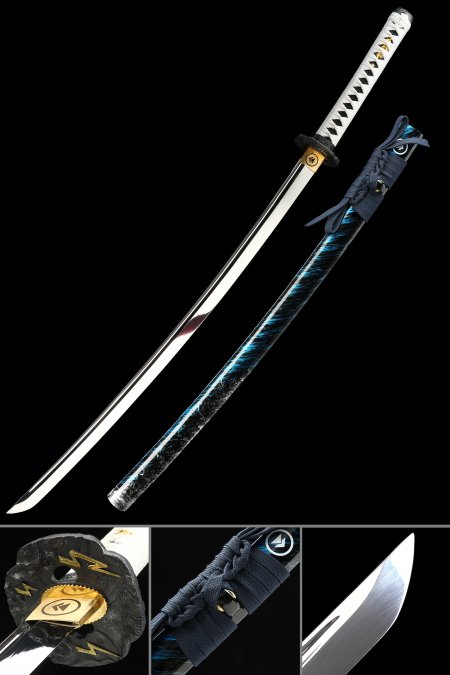
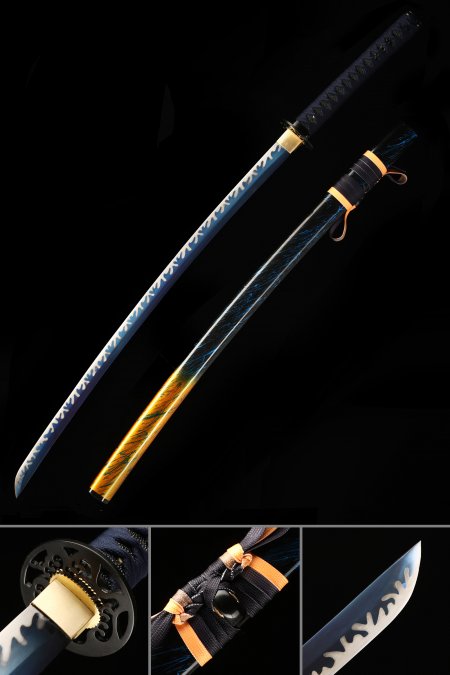
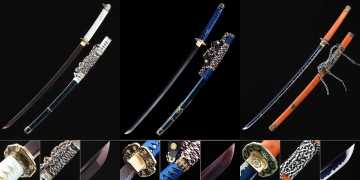
The black-blue lacquer finish is achieved through multiple coats of urushi-style lacquer applied over a wooden saya core, then polished between layers to build depth and sheen. Unlike plain black scabbards, the blue undertone shifts slightly depending on the light angle, giving the saya a subtle iridescence that photographs beautifully and draws the eye in a display setting. Many pieces in this style also incorporate hand-painted motifs - lightning, spiders, floral patterns - that are sealed beneath the final lacquer coat for durability. The result is a scabbard that functions as a standalone art object, not just a blade holder.
How does Damascus steel differ from 1095 in these katana?
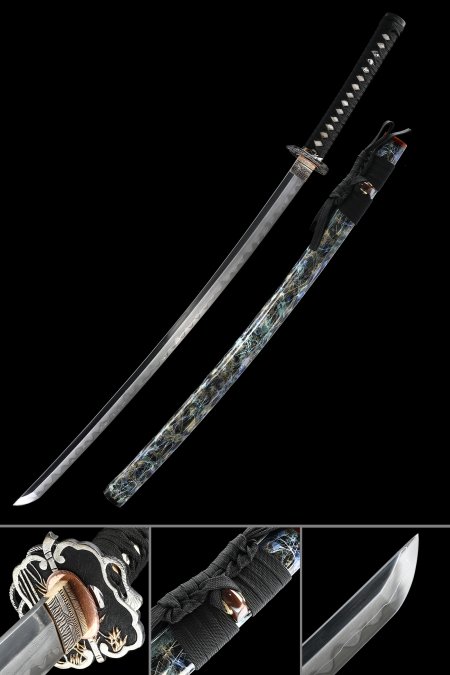
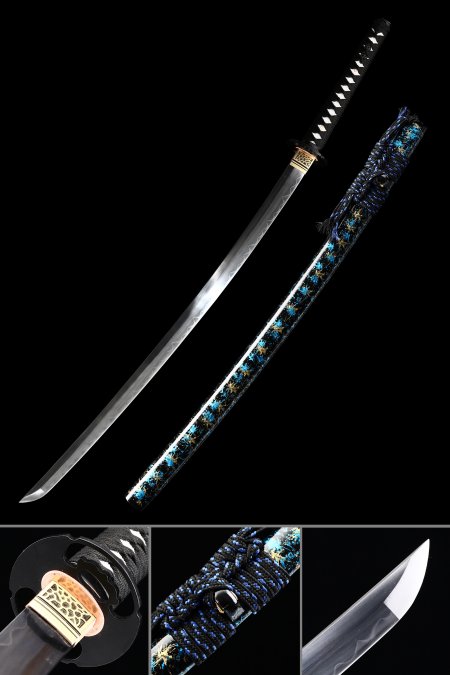
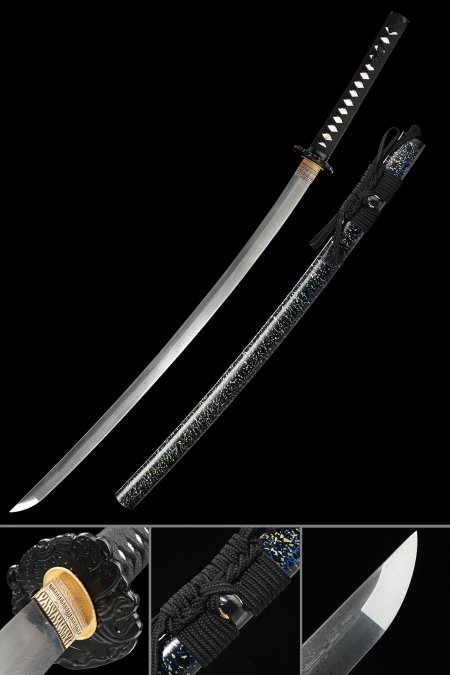
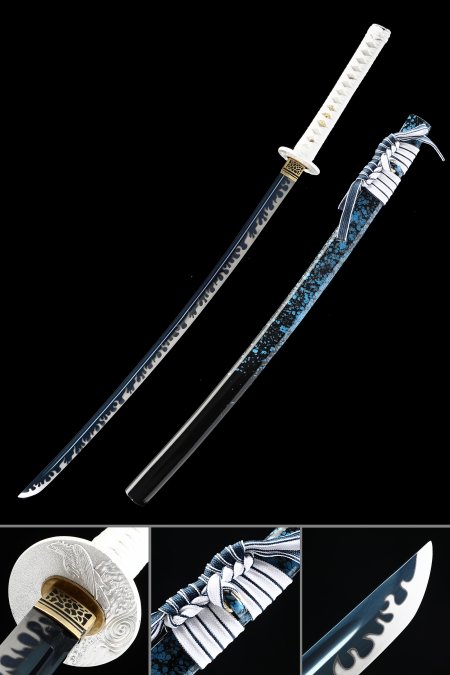
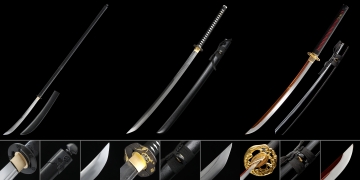
Damascus steel is produced by forge-welding alternating layers of high and low-carbon steel, then folding and drawing them out repeatedly. The result is a blade with a visible flowing grain pattern across the surface - each sword is visually unique. It offers good toughness from the layered construction. 1095 high-carbon steel, by contrast, is a single-alloy steel prized for its ability to hold a consistent edge and respond well to clay tempering. Clay-tempered 1095 blades produce a genuine hamon - the wavy temper line along the edge - which is a key marker of traditional Japanese forging technique. Collectors who prioritize visible authenticity often prefer clay-tempered 1095, while those drawn to surface pattern work tend to gravitate toward Damascus.
Are daisho sets worth buying for a display collection?
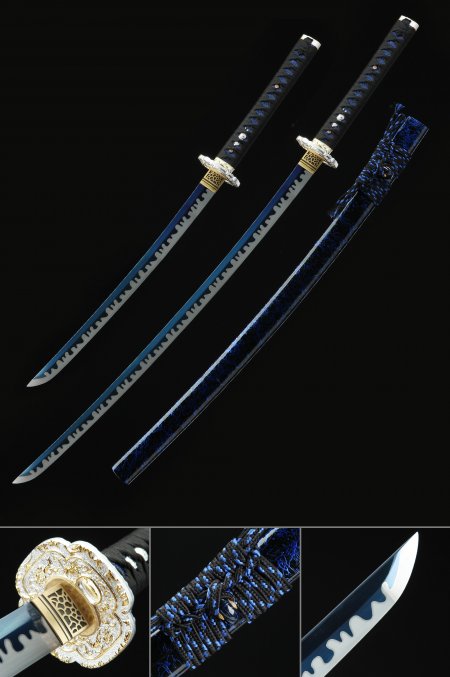
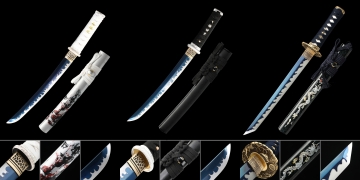
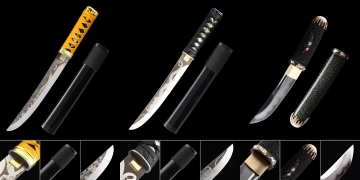
A daisho - the paired set of a katana and wakizashi - holds significant cultural meaning in Japanese sword tradition. Historically, only samurai of recognized status were permitted to carry both blades simultaneously. For display purposes, a matched daisho set creates a visually complete arrangement that a single sword cannot replicate. When both pieces share the same saya lacquer, tsuba design, and ito wrap color, the cohesion of the display is immediately apparent. Collectors building themed arrangements around historical or anime-influenced aesthetics will find a matched daisho far more impactful on a wall mount or dual sword stand than two individually sourced pieces.
How should I care for a lacquered saya at home?
Lacquered saya are more durable than they appear, but a few habits will keep them looking their best long-term. Avoid storing the sword in direct sunlight, which can fade or yellow the lacquer over time. High humidity is the bigger concern - moisture can cause the wooden core to swell, making the blade difficult to draw and potentially cracking the lacquer surface. A climate-controlled room with stable humidity is ideal. For the blade itself, apply a thin coat of choji oil every two to three months using a soft cloth, wiping from the base toward the tip. Never store the blade in the saya for extended periods without periodic removal to check for condensation buildup near the habaki.
What should I look for in tsuba quality on display katana?
The tsuba is the hand guard positioned between the blade and the tsuka, and on a quality display piece it should fit snugly with minimal lateral play. On the swords in this collection, tsuba materials range from iron with gold inlay scroll work to cast alloy with cloud or floral motifs. Look for clean casting lines, consistent finish on decorative elements, and a tight fit against the habaki and fuchi. A tsuba that rattles or sits loosely indicates poor fit tolerances, which affects both the visual quality and the structural integrity of the assembled sword. For display collectors, the aesthetic coherence between tsuba design, saya finish, and ito wrap color is the primary consideration - these three elements together define the sword's overall character.